‘Mandatory opportunities to be clear and specific’: How Christians can assess progressive candidates’ faith claims in midterm elections
Several Democrat candidates running in the November midterm elections are using Christian language to justify progressive policies that conflict with biblical principles. Voters who hold traditional…
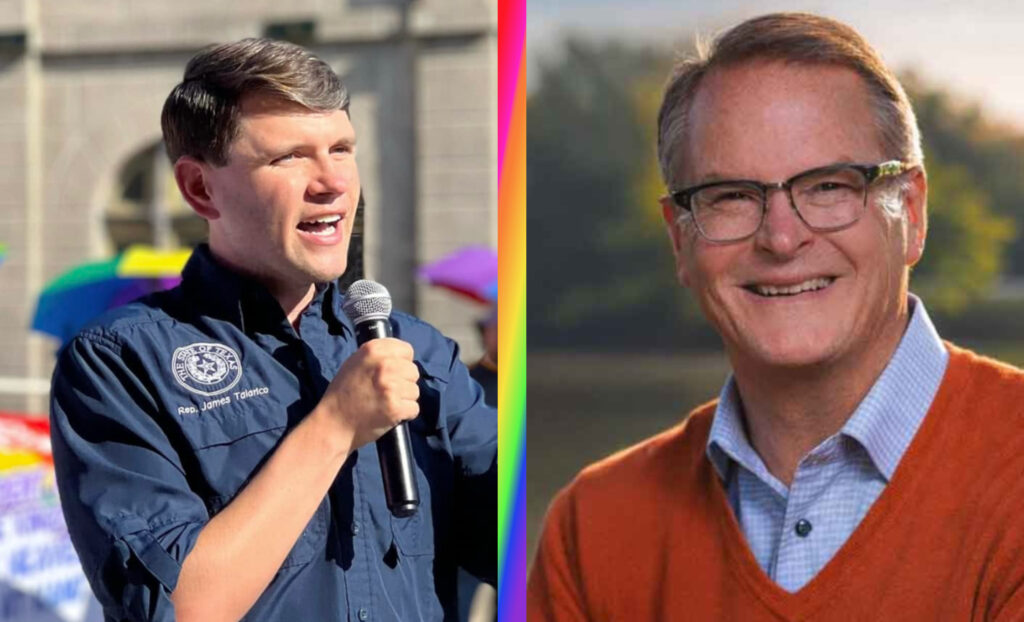
Several Democrat candidates running in the November midterm elections are using Christian language to justify progressive policies that conflict with biblical principles. Voters who hold traditional Christian values must scrutinize and challenge those claims, biblical and conservative leaders told Heartlander News.
Pro-life and pro-abortion voters have “a lot in common,” claims Texas Rep. James Talarico, a self-described Christian running as a Democrat for the U.S. Senate.
“I also want to see fewer unplanned or unwanted pregnancies,” Talarico told a pro-life Texas voter during a mini debate at the Jubilee Townhall event, which aired live on CNN Oct. 14. “I want to see fewer abortions, and so you and I actually have the same goal. We may have different moral conclusions when it comes to this particular ethical question, but we actually have the same public policy goal.”
Talarico is one of several progressive candidates invoking Christian faith to justify progressive positions on issues such as abortion and LGBTQ ideology. Adam Hamilton, a pastor at the United Methodist Church of the Resurrection, is running to represent Kansas in the U.S. Senate. The church belongs to the United Methodist Church, a liberal denomination.
Rob Sand, the Democratic nominee for governor of Iowa, attends a church that partners with the Rainbow Faith Coalition and supports various social justice issues, according to its website. Also in Iowa, Sarah Trone Garriott, a Lutheran minister at another liberal church, is challenging incumbent Rep. Zach Nunn for his seat in the U.S. House. She promises to support abortion and public education.
These candidates, whom critics describe as theologically liberal, are using their faith to appeal to Christian and non-Christian voters alike. They aren’t compromising leftist ideology but instead are bending Christianity to promote liberal policies, Albert Mohler, president of The Southern Baptist Theological Seminary, told Heartlander News in a statement.
“The ideological dynamic behind the modern left is decidedly secular. And we also see now that even some on the left are trying to claim some kind of Christian identity. They’re often identified with what is called ‘Progressive Christianity,’” Mohler said. “And I’ll just say bluntly, that is a Christianity in which the modern age and modern ideologies set all the rules. And so by no surprise, they don’t represent historic biblical Christianity but something very different. That shows up, as a matter of fact, often in their positions on issues like the sanctity of human life and the LGBTQ issues.”
Barack Obama, who invoked Christian faith a number of times, offers an earlier example. During his 2008 presidential campaign, he said he wanted to reduce the number of abortions, but critics later argued that the Affordable Care Act expanded access to health insurance plans covering abortion.
After rejecting Christian principles, the left seeks to win back Christian voters
For the past decade, the Democratic Party has largely rejected and criticized Christian voters while promoting policies and ideologies that oppose biblical principles, Aaron Baer, president of the Center for Christian Virtue, told Heartlander News.
Andrew Walker, dean of the School of Theology at Southern Baptist Theological Seminary, made a similar argument in a recent piece for The Daily Wire. Within the past 10 years, he wrote, “the Democratic Party has mainstreamed progressive cultural efforts to treat our views [evangelicals] as outside the boundaries of polite society.”
Christians’ theology shapes their “conception of the good” and, in turn, their analysis of which political means can achieve that end, Walker explained. This Christian vision “directs to what is right, true and good,” he said, adding that one political party clearly favors Christian values concerning morality, human nature and dignity.
“Evangelicals who take the Bible seriously find more resonance in the current Republican platform, imperfect as it is,” Walker wrote.
After years of what Baer described as Democrats’ mockery and moral rejection of their beliefs, many Christian voters who had not already joined the Republican camp turned to supporting President Donald Trump. Now, Democrats are trying to win back Christians in the middle, whom Mohler described as “confused.”
“They realize the political miscalculation of that, and so now they’re trying to appeal back to this base,” Baer said. “It’s pretty hollow what they’re doing, and I think most Christians are going to see through it because you know their deeds don’t follow their actions.”
The inconsistency of the ‘religious left’
During the CNN debate, a Christian voter challenged Talarico’s use of Scripture, despite his current studies at Austin Presbyterian Theological Seminary. When she asked whether Jesus came to redeem sinners and is the only way to salvation, Talarico did not directly answer her question.
“I believe Jesus is the truth, the way and the light,” Talarico said, notably substituting “light” for “life” and omitting the final sentence of John 14:6: “no one comes to the Father except through me.”
Mohler said this tactic draws on a centuries-old ploy: using theological and moral language without concrete biblical content.
“I think of the warnings even in the New Testament about how easy it is to mislead people with language that sounds almost theologically right,” Mohler said. “That is one of the great dangers of our time, and that’s why we have to keep coming back to the most basic truths revealed in Scripture, including the sanctity and dignity of every single human life – every single human being made in the image of God and right order in creation, extending to marriage and family. And you can see the confrontation with the leftist ideology already.”
Talarico tailors his message to his audience, Baer said.
“James Talarico goes into a more Christian environment and he’s talking Bible verses and values and all these kind of things, and then he’s at just a standard Democrat fundraiser and someone says, ‘Hey, who’s your favorite drag queen?’ And he knows it off the top of his head,” Baer said.
President Donald Trump compared Talarico’s support for LGBTQ ideology with Hamilton’s, suggesting the Kansas Senate candidate was even more extreme.
“He promotes a document listing 125 different genders. You think Talafreako’s bad, he was only six,” Trump said at a rally in Park City, Kansas, near Wichita, in mid-October.
Trump accused Hamilton of mocking God, pointing to the social justice advocacy of the United Methodist Church of the Resurrection, where Hamilton is pastor. Hamilton supported the denomination’s embrace of same-sex marriage and gay and lesbian clergy in 2024. The church also hosts regular “Coming out for Our Community” events.
“Adam Hamilton used church dollars to fund anti-religious transgender activity,” Trump said. “He used a lot of church money to fund all of this transgender crap that you’re reading about – who openly mocks Jesus, and he openly mocks Jesus.”
Hamilton was registered as a Republican until April, when he switched parties to challenge incumbent Sen. Roger Marshall, R-Kansas, for the Senate, according to CBS News.
Christian voters may see through the faith-based appeals
Baer said he doesn’t think Talarico or other progressive Christian candidates will win over many traditional evangelical voters.
“Christian voters tend to be much more savvy than the political consultants give them credit for,” he said.
Walker added that most evangelicals know Democratic candidates will not protect the moral issues important to them, particularly pro-life policies.
“But the Talarico situation is an interesting test case because one might be tempted to think that, since Talarico talks a lot about Jesus, he would be an evangelical favorite. He’s not,” Walker wrote. “He’s a progressive who uses distorted Bible verses to support his preferred progressive policy. It’s great to have candidates talk about Jesus, but the implications matter: whether they’re invoking Jesus accurately.”
Christians care about actions and must distinguish genuine biblical principles from ambiguous rhetoric that masks policies they consider immoral, Baer said.
“We Christians care about politics because of the issues, because of the real-life consequences of bad public policy,” he said.
“You can’t say you are Christian and then want to systematically destroy little ones made in the image of God through abortion,” he added.
Mohler agreed, saying Christians must distinguish between moral language and biblical principles, especially during elections.
“So it is our responsibility to make this distinction very clear, to make this contrast evident,” Mohler said. “Elections are one of those rather mandatory opportunities to be clear and to be specific.”
Baer said the left’s strategy will not “be effective at pulling over that core Christian base vote that Republicans have been depending on for years.” Instead, he argued, Republican leaders’ inaction on issues such as abortion will hurt the GOP more than Democrats’ efforts to attract Christian voters.
“The thing that’s going to hurt Republicans far more than James Talarico’s fake Christianity that he’s waving around is President Trump and the Republicans’ inaction on things like mifepristone,” Baer said, referring to the stalled study and regulation of the chemical abortion pill.
Baer said Christians would not switch to the Democratic Party and vote for Talarico, Hamilton or Sand. Instead, he predicted, some would stay home on Election Day.
“This core Christian base that that makes up the bulk of the GOP’s base vote will almost never vote Democrat, statistically speaking. They just won’t vote, right?” he said. “If they don’t feel like one party is actually standing on key issues, is doing the right thing. They’re not going to go vote for the party that supports child murder and sterilizing kids, and mass illegal immigration. That’s just not going to happen. But they will just stay home if they don’t feel like someone’s actually going to do the right thing, and that’s the real challenge for Republicans in this election.”
(Image credits: Screenshot/Facebook/James Talarico; Adam Hamilton campaign website)