Analysis: Iran war on knife’s edge as divided administration awaits Trump decision
The Trump administration’s national security team met Thursday night to hash out whether to resume an all-out war, continue economic sanctions or negotiate a permanent ceasefire with…
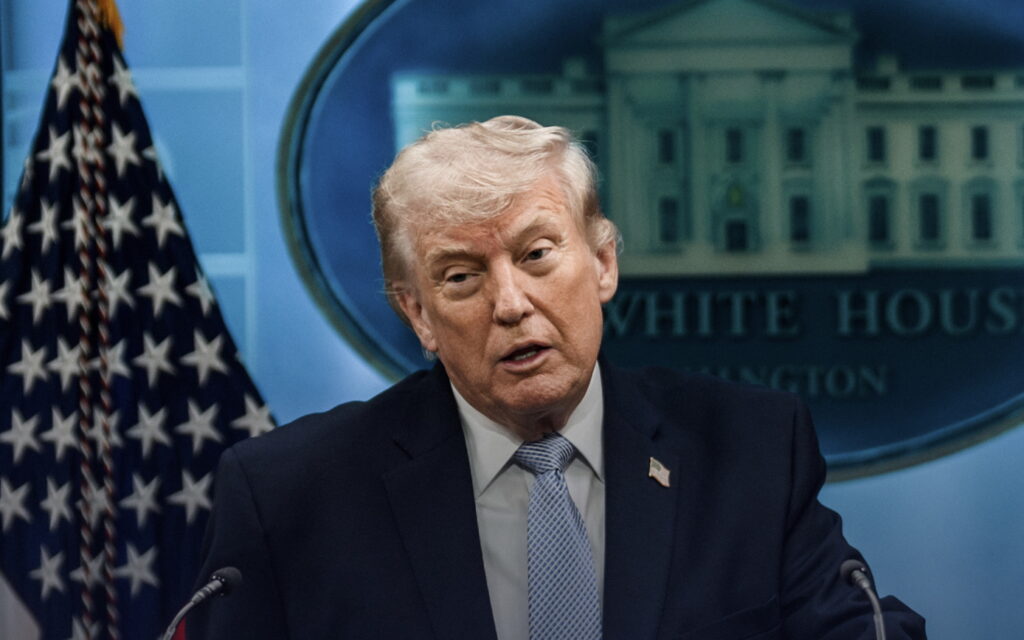
The Trump administration’s national security team met Thursday night to hash out whether to resume an all-out war, continue economic sanctions or negotiate a permanent ceasefire with Iran.
“I would rather not destroy the rest of the country if possible but maybe I’ll have to,” Trump told reporters in the Oval Office after the meeting. “You’ll know soon enough.”
The president noted that the Islamic Republic of Iran has been at war with the U.S. since 1979.
Iran has “killed thousands of Americans and many other people,” he said. “And if you go back just over the last seven months, they’ve killed 75,000 at least. That’s as of two months ago, they’ve killed 75,000 protesters, hanging many from cranes.”
Axios reported that regional mediators Qatar, Saudi Arabia, Turkey, the United Arab Emirates, Oman and Egypt have been in contact with Iran, trying to negotiate an end to the hostilities.
A week ago, U.S. Central Command (CENTCOM) met with Trump and his top national security advisers, including Secretary of War Pete Hegseth, to outline military options in case of renewed fighting, according to the Jerusalem Post.
Heartlander News previously reported that Gulf state allies had privately been warned about a possible short, intensive military campaign against Iran after the U.S. midterm elections.
The CENTCOM meeting came one day after Vice President JD Vance was briefed separately by military leaders, although there are conflicting accounts regarding the topic of discussion.
Trump himself has said Vance was speaking with Iran about providing humanitarian aid, but the Wall Street Journal reported that the meetings were about restarting peace negotiations with Mohsen Rezaei, the minister in charge of Iran’s national security council, who is widely considered a hard-liner.
If the goal was to restart peace negotiations, Vance likely received his answer in Moscow on Thursday in the form of an ultimatum from Iran.
Rezaei met with Russian President Vladimir Putin on Thursday.
“We told Mr. Putin that we announced seven conditions to the Americans regarding diplomacy, and that until the Americans fulfill our seven conditions, neither the Strait of Hormuz will be opened nor will there be any negotiations,” Rezaei said after the meeting, according to Axios.
Meanwhile, the U.S. president told reporters that it doesn’t matter what demands Iran is currently proposing: “They’re not going to have a nuclear weapon. They know that. So do I.”
Trump’s comments come as a rift in the administration becomes more public.
Blaming the war
In comments widely interpreted as an attempt to distance himself from the Iran war, Vance blamed the war for almost the entirety of the GOP’s election loss.
“If you’d like to argue it was worth it, that losing the Senate for the next 6 years was worth it, then do so,” Vance said in a lengthy social media post.
“Agree or disagree, that’s at least honest,” he added.
While Trump tried to downplay the rift with Vance, The Associated Press reported that Trump had made the argument that the war was worth it on the campaign trail.
The AP said Trump was still making the argument that he would follow a similar path if he had to do it over again.
While the president acknowledged that the war likely cost the GOP the midterms, he didn’t hesitate when asked specifically whether it “was worth it to lose.”
“I do. Yeah. I mean, well, you have no choice,” Trump said. “I mean, I thought the oil would go up a lot more and I did it on that basis. You have no choice, you have to do it. You can’t let Iran have a nuclear weapon, or everything that you see here someday might not exist.”
Some conservatives have claimed that Vance’s own peace negotiations with Iran prematurely halted the war and that the halt led to the stalemate, which has increased energy prices and has yet to produce peace.
“It’s because of six months of trying to chase down a deal with the Iranians that Vice President Vance led with an Iranian regime that had no interest whatsoever in having a deal,” said Marc Thiessen, a resident fellow at the American Enterprise Institute. “If we had finished this conflict in July, the gas prices would be below $3 a gallon right now.”
The opposition by Democrats, aided by Vance, simply emboldened the Iranian regime, which never negotiated seriously with the vice president, critics said.
On cue, one Iranian political figure mocked Vance, replying to the vice president’s lengthy social media post, which the Iranian labeled a “TED talk.”
“Losing gambler energy, can’t walk away from the table,” wrote Iran’s Parliament Speaker Mohammad Baqer Qalibaf on X. “Boss is prepping the next war phase while America teeters on an Israel-First cliff.”
There are no good options for the president if he wants to force a change in the Iranian regime’s behavior, unless he’s willing to buck American public opinion even further.
As Vance pointed out in his X post, the American people have no appetite for war.
Retired Army Maj. Gen. James Marks argued that a short, intensive attack like that seen in the opening operations of the Iran war in February might allow the U.S. to degrade Iranian nuclear capabilities enough that Trump can move on to negotiations.
“At that point, the president can say ‘Our work is done here,’ and then he can right-size, or at least establish a new normal, in our relationship with Iran,” Marks said.
But Michael Doran, senior fellow and director of the Center for Peace and Security in the Middle East at the Hudson Institute, said there’s too much at stake for Iran or Trump to back down now.
The Middle East specialist said Trump has shown a consistent willingness to use political capital to confront Iran, with opposition to the Islamic Republic “among the most consistent threads running through both of his terms.”
Iran, for its part, has made war against America a central premise of its existence and sees the current conflict as the ultimate test of that ideology.
“[Iran] clearly has no intention of handing Trump a graceful exit. On the contrary, [it] intends to humiliate the American president,” Doran said.
That brings up the central question: How do you stop fighting when one side has pursued a war for nearly 50 years, even when it’s clearly harmed its own people’s interests?
Indeed, the Islamic Revolutionary Guard Corps under Maj. Gen. Ahmad Vahidi is already preparing for the next phase of the conflict, Doran said.
“Military dictatorships see force as the answer to every major problem,” he added. “Vahidi can see that Trump’s policies are choking Iran economically, but he won’t drop to his knees. He will instead try to break the choke hold.”