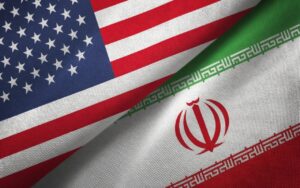
Analysis: Israeli elections produce stalemate as Iran awaits voters’ verdict
Israeli elections have thus far produced a stalemate, defying expert predictions and polls that forecast a “crushing defeat” for current Prime Minister Benjamin Netanyahu.
With 85% of…

Israeli elections have thus far produced a stalemate, defying expert predictions and polls that forecast a “crushing defeat” for current Prime Minister Benjamin Netanyahu.
With 85% of the vote counted, The Times of Israel reports that Netanyahu’s Likud coalition has 53 seats, the opposition has 49 seats and Arab parties have secured 19 seats.
A party needs to control 61 seats to form a government.
U.S. President Donald Trump credited his endorsement of the Israeli prime minister with turning “the whole tide” of the vote in Israel.
“Bibi Netanyahu has been a Great Warrior Prime Minister, and an even greater Partner for Peace in combatting the Islamic Republic of Iran,” Trump said on social media, vowing to “finish the job” on Iran.
The prime minister has echoed Trump’s warnings about Iran in recent days.
“I have already instructed the Mossad and the IDF (military) to bring down this regime, to bring down this regime because that is the only way to put an end to this threat,” Netanyahu said, according to Reuters.
The Wall Street Journal, citing anonymous sources, reported that Gulf state allies have privately been warned about a possible short, intensive military campaign against Iran after the U.S. midterm elections.
The Israeli election results mark a turnaround from early exit polls released immediately after voting, which predicted Netanyahu’s right-wing coalition would suffer a defeat.
It’s also a clear defeat for the Islamic Republic of Iran, which was hoping for a dual defeat of Netanyahu in Israel and Trump in the U.S. midterms to turn back military action against the Islamic state.
Iran was banking on a combination of war weariness and high oil prices to weaken the current governments in Israel and the U.S.
But oil prices are up only about 2% amid the possibility of renewed fighting in the region, as Israel’s ruling government appears poised to remain in place.
Media outlets are reporting that the price increases are the result of attacks on Saudi Arabian energy facilities.
The need for a majority
“The Likud is the biggest party in Israel,” the prime minister told a cheering crowd before ridiculing news outlets that had predicted Likud’s demise in the elections.
“The right-wing bloc has a clear, decisive majority among the Zionist public, among the Jewish public and all those who support the state,” he said.
It’s unclear how the final tally will apportion seats, however.
Election officials still have 600,000-650,000 special ballots from soldiers and other absentee voters to count, which will affect the result, Ynet News reported.
Final voter turnout was nearly 78%, The Jerusalem Post reported.
Turnout among military members, whose votes tend to skew right, was nearly 80%.
Ynet estimates that the special ballots could represent as many as 15 seats. The ballots “have tended to favor Zionist parties across the political spectrum, largely because soldiers make up a significant proportion of voters using the system.”
Those votes will not be counted until Wednesday, with results not expected until Friday.
Still, it’s unclear whether either side will have enough legislative seats to form a majority.
Under Israel’s parliamentary system, the government is formed by a majority in the legislature.
Likud’s current coalition controls 64 seats.
Once the seats are allocated, Likud and the opposition Yashar Party will be free to try to form a majority government, each represented by a designated candidate, the Israel Policy Forum said.
The president will then designate one party to begin negotiations to form a government.
If the candidate is unable to form a government, negotiations may be extended for 14 days.
If the designated candidate cannot form a government, the opposition party may be offered the opportunity to negotiate a majority.
If neither side can form a majority, new elections may be called.
In fact, the Israel Policy Forum said Netanyahu successfully formed a government in 2009 after receiving fewer votes than the opposition party, which failed to form a government.
It also noted that between April 2019 and November 2022, five elections were held because no party was able to form a stable coalition.
Still, either way, it’s a remarkable comeback for Netanyahu’s Likud coalition.
Just days ago, Reuters was speculating about all the changes that would happen in Israel in the wake of a Netanyahu defeat.
At the same time, poll aggregators were predicting 19-20 seats for the main Likud Party, which now has 27 seats.
Instead, what has happened is a nightmare scenario for anti-Zionists, with Netanyahu remaining in power.
“Netanyahu’s best scenario, Israeli analysts say, is a stalemate,” The Atlantic wrote in mid-October. “No bloc reaches 61, and the country goes to another election.”
At this point, that’s more likely to be the opposition’s best scenario, as Likud needs only a half-dozen defections to form a government.
And it’s not entirely out of the question that the special ballots could give the Likud coalition an outright majority, allowing the government to remain as it stands.
(Featured image: Israeli Prime Minister Benjamin Netanyahu)