‘Who represents us’: Political advertising hits record spending highs ahead of midterm elections
Healthcare is dominating political ad spending this election, tracking with voters’ top concerns, as Republicans focus on taxes and immigration and Democrats target President Donald…
Healthcare is dominating political ad spending this election, tracking with voters’ top concerns, as Republicans focus on taxes and immigration and Democrats target President Donald Trump.
Democrats are spending the most on ads about health care, special-interest topics and Trump, while Republicans are putting their money into taxation, healthcare and immigration, according to an AdImpact report.
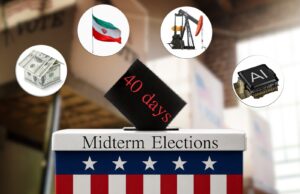
Half of registered voters ranked the economy and health care as “extremely important” to their vote, followed by Iran (47%), wealth (44%), gas prices (42%), immigration (40%) and abortion (38%), according to a Gallup survey conducted Oct. 1-19.
Senate ads for Democratic candidates mention the president three times as often as Republican ads, but the overall percentage of Trump references has dropped significantly, according to AdImpact.
In Senate races, Trump ads make up only 6% of all Democratic airings and 2% of all Republican advertising, compared with 25% and 36%, respectively, in February. For House elections, Trump ads have dropped to 4% overall across both parties, compared with 43% of all broadcast airings in February.
Media and the American public
The average American engages with media for more than eight hours a day, Brad Benbow, CEO and chairman of the marketing firm Prolific, explained. The dominant form of media “combines sight and sound,” namely video ads, across all platforms, including TV and social media, he said.
“It’s really about being more agnostic about how you reach people with communication that really moves them and more about going to where they already are, because those audiences are entrenched,” he said.
Statistically, advertising especially persuades middle-ground voters, who make up a large portion of America, he said.
“There’s always movement but there’s very little movement between red and blue,” Benbow said. “But we have a very large percentage of the population that consider themselves independent minded, and I think they are easily persuaded.”
The use of more negative ads, largely targeting political opponents, reveals a tension between long-term branding and short-term market gain, Benbow said, explaining that candidates are sacrificing their future image and that of their party for more immediate results at the ballot box.
“Is the right now so important that you’re willing to sacrifice the long-term position?” he asked. “And that’s typically been the choice for both individual candidates and parties.”
Negative ads may “work” in terms of polling and ballot box statistics, but the momentary victory brings later consequences, Benbow explained.
“They [negative ads] clearly work in terms of performance against an opponent in terms of diminishing their credibility or making people doubt them as a possible representative,” he said. “But what’s being sacrificed, and you see this in other polling, is the opinion of the American public of almost all of these candidates individually, as well as the political parties, is incredibly low. And why is that? Because they’ve earned it through the negative ads.”
Strategic branding is long-term, more substantive and strategic, Benbow said, referencing well-known companies such as Coca-Cola or Apple, which “never recognize a competitor.”
“Brands can make mistakes or brands can slow down, but if they believe in the hope proposition of the brand then they are going to endure toward that vision,” he said.
Advertising money
Political ad spending this election cycle has hit record highs, topping $3.8 billion total for congressional races, more than $872 million greater than at this time in the 2024 election, according to AdImpact.
“The fight for Congress has never been more expensive,” the report states.
Additionally, unlike in previous years, Republicans hold the financial trophy, outspending Democrats in seven of eight competitive Senate races and 25 of 42 tight House races, according to the report, which notes, “Republicans have reversed historical spending trends.” In 2024, Democrats topped Republicans in aired spending for seven of eight Senate races and 34 of 42 House races, according to AdImpact records.
“Midterms are historically tough on the incumbent party that has the presidency,” Benbow said. “So, you’re fighting the natural tempo of the American public.”
He added that GOP candidates in 2024 simply performed better than current Republican candidates are polling.
Between Sept. 28 and Oct. 11, the GOP spent approximately $267 million on advertising compared with the Democrats’ $196 million, according to a report from the Wesleyan Project. During those two weeks, Republicans held 146,000 broadcast spots, compared to 122,000 for Democrats.
“Republican cash has been dominating the most competitive Senate races since Labor Day, but Democrats are starting to catch up,” Travis Ridout, co-director of the Wesleyan Media Project, said in the report. “Because Republicans are depending more on outside groups than are Democrats in this cycle, they are paying more per ad. Thus, over the past two weeks, Democrats have been able to run comparable airings on broadcast television as Republicans.”
The total spending – including primary and general-election dollars – for the Texas Senate ($490.4 million), Ohio Senate ($431.7 million) and Michigan Senate ($295.3 million) races forms the top three most expensive congressional races this election, according to AdImpact. The most expensive nonpresidential election on record is the 2024 Ohio Senate race, which topped $543 million, but the Texas and Ohio Senate races are nearing that record.
Ohio’s general-election spending for the Senate accounts for 22% of all Senate general-election dollars, as Republican incumbent Jon Husted faces former Democratic Sen. Sherrod Brown.
Benbow explained how the substantial amount of money poured into elections is more reasonable than it may appear at face value, emphasizing the significance of political representatives and leadership. He highlighted the “tens of billions” of dollars spent on other advertising for footwear, clothes, cars or pharmaceuticals, adding that these topics “are not remotely as important as who represents us in the government as a republic.”
“I would love to see one of the parties be more innovative and spend smarter, more strategic, more brand-oriented money all the time, not just in these tight cycles where everything has to be negative to move the numbers,” he said. “I would actually contend that they don’t spend nearly enough money, given how big a deal it is relative to who represents us in the government.”
(Image credit: Photo by Kelly Sikkema on Unsplash)