
‘We need jobs’: Navajo Nation defends Trump repeal of Biden-era power plant regulation as green opposition mounts
One Navajo Nation official said his government approves of the Trump administration repealing a Biden-era rule concerning power plants because it will preserve jobs for the Navajo…
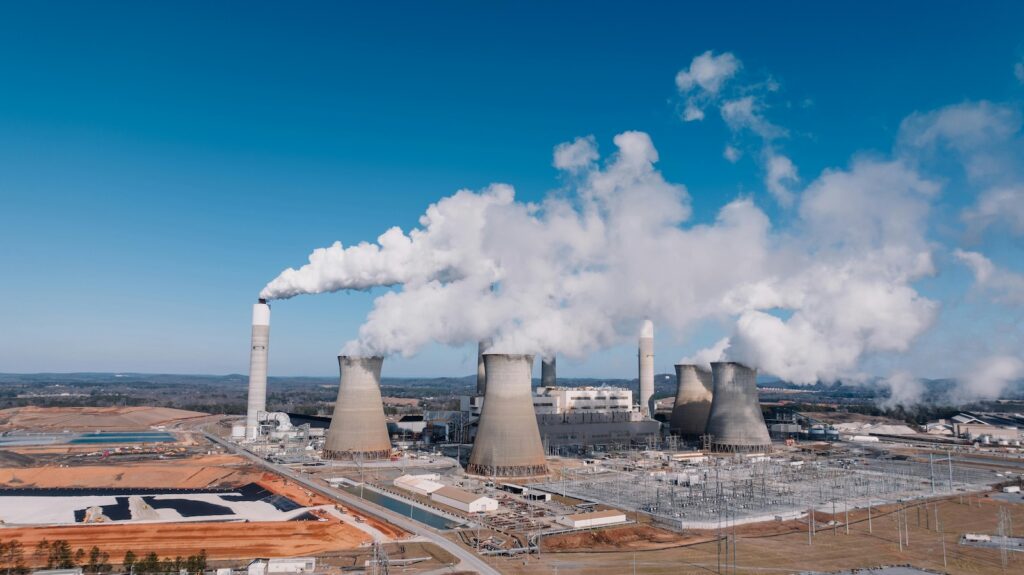
One Navajo Nation official said his government approves of the Trump administration repealing a Biden-era rule concerning power plants because it will preserve jobs for the Navajo people.
Stephen Etsitty, executive director of the Navajo Nation Environmental Protection Agency, told Heartlander News that eliminating the 2024 Carbon Pollution Standards will benefit his nation’s economy.
EPA Administrator Lee Zeldin announced on Sept. 14 that his agency gutted most of the 2024 Carbon Pollution Standards, commonly called the “Clean Power Plan 2.0” by critics.
Navajo Nation President Buu Nygren, who attended the announcement of the proposed rule change last year, said at the time that Zeldin’s decision to repeal the Biden-era rule “re-establishes confidence within the Navajo Nation as it protects Navajo jobs and Navajo energy.”
Etsitty reiterated that support, saying the repeal could help sustain jobs at the Navajo Mine and the Four Corners Power Plant – a coal mine and a coal-fired power plant in San Juan County, New Mexico.
“President Nygren’s underlying theme for all of this is: ‘We need jobs and we need them now. And we need them to be there 20, 30, 40 years from now,’” Etsitty told Heartlander News.
The standards were similar to an Obama-era rule, referred to as the Clean Power Plan, which was struck down by a Supreme Court ruling. The Biden EPA rule would have effectively forced all coal plants and new natural gas plants to reduce their carbon emissions by 90% through carbon capture and sequestration within approximately 15 years to continue operating, which several energy policy experts warned was unrealistic and would harm the power grid’s reliability.
Several environmentalist groups challenged the Trump EPA’s repeal on Sept. 17. When asked what reimplementing the Biden-era regulation would mean for the Navajo Nation, Etsitty said it would hurt the already shrinking job market.
“We’ve already lost a substantial number of jobs,” he said, noting that since the Mohave Generating Station in Laughlin, Nevada, shut down, hundreds of Navajo people trained in the industrial sector, including welders and technicians, have retired or left the industry. “Some of these families had three generations of people that worked in this sector. Now most of that is gone.”
Etsitty added that “if somehow the Trump proposals were to get overturned and reversed, that trend would likely continue … There were efforts to retrain people, but there were no other sectors that they could turn to immediately, and the promise of any jobs coming from full-on development of renewable energy sources … There may be construction jobs, but there’s no long-term jobs for continual operations.”
Etsitty noted that only a few solar projects have been started and completed on Navajo Nation, “so, the trade-off is still a net loss of jobs.”
The Four Corners plant is operating at “greatly reduced levels” and is slated to close in 2031, Etsitty said, though President Donald Trump’s push to revive the coal industry created an opportunity to extend the plant’s life.
He said Nygren jumped on the opportunity to support the administration’s move, as the Navajo Nation still has an interest in fossil fuel, which provides revenue and energy jobs.
The Biden administration set several aggressive climate goals and branded itself as “one of the most supportive Administrations for Tribes ever.”
At one point, it invoked “indigenous knowledge” to crack down on oil and gas drilling opportunities on the North Slope in Alaska. However, several Native Americans who rely on oil and gas to power their economy there were devastated by the Biden administration’s actions and were relieved when Trump reopened the opportunity for economic development in the region.
The Trump EPA also announced a proposed rule to erase all greenhouse gas regulations on power plants on Sept. 14.
When asked if the Navajo Nation has supported that move, Etsitty said, “I have not seen that level of support. One of the things that I’m concerned about, from my perspective as one of the lead regulators in this area, is that the Clean Air Act was amended in 1990 to give tribal governments such as the Navajo Nation an opportunity to assume a regulatory posture.”
“If there’s going to be rollbacks in regulations, we are going to be very concerned if that means that our authority to regulate might be constrained, or reduced or eliminated,” Etsitty said. He added that the reservation’s own experts can best determine appropriate regulations for their land and that tribal standards can differ from federal ones only by being more stringent.


