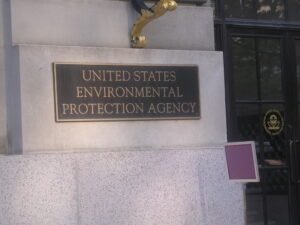
Trump admin announces ‘largest power sector deregulatory action in US history’ as America faces troubled grid
The Environmental Protection Agency on Monday repealed Biden-era power plant regulations and proposed axing even more rules in what it called the “largest power sector deregulatory action in U.S….
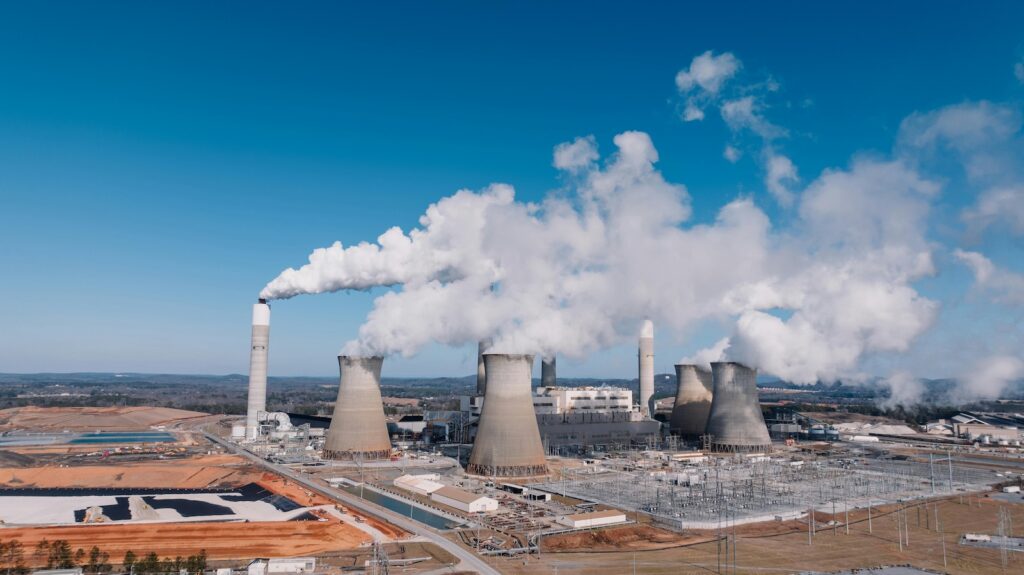
The Environmental Protection Agency on Monday repealed Biden-era power plant regulations and proposed axing even more rules in what it called the “largest power sector deregulatory action in U.S. history.”
Specifically, the EPA issued a final rule repealing most of the Biden administration’s greenhouse gas (GHG) requirements for power plants and announced a proposed rule to gut the remaining GHG regulations stifling the power sector. The agency said the end of the Biden-era standards will save $310 billion and, if the proposed rule is finalized, an additional $370 million in direct compliance costs.
The policy shift is long overdue and is set to strengthen the nation’s power grid and lower costs for consumers, some energy policy experts told Heartlander News.
“The Obama and Biden administrations’ power plant rules were designed to make coal and natural gas generation more expensive while advancing the climate alarmists’ agenda that sacrificed affordability, reliability and national security,” Jason Isaac, CEO of the American Energy Institute, told Heartlander News. “Repealing these mandates will help unleash American energy, strengthen our electric grid and lower costs for families and businesses.”
The Biden administration finalized power plant rules in April 2024 – commonly referred to by critics as the Clean Power Plan 2.0 – that would have effectively forced coal-fired plants and new natural gas plants to reduce their carbon emissions by 90% through carbon capture and sequestration technology within approximately 15 years to continue operation.
Critics have described the Biden EPA’s GHG regulations on power plants as an impractical and roundabout attempt to impose the Obama-era “Clean Power Plan,” which the Supreme Court struck down in West Virginia v. EPA in 2022. The Supreme Court ruled that the Obama EPA overstepped its authority as an administrative agency in attempting to implement the plan, which the Trump EPA noted in Monday’s announcement.
“The 2024 rule was another example of the Democrats’ war on America’s natural resources and attempted to achieve the same unlawful fuel-shifting goals of the Obama-era Clean Power Plan,” the EPA said.
Frank Lasee, president of Truth in Energy and Climate, called the action to repeal the GHG limits on coal and natural gas plants “long overdue.”
“For years, Washington forced premature plant closures and piled costs onto families and employers. This is one of the most important steps President Trump has taken to restore reliability and keep electricity affordable,” Lasee told Heartlander News. “American manufacturers, data centers and communities need power when they need it, not rules that shrink the grid as demand rises. By letting utilities keep useful plants online and invest where it makes sense, this decision strengthens our grids and helps the United States compete for factories and jobs at home.”
After 15 years of static electricity consumption, America’s power demands are climbing amid the proliferation of artificial intelligence, which includes data centers, electrification and onshore manufacturing.
The Department of Energy (DOE) warned in July 2025 that if the U.S. kept phasing out reliable power sources without adequately replacing them, blackouts would increase 100-fold by 2030. The DOE has issued numerous emergency orders to keep coal plants running in the months since.
EPA Assistant Administrator of the Office of Air and Radiation Aaron Szabo told reporters Monday that the Biden administration’s expectation for power plants to minimize GHG emissions by 90% within 15 years via carbon capture and sequestration was unfeasible.
“The Biden administration relied on technology that has not been adequately demonstrated, but the Biden administration didn’t care that they were closing plants and that American jobs would be lost,” he told reporters. “This is in stark contrast to the Trump EPA, who calls the best reading of the Clean Air Act every single time.”
Szabo noted that the proposed rule states that the agency doesn’t hold authority under the Clean Air Act to impose GHG regulations on American power plants as part of a crusade against global climate change, so if finalized, it would bar future administrations from implementing similar schemes.
“The targeted emissions are global in nature, and any potential public health harms are too uncertain, conjectural, remote and convoluted to tie specifically to the U.S. power sector. Therefore, the agency is proposing it is out of its scope to regulate,” the EPA announced.
Szabo argued the major cost savings would result from easing the regulatory burden on utilities, allowing them to make decisions for ratepayers based on cost savings and not being pigeonholed into shutting down facilities.
“Repealing the power plant rule for greenhouse gas emissions is key to the Trump energy agenda. Now, it will have to be defended in court,” Steve Milloy, a former Trump EPA transition team adviser and senior fellow at the Energy & Environment Legal Institute, told Heartlander News, adding that Congress should pass legislation to help ensure that the EPA or the states cannot regulate emissions independently from the federal government.