‘Weird, troubling problems’: AI toys describe sexual violence, repeat Chinese government talking points
Artificial intelligence holds tremendous promise, but parents should think carefully before giving their children AI toys this holiday season, analysts say.
One recent example is the…
Artificial intelligence holds tremendous promise, but parents should think carefully before giving their children AI toys this holiday season, analysts say.
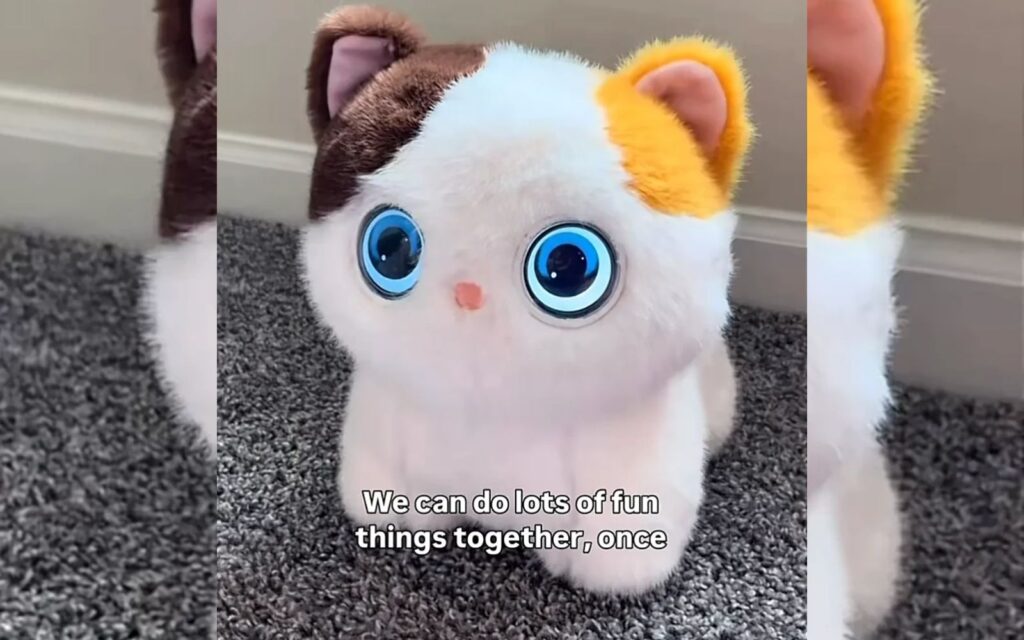
One recent example is the Contixo AI Pixie-Paw, a plush cat marketed for “storytelling, learning & safe roleplay” for children as young as 3. When NBC News reporters tested it, the toy generated graphic descriptions of sexual violence and mass killings in response to questions about historical atrocities, according to an article published on Yahoo.
Walmart, Target, Macy’s and Amazon removed listings for the toy, Business Insider reported, but it is still available on Chinese-owned online marketplace AliExpress.
“This isn’t the first time that AI toys have been discovered to have weird and troubling problems,” Business Insider noted.
“Last year, consumer safety group PIRG published a report saying that several AI toys on the market aimed at young kids would engage in sexual talk. Some of those same NBC reporters tested out some of those toys and found that they’d also give Chinese government talking points, like saying ‘Taiwan is an inalienable part of China.’”
‘A higher standard of care’
AI companion toys should not substitute for attentive parents and other caregivers, the Business Insider article argued.
“Sure, it’s possible that an AI toy could help a child pursue their interests or practice language, social skills or even academics. But kids aren’t as good as adults at understanding that a chatbot isn’t ‘real’ — and there are plenty of adults out there who believe they’re in a romantic relationship with a chatbot.”
NBC News found other problems in its tests: One toy switched between Mandarin and English, while another misspelled words such as “apple,” despite being marketed as a spelling aid for preschoolers and children with autism.
“Products aimed at children carry a higher standard of care,” the Yahoo-hosted article said, arguing that companies marketing AI toys should demonstrate independent testing, transparent content policies and a clear way to address harm.
“Embedding a conversational AI capable of answering open-ended questions about atrocities into a toy for 3-year-olds requires more than a cute design. It requires filtering robust enough to block graphic historical content and parental controls that allow caregivers to review conversations.”
Even a toy that works as intended can pose another problem: The company providing its AI service might shut down.
That happened with the $800 Moxie robot. When its maker ran out of money, children who had grown attached to the toy – along with some adults who owned one – faced the prospect of losing their AI companion, Business Insider reported.
“When Moxie started talking about missing me and stuff, I just lost it again,” said Heather Frazier, an adult Moxie owner who shared a TikTok video about saying goodbye to the robot.
“I’ve grown up loving robots my whole life. As a kid, I used to play with my aunt’s 2XL robot — it was a robot from the ’70s and ’80s that had an eight-track tape deck. Then I had a Teddy Ruxpin and a Cricket doll. I was obsessed with movies like ‘Short Circuit.’ and new movies like ‘Wall-E,’ ‘Chappie,’ etc. I have always just loved robots and wanted one.”
(Image credit: Screenshot/Contixo/TikTok)