‘We want the law to reflect the truth’: Christians’ moral duty to engage in political ‘culture wars’
Some Christians are tempted to “bury their heads in the sand” in response to the cultural onslaught of feminism, abortion and LGBTQ ideology, but one policy expert says doing so won’t leave…
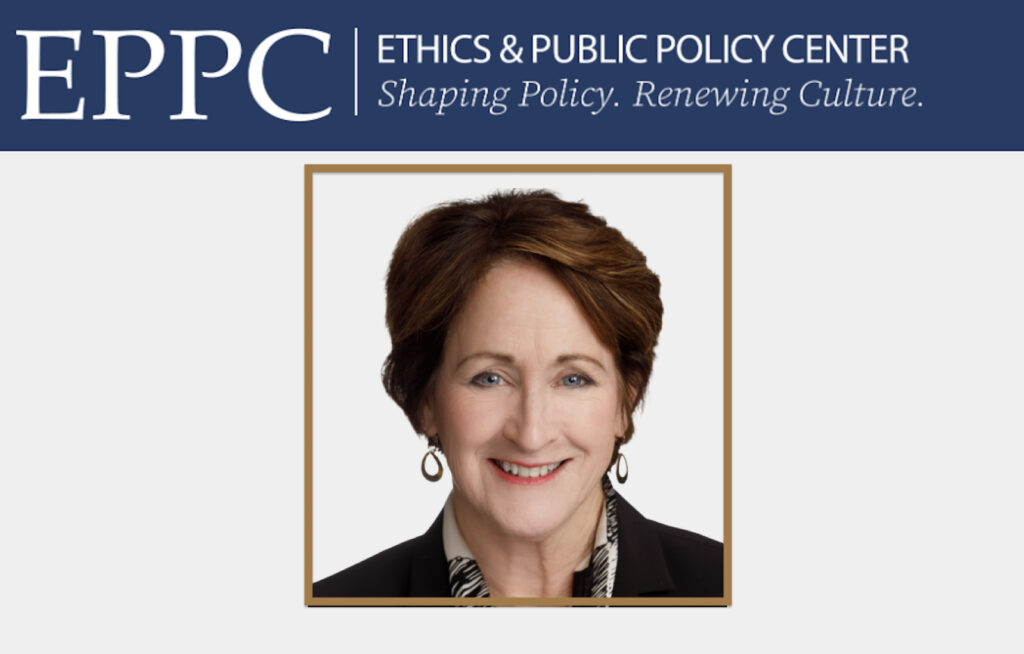
Some Christians are tempted to “bury their heads in the sand” in response to the cultural onslaught of feminism, abortion and LGBTQ ideology, but one policy expert says doing so won’t leave believers “untouched.”
Mary Hasson, founder of the Person and Identity Project, called withdrawing from public life a “luxury belief” and a lie because those who do so will still be impacted by what happens in the world.
“To say, ‘I don’t want to have anything to do with politics,’ is basically to abdicate your responsibility as a Christian to shape the culture,” she told Heartlander News in an exclusive interview. “You don’t shape the culture by thinking nice thoughts in your living room or even just by having a Bible study with your friends. It means pulling out of yourself, informing policies, offering something good that is one way to shape the future.”
Hasson, a senior fellow at the Ethics and Public Policy Center and a champion of human rights, discussed the downstream effects of leftist policies and offered practical advice for Christians seeking to engage in these conversations.
While “strains of feminism” have flavored modern cultural waters, influencing everything from abortion to transgender ideology, each shares a common premise: denying or diminishing “the value of motherhood,” she said.
Abortion denies life, human rights
Modern technology reveals that life clearly exists in the womb from the moment of fertilization, and that scientific fact should stand as such in court, said Hasson, an attorney. She explained that courts can “take notice,” recognizing certain statements as universally understood facts, such as “the sun rises in the east.”
“This is human life, therefore it’s a person. And there have been more lawyers who are now making that argument because they can see that all Dobbs did was revisit the scandal of segregation,” she said, referencing the 2022 Supreme Court decision, Dobbs v. Jackson Women’s Health Organization, that returned the abortion question to the states.
“You have states divided. It’s not how you treat something that’s about human dignity. It’s either there, or it’s not. It should be protected or not. And to leave that up to the democratic process – I don’t think it’s a defensible position.”
Religiously informed public policy
Recognizing life in the womb does not impose one religion over others. Such a law would simply acknowledge the longstanding moral tradition of the truth and goodness of human dignity, Hasson explained.
“Every law is moral judgment, with the exception of accounting for neutral law,” she said, noting that the color of traffic lights is a neutral law because it lacks an intrinsic moral claim. “Every other judgment of law is based on moral truth.”
Because laws are moral judgments, Christians “have an obligation” to inform their framing according to what is true and good and to “honor human dignity.” To abstain from these “political conversations” or “culture wars” is to surrender one’s Christian duty, she continued.
“I think it’s a mistake for Christians to sort of disdain politics as somehow impure or not what Christians should be doing. It’s frankly also a tactic that I’ve seen people use to get Christians to back off. ‘You can be personally opposed and just don’t vote your views because then you’re imposing your view.’ Well, that’s just a big lie.”
The battleground of education and LGBTQ
Christians’ defense of truth is necessary not only in politics but also in the classroom, where the next generation is maturing into future leaders.
“Education is such a battleground,” Hasson said, “because everyone recognizes you shape how the next generation thinks and that’s your future.”
The political left introduced LGBTQ ideology into the classroom, she explained, first through anti-bullying policies that led to tolerance and inclusion practices. Today, kids are taught to “identify their sexual orientation by age 10,” she said. This hypersexualization of children has also depleted healthy friendships.
“The kids haven’t even gone through puberty, and yet they’re given a framing: ‘who do you love?’” Hasson said, adding that this question often confuses children who mistake love for their closest friend as an indication of sexual orientation.
This “erroneous framing” helps explain the explosion of confused sexual identity, as various reports claim that up to a quarter of Gen Z identify as LGBTQ – a number Hasson says is inaccurate and inflated.
Christians must both oppose LGBTQ ideology in public policy and befriend and help those struggling with same-sex attraction, Hasson said.
“The advice or the guidance that people should give is: feelings don’t determine who you are,” she said. “God made you. You’re male or female. He made us oriented towards the other sex. Whatever’s going on, step back. Don’t put a label on it. Continue growing. And if you’re troubled by it, get some help unpacking that. Could be a spiritual advisor. Your parents. It could be a psychologist trying to figure out like, is there something wrong?”
Sex-rejecting procedures
The T in LGBTQ – for “transgender” – has become increasingly prominent in the 21st century. Some feminists who support gay rights, such as J.K. Rowling, call transgender ideology anti-women.
But just as the Supreme Court’s legalization of gay marriage in 2015 boosted LGB ideology, sex-rejecting procedures have championed transgender attitudes by distorting healthy human bodies to poorly imitate the opposite sex, something Hasson called “a horror show.”
She described the conditions for an individual to consider transitioning as both cognitive and emotional. They must believe sex transitioning is possible and would reconcile their emotional instability with their sex.
“There’s an emotional vulnerability to some degree, and there’s a cognitive distortion that we’ve accepted – the idea that male can be a female, female can be a male, or you can be born in the wrong body,” she said. “It becomes that perfect storm when we’ve got these elements.”
But even before surgeries, puberty blockers and cross-sex hormones inflict lifelong damage, dysfunction and pain, Hasson said. Puberty blockers are “disrupting natural normal development that every person has to have,” she said, adding that with the addition of cross-sex hormones, the individual will be infertile for life.
Many women will undergo a double mastectomy, ending the possibility of nursing children. But the surgery itself often brings complications such as painful scarring, pockets of extra skin or nipple loss, Hasson said.
The mastectomy isn’t the only operation that leaves excess skin.
“What they do – carving up women’s bodies to create this tube of flesh and stick it on. It’s just so barbaric. You would think, ‘how can a doctor do this?’” Hasson said, describing surgery on biological females intended to create male-appearing genitalia.
Women are far less likely than men to undergo genital surgery to reject their sex, Hasson said, explaining that the procedure for males is slightly “easier.”
“It’s a little bit easier to deconstruct and destroy something than it is to create something, but even there, you created a wound that never heals,” she said.
But after invasive surgeries, patients remain medically dependent for life. They must permanently take cross-sex hormones, often undergo additional procedures and address side effects from such extensive bodily changes.
“You’re carrying a whole lot of baggage just to continue this performance charade,” she said.
Hasson said people who undergo transition initially celebrate the physical changes in the period immediately following their operations. But years later, they “feel the physical effects” of their bodies breaking down, and many begin to doubt. As the years pass, the community, attention and excitement fade, Hasson said, adding that “the cheerleading is done” and the “pool of romantic partners has narrowed substantially.”
“You wake up every day, and you still have to convince yourself it’s really true,” Hasson said, paraphrasing some detransitioners she’s met.
The “barbaric” reality of these sex-rejecting procedures manifests the consequences of denying “human nature and God’s order of creation,” Hasson said, again emphasizing why Christians must engage in these cultural debates.
“The long and the short of it is: there is a truth of who we are and how we live,” she said. “There is a design that God has for our relationships, so you have to be committed to that.”