U.S. officials claim Iran factions prevent peace talks but doubts remain
U.S. officials are citing internal Iranian divisions for the breakdown in peace talks, but a leading defense think tank says Tehran’s strategy appears more calculated than chaotic.
U.S….
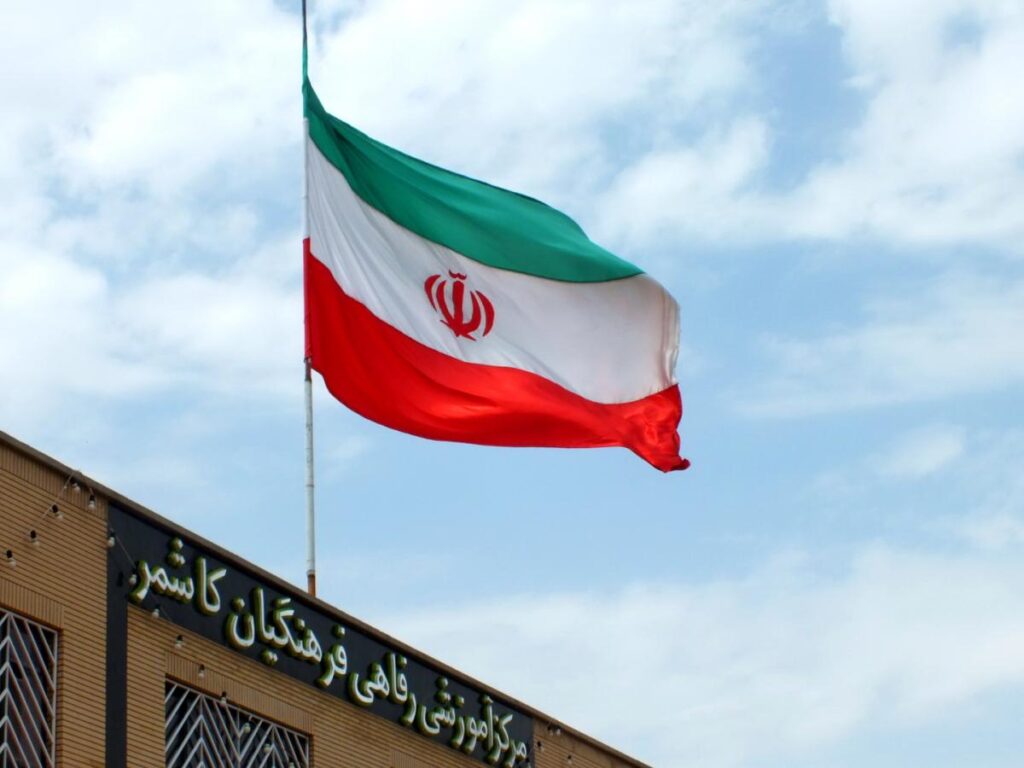
U.S. officials are citing internal Iranian divisions for the breakdown in peace talks, but a leading defense think tank says Tehran’s strategy appears more calculated than chaotic.
U.S. officials and regional mediators have pointed to a struggle inside Iran’s leadership between pragmatists seeking a deal and hardliners pushing confrontation, according to Axios.
The development follows the collapse of the U.S.-Iran ceasefire last week, after Iran expanded its attacks on commercial shipping in the Strait of Hormuz, a key transit point for global oil supplies.
Reuters also reported claims of factional infighting in Iran, with U.S. officials saying the attacks are emanating from “an errant part of their system” involved in the power struggle.
But the Institute for the Study of War (ISW) argues the evidence points to a coordinated strategy by Iran rather than a fractured regime.
“The effect of Iranian negotiators blaming an ‘errant faction’ for attacks in the strait is that it allows the regime to sustain talks and attempt to reap potential economic benefits while the IRGC continues to enforce Iran’s control over the strait,” ISW said.
Officials from mediating countries, including Qatar and Pakistan, reportedly reached the same conclusion as U.S. officials, believing rogue factions in Iran initiated the attacks to derail negotiations, Axios reported.
“They told us, ‘We screwed up. We made a mistake. Let’s keep talking,’” one U.S. official told Axios.
Washington is also claiming Iran does not want continued military strikes but that hardliners are acting outside the control of negotiators.
“There are elements within their system that want to reach a deal, but we can’t make decisions for them,” another official said. “They need to get things under control.”
The dispute over control of the strait has increasingly eclipsed the nuclear issue as the central point of conflict between Washington and Tehran.
Heartlander News previously reported that Iran now considers control of the Strait of Hormuz its “golden weapon,” noting Tehran views the waterway as a greater strategic priority than the nuclear dispute.
ISW said it believes there is broad agreement among Iran’s various factions “that the strait represents critical leverage for Iran.”
Pragmatic Iranian officials appear to be pushing to keep talks alive mainly to head off another major U.S. military campaign and the economic damage it would cause, ISW added.
ISW also said the negotiations give Iran time to rebuild its degraded military.
“The differences between the negotiators and the IRGC are one of immediate tactical means – negotiations or military action – not strategic ends,” the think tank said.
The Trump administration has responded by increasing pressure, telling Iran it must publicly declare the strait open to commercial shipping and pledge to stop firing on vessels.
President Donald Trump said the alternative was that the U.S. would take over the strait.
“We will become guardians of the strait,” Trump said on “Fox & Friends” Monday morning. “We’re going to hit [Iran] very hard and keep the strait and probably run it.”
He later proposed a 20% toll to reimburse the U.S. for providing security for the waterway.
“The Hormuz Strait is OPEN, and will remain OPEN, with or without Iran,” Trump said on social media. “We are reinstating … THE IRANIAN BLOCKADE, so named because it is only stopping Iran’s ships or customers from entering or leaving.”
Trump has since ordered the U.S. military to reimpose the blockade on Iranian ports, removing the last major concession that had helped sustain the ceasefire, The Washington Post reported.
Administration officials have acknowledged the Hormuz standoff has raised serious doubts about whether Iran would honor a broader nuclear agreement, according to Axios.
ISW also said Iran is taking steps to rebuild its drone capacity and harden its nuclear facilities.
Satellite images obtained by CNN reportedly show Iran building a concrete cap over one of its nuclear facilities, known as Taleghan 2, to better protect it from renewed U.S. or Israeli strikes.
The images raise fresh questions about whether Iran violated the terms of the ceasefire even before it attacked commercial vessels in the strait last week, CNN reported.
“The Iranian regime previously used the Taleghan 2 facility to test explosives that are needed to detonate a nuclear device before the regime suspended its nuclear weapons program in 2003,” ISW said.