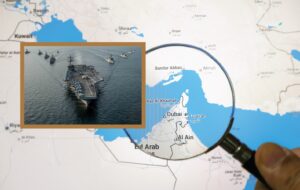
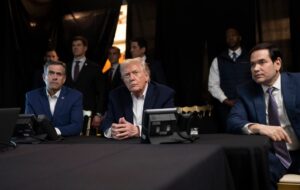
US-Iran conflict continues over control of Strait of Hormuz
President Donald Trump declared the temporary U.S.-Iran truce was over Wednesday after renewed Iranian attacks in and around the Strait of Hormuz.
The comments follow weeks of signaling…
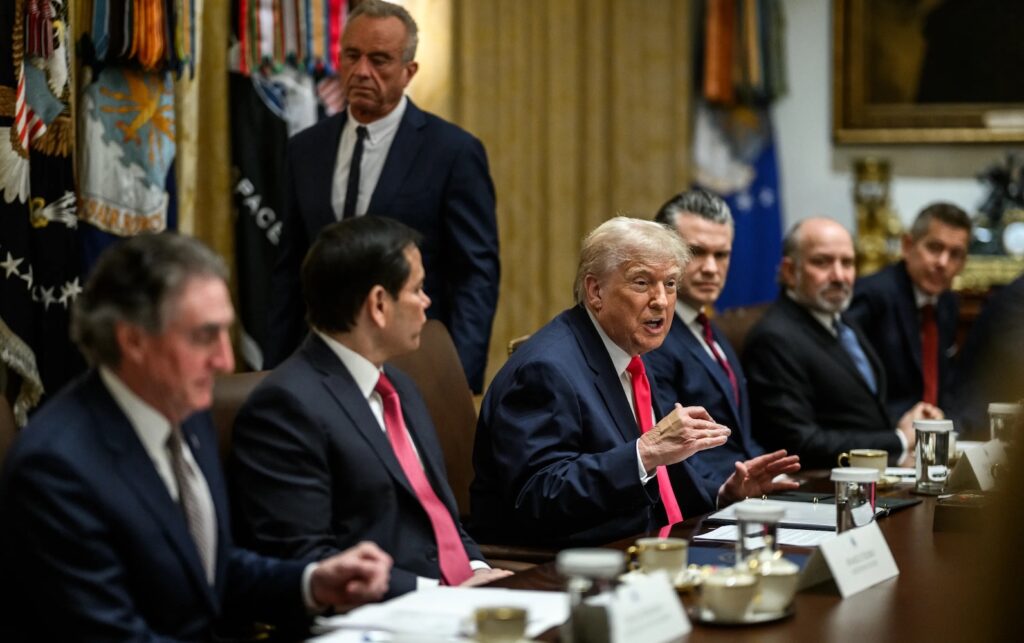
President Donald Trump declared the temporary U.S.-Iran truce was over Wednesday after renewed Iranian attacks in and around the Strait of Hormuz.
The comments follow weeks of signaling the Trump administration is again prepared to use military force after months of unsuccessful diplomacy.
This week tensions escalated after Iranian forces struck commercial vessels in the Strait, with the U.S. responding with airstrikes.
Analysts are saying Iran used the negotiating period to strengthen its leverage over the waterway, according to the Institute for the Study of War (ISW).
“Iran is attempting to coerce Gulf states and others to acquiesce to Iranian control over the Strait of Hormuz after Iran failed to secure recognition of its control over the strait through diplomacy,” said ISW.
Trump’s declaration capped two weeks of increasingly firm signals from Washington.
While administration officials publicly pursued negotiations over Iran’s nuclear program and reopening the strait, reports emerged that the White House also reviewed military options for resuming large-scale operations.
Trump was briefed by Defense Secretary Pete Hegseth and Joint Chiefs Chairman Gen. Dan Caine on options that officials described internally as “finishing the job,” according to a Wall Street Journal report later verified by Trump himself.
“We’re either going to make a deal or we’re going to finish the job. OK,” Trump told reporters in the Oval Office, according to Reuters. “And it won’t be tough to finish the job. I’d rather make a deal, because I don’t want to affect 91 million people,” referring to the Iranian people.
Vice President JD Vance previously described the administration’s thinking in operational terms.
He said the temporary cease-fire gave global energy markets time to replenish oil supplies while allowing the administration to evaluate Iran’s intentions before deciding whether further military action would be necessary.
Indeed, the pivot back to war may have been implicit in a world that simply adapted quickly to the lack of Iranian oil.
“The surge in oil supply is about to collide with a market that, at least for now, simply does not need it,” said JP Morgan’s Natasha Kaneva about oil replenishment, as reported by the Wall Street Journal this week.
In June, even as the Trump administration was signing the cease-fire agreement, the International Energy Agency said demand for oil would remain weak throughout 2026.
“How exactly this plays out is very much contingent on the way Iranians respond to the leverage the president has put on them,” added Vance in an interview with Michael Knowles.
It looks increasingly like Trump has decided the Iranian response is unacceptable.
Iran has been prioritizing control over the Strait of Hormuz even more strongly than protecting their nuclear weapons program, believing it’s the key issue they can leverage against the West, reported Reuters.
“The issue of Hormuz, which is Iran’s golden weapon, is something they now want to take away from Iran, and that will be absolutely impossible,” an unnamed top-Iranian source told the newswire.
In his interview with Knowles, Vance characterized Iranian demands to continuously control trade through the strait as unacceptable, not just to the U.S., but also to the Gulf state allies, such as Kuwait, Qatar, UAE and Bahrain.
A reporter at the NATO conference Wednesday asked Trump about his comments from a month ago, when he praised the current leadership in Iran as “rational.”
This week he characterized Iranian leaders as “sick people.”
“I got to know them,” replied Trump about his change of view.
The sequence of events suggests the administration viewed diplomacy and military force as parallel tracks rather than mutually exclusive strategies.
With Trump now declaring the cease-fire finished and renewed strikes already underway, the central question is no longer whether military or diplomatic options exist.
The question is whether the U.S. will continue to fight a limited war simply over nuclear stockpiles, or be forced to expand the war to wrest control of the Strait of Hormuz back from Iran.
In May, Russian-born American historian Max Boot argued the U.S. having to open the strait was “a worst-case scenario” for the war.
On Wednesday, speaking at the NATO summit, Trump noted his goal hasn’t changed.
“It’s very simple: they can’t have a nuclear weapon,” he said. “That’s what I’m there for.”