Operation Show Me Justice nets 435 arrests, 166 illegal firearms as ATF announces new crime gun center for St. Louis
Hundreds of violent criminals have been arrested, illegal firearms seized and drugs taken off the streets of St. Louis following a massive, collaborative law enforcement operation.
Sen….
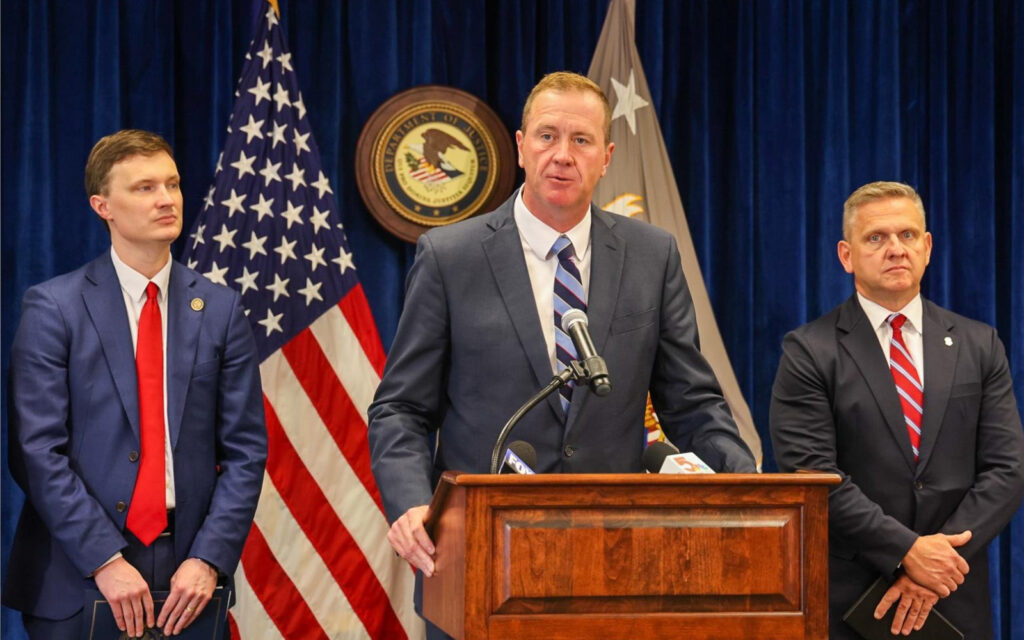
Hundreds of violent criminals have been arrested, illegal firearms seized and drugs taken off the streets of St. Louis following a massive, collaborative law enforcement operation.
Sen. Eric Schmitt, R-Missouri, is touting the results of Operation Show Me Justice, saying the two-month partnership between local and federal authorities is making the region safer.
“As a native St. Louisan, there is no reason why we should accept that violent crime is something that is in the headlines every single day,” Schmitt said during a press conference Thursday. “St. Louis is my home, and I want people to feel safe as a former attorney general.”
Schmitt promised continued advocacy for federal resources.
“We’re going to continue to advocate for more and more help here in St. Louis, so that the grandmother that’s tired of sweeping up the glass on her front porch on Sunday mornings knows that people are there to support her,” Schmitt said.
Operation Show Me Justice by the numbers
• 435 arrests
• 412 warrants cleared
• 166 firearms seized
• 81 kilograms of drugs seized
• $1.2 million in currency seized
Acting Deputy Attorney General Trent McCotter believes the surge of federal agents in St. Louis has helped lower homicide numbers by nearly 50% compared with the same period last year.
“If you have political willpower, and we’re glad that we had it here, and cooperation, then you can make a meaningful difference,” McCotter said. “We’ve seen the results here. We’ve seen the results in other cities and we’re happy to keep partnering with those who wish to assist.”
U.S. Marshals Service Director Gadyaces Serralta emphasized the importance of cross-agency teamwork.
“The United States Marshals Service is very proud to have supported Operation Show Me Justice by removing these dangerous drugs and firearms from the St. Louis streets,” Serralta said. “Strong partnerships make stronger neighborhoods by working alongside our partners and briefing and bringing additional resources to St. Louis.”
St. Louis Metropolitan Police Department Chief Robert Tracy emphasized the human element behind the statistics.
“Every person in St. Louis deserves to feel safe on their block, in their home and going about their daily life,” Tracy said. “Success means families comfortable letting their children play outside, business is confident about investing in this city and neighbors able to enjoy their front porches.”
U.S. Attorney Tom Albus said officials plan to maintain the momentum and continue driving down crime rates.
“We feel like we’ve got the shooters and the killers on their back foot, and we really want to put our foot on the accelerator and just keep driving them down,” Albus said. “But the big thing, success for me, is when people in these neighborhoods really can envision saying, ‘Hey, I can live my life just like somebody living in Chesterfield. I can go to the park. I can go to the store, and I’m not going to be afraid.'”
Beyond the operation
ATF Director Robert Cekada announced that his agency is making a permanent investment in St. Louis.
Thanks to additional funding from the Trump administration, Cekada said ATF is expanding its number of agents and hiring intelligence research specialists over the next two years to help local partners combat violent crime.
Additionally, the ATF will open a crime gun intelligence center in January 2027 to aid local police.
“In that center, we will focus our efforts on further developing leads to identifying violent criminals using crime gun tracing, the National Integrated Ballistic Information Network, and DNA tracing for investigative profiling,” Cekada said.
These new specialists will connect directly with the ATF’s forensics laboratory in Wichita, Kansas. Investigators will collect fired cartridge casings from crime scenes and treat them like fingerprints to identify suspects and track where the guns originated.
“We can identify the people that were responsible for violent crimes, where those guns came from, and develop strategies to ensure we focus our efforts on the trigger pullers,” Cekada said.
McCotter noted that the work is far from finished and that federal partners will continue working every day with state and local police to keep violent crime at bay.
“This is not a one-and-done press conference,” Schmitt said. “We’re going to continue this work. We’re hoping to be some, you know, important announcements down the road, but we’re going to continue to advocate for more help here in St. Louis.”