Kansas City businesses face tariff uncertainty as U.S.-Canada trade tensions escalate
The fight over tariffs between the United States and Canada is creating uncertainty for Kansas City businesses, particularly those with cross-border supply chains, even as local employment data…
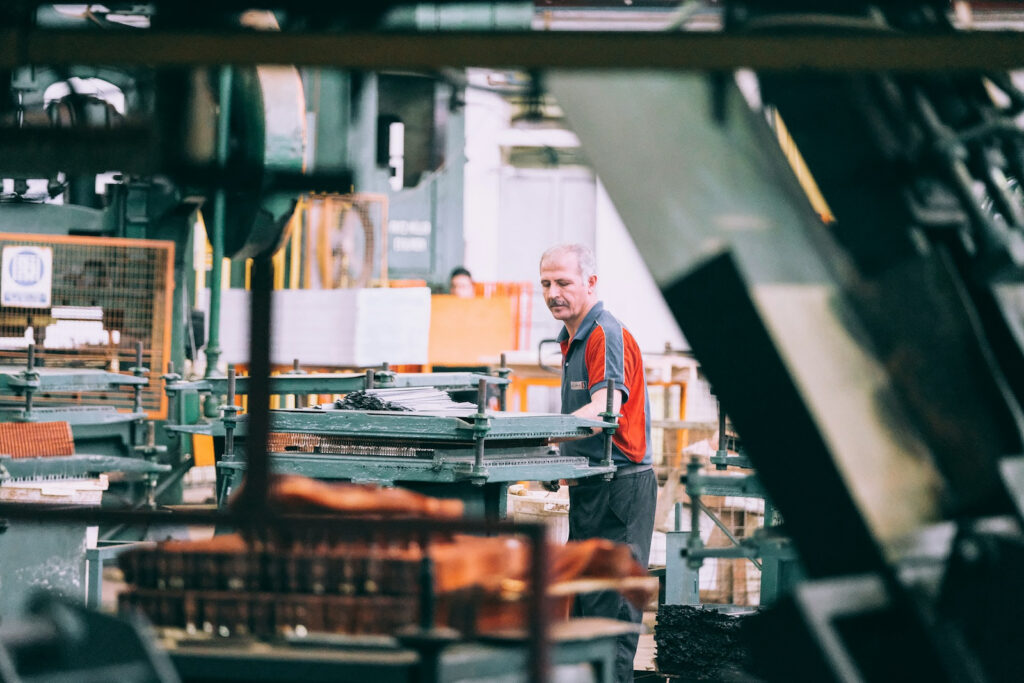
The fight over tariffs between the United States and Canada is creating uncertainty for Kansas City businesses, particularly those with cross-border supply chains, even as local employment data offers little evidence of significant economic damage so far.
The Canadian Chamber of Commerce has highlighted Kansas City as one of the U.S. metropolitan areas most exposed to the trade dispute because of its exports to Canada. But a closer look at the data shows that whatever effect tariffs are having on the local economy, uncertainty over future tariffs may be a bigger concern than the tariffs themselves.
“Kansas City, specifically the Metro area, exports about $4 billion [to Canada]. That represents 37 percent of the overall exports from Kansas City,” said Andrew DiCapua, principal economist for the Canadian Chamber of Commerce, reported Fox 4 KC.
But the report that makes the claim also contains an important footnote warning that it would be wrong to imply the $4 billion represents the local economic impact.
“Data collection is from the address of origin and doesn’t necessarily represent the location of production,” said the report authors. “This means that employment may not be represented in these numbers.”
To put the numbers in perspective, in 2025, the state of Kansas produced agricultural output worth $86 billion, nearly 22 times the amount of exports traveling through Kansas City to Canada.
For sure, Kansas City is an important logistics hub from which many U.S. imports and exports transit to Canada. Imports and exports combined, however, account for less than 6% of the total traffic, while domestic freight makes up more than 94%.
No big change in employment
There is scarce data to show that employment has been significantly negatively affected by tariffs in the Kansas City metro region thus far.
Employment numbers supplied by the Bureau of Labor Statistics show that employment has been somewhat sluggish compared to national numbers, but at the same time, unemployment has dropped substantially.
The metro area has added about 30,000 jobs between February and July 2026, while unemployment has come down from 4.2% to 3.8%, according to BLS data.
Manufacturing, which economists contend is the sector most negatively affected by the imposition of tariffs, has shown 2.1% job growth since February.
Brandon Worrell, owner of KCSP Machine and a member of the board of directors for the Kansas City Chapter of the National Tooling & Machining Association, told Heartlander News that he’s been hiring, and so have many of his colleagues.
While costs are going up, uncertainty is the greatest problem, he noted.
“It creates some uncertainty because you don’t know if that business is permanent,” Worrell said, adding that the new business could quickly return to China or Japan even after companies make big investments.
That’s why the region is particularly vulnerable to a tariff tiff – especially in industries where companies have cross-border partnerships, such as aerospace and automotive.
Ford plant vulnerable
Ford maintains an assembly plant for F-150 trucks in Kansas City that employs roughly 9,000 workers. It’s dependent upon V8 engines supplied by Ford’s Canadian plant in Ontario.
The U.S. automotive giant recently entered into an agreement to invest $500 million to expand the facility after closing its Michigan engine plant in 2022.
Any disruption to the importation of those engines could bring Kansas City F-150 assemblies to a halt, as well as shutter – at least temporarily – the engine facility in Canada, affecting about 14,000 American and Canadian employees.
Currently, the danger is more acute in the aerospace industry.
Aerospace impact
Canadian aircraft manufacturer Bombardier, which has a U.S. headquarters in Wichita, Kansas, buys about 50% of its parts, including its engines, from American companies.
A fact sheet by the Canadian Consul General in Denver notes that Kansas exports over $300 million worth of aircraft parts and equipment to Canada annually.
That trade may be in danger.
“If they want our Market, they must build here, and stop treating America like a ‘piggybank,’” Trump wrote on social media about Bombardier on Tuesday.
The post was part of an ongoing row between Trump and Canadian Prime Minister Mark Carney over tariffs, retaliation and the failure to reach a trade agreement.
The aviation company has 3,500 workers in the U.S., with an additional 2,800 supplier jobs, along with 18,000 workers in Canada, reported Reuters.
A shutdown in American operations would likely lead to a standstill at the company.
Negotiations, retaliation and court decisions on tariffs have made it difficult for businesses to plan.
On Tuesday, President Donald Trump slapped Canada with another $50 billion worth of restrictions under federal procurement bans in retaliation for Canada’s retaliatory tariffs, as both sides escalated.
While Worrell has witnessed some indication tariffs have helped reshore manufacturing in America, changes in policy, a change in administration or a different tariff schedule could move that manufacturing back overseas.
“All that tooling comes from overseas too, and if it’s subject to tariffs, it’s very painful to try to grow your business,” said Worrell. “It’s a very capital-intensive business.”
(Image credit: Photo by Sam Moghadam on Unsplash)