‘Free-for-all’: Audit finds reasons for citizen ‘mistrust’ in Kansas’ largest city-county government
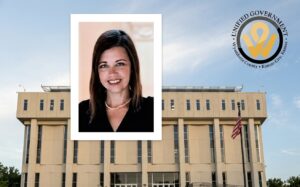
Carolyn Caiharr is hoping for something of a reset of the Wyandotte County/Kansas City, Kansas, Unified Government.
A preliminary audit of the UG, requested by the state representative, has…

Carolyn Caiharr is hoping for something of a reset of the Wyandotte County/Kansas City, Kansas, Unified Government.
A preliminary audit of the UG, requested by the state representative, has revealed discrepancies in funding – and what she says is a stunning lack of state laws guiding the sprawling operation.
The report by the nonpartisan Kansas Legislative Division of Post Audit cites $40 million in unaccounted-for funds in 2024 alone, as well as discrepancies in how rural residents – and those in incorporated Bonner Springs and Edwardsville – are taxed and treated.
For example, while utility fees – known in this case as Payments in Lieu of Taxes (PILOTs) – are collected countywide, the revenues accrued solely to Kansas City, Kansas, for many years, Caiharr says.
PILOTs off course
The PILOTs in question are roughly double what utility franchise fees would be, she says – and such franchise fees would normally be set aside for the areas where they’re collected.
“So, if [the Board of Public Utilities] is using a right-of-way in Bonner Springs, or right-of-way in Edwardsville, or right-of-way in Kansas City, Kansas, the franchise fee goes to that [particular] city for maintenance of the right-of-way,” she tells Heartlander News.
For years, however, all those monies went to the Kansas City, Kansas, General Fund, she says.
“The Unified Government has taken the position that the PILOT is perfectly legal, then they said it wasn’t legal in 2024, then went back on their word and are back to insisting it’s legal.”
Caiharr says she’ll shine a light on this contentious subject during her next session in Topeka.
“Part of the issue is, when they allowed the consolidation of the unified government, there was no state mandates, no state oversight on how that money would be split up, how to account for mixing of these departments and these funds and the manpower and the equipment.
“And so it’s just been a free-for-all.”
“A new starting point”
“This will be a great opportunity to make a new starting point and say, ‘OK, we’ve seen that there need to be guardrails in place. They’re very much lacking. And so now, where can we bring these guardrails in to protect Wyandotte County taxpayers?’
“I think just bringing some of these concerns to light in Topeka, and getting an outside look on it, has been really beneficial and will help the people of Wyandotte County.”
The audit avoids getting political but notes that missing or misappropriated funds can cause political unrest.
“Recently,” the report concludes, “stakeholders from some areas of Wyandotte County outside of Kansas City expressed concern that county funds were not appropriately shared or distributed. While there are no proportionality rules, we examined inter-local agreements and other operating requirements for county funds.
“During our limited review of certain county-focused funds and services, we found many funds and services were operating as expected or required. However, we noted an incorrect allocation of the highway funding, improper cost allocations between Kansas City and the county for one department, a few inaccuracies in budget information and record-keeping issues with interagency agreements.
“The issues we identified pointed to UG management’s errors or lack of oversight related to statutory requirements, departmental allocations, operational transitions and record-keeping. Given the heightened scrutiny the UG may receive in its unique environment, these errors could contribute to continued mistrust by stakeholders.”
“They should be concerned”
KMBC News spoke to Frank Ramirez, former chief of staff for KCK Mayor Christal Watson.
“I do think [residents] should be concerned,” Ramirez, who has a background in finance himself, told the station.
“He said Wyandotte County residents living outside KCK expressed those same concerns to Watson on the campaign trail,” the station reports.
The UG “misappropriated $313,000 in state highway money,” KMBC reported, quoting a post-audit official as noting that “the UG placed the county money in the county general fund instead of the specific road and bridge fund as required by law.”
To add insult to injury, Caiharr says the UG’s own legislative auditor also has been paid exclusively with county money – even though most departments are funded 70% by KCK and 30% by the county.
“There were several interlocal agreements that were not signed or not fully executed,” Caiharr adds.
The UG’s response
The UG is creating a “central depository of signed legal agreements” as a result of the audit, Interim County Administrator Alan Howze writes in a formal response to the state.
“As the audit shows,” Howze writes, “funds are managed per state statute with county revenues funding county services. This includes departments such as the Sheriff, Jail, District Court, District Attorney, Appraiser, Recorder of Deeds, and Health Department. These services are provided to all residents and businesses of Wyandotte County.
“The audit also shows that services that are shared among city and county, such as Human Resources and Technology, have their costs allocated in line with UG Policy of 70% city funded and 30% county funded.”
Howze acknowledges “the method the state highway funds are being distributed [by the UG] is not consistent with state statute.”
But there’s a good reason for that, he adds:
“Because Wyandotte County has only a small geographic area of unincorporated land with only a portion of several small roadways, the statute does not contemplate situations such as this. The statute does state that 10% of these funds should be deposited into a separate county highway fund; however, that would disproportionately fund any infrastructure needs of this area, which has a very small population and limited number of lane miles.
“Instead, the UG has been allocating these funds in a commonsense way, based on the percentage of population within each incorporated area as well as the unincorporated area. The result of this is that the cities of Edwardsville, Bonner Springs, and Kansas City Kansas have been receiving slightly more funding than they would have otherwise if the statute were applied as written.
“To correct this situation, the UG will deposit 10% of the funds into a fund for county unincorporated roads until such time as the statute can be amended to more equitably distribute these funds.”
Where from here
It’s likely both the UG and residents will seek competing new legislation next year to either clarify or correct what they see as injustices or fallacies in the current consolidation arrangements.
“The residents of Wyandotte County are incredibly thankful to finally have Topeka’s attention,” Caiharr says when asked what kind of feedback she’s getting from constituents.
Indeed, Heartlander News’ previous story about the audit was heavily circulated on social media pages devoted to dissatisfaction with the UG. Caiharr said at the time that “residents in Wyandotte County have been requesting an outside audit for years and years.”
“I’ve gone directly to the Unified Government and requested better accountability and transparency for years with no real results,” she messaged Heartlander News on Monday. “Now I’m able to stand for our community at the state level and make a real positive change.”