Freshly minted lawmaker ignites long-sought audit of powerful Kansas City-area government
Frustrated residents of the combined Wyandotte County/Kansas City, Kansas, government have sought accountability for its use of tax money for many of the years since the two entities merged into a…
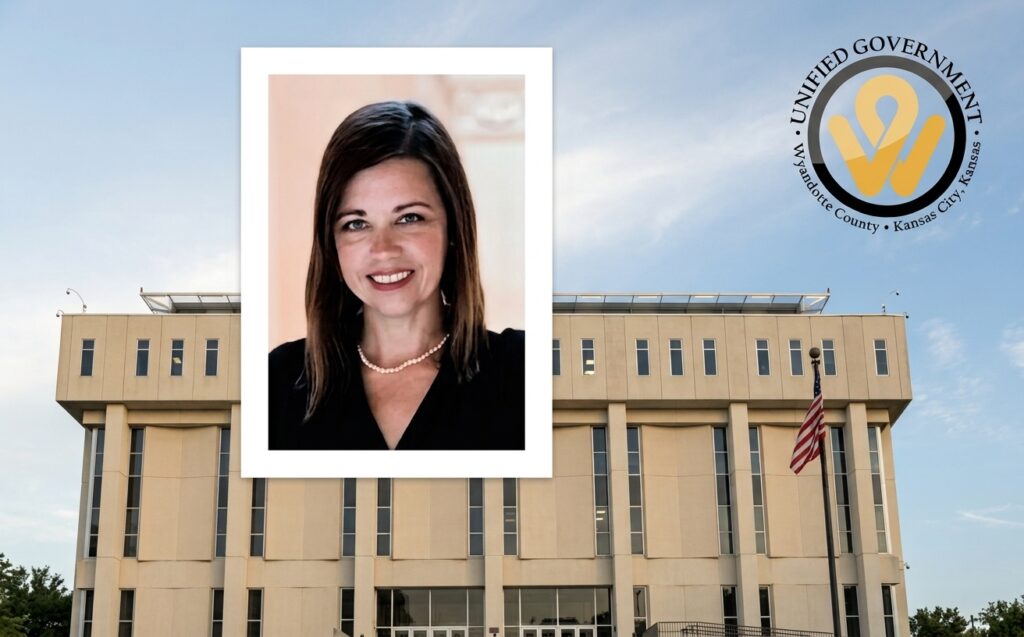
Frustrated residents of the combined Wyandotte County/Kansas City, Kansas, government have sought accountability for its use of tax money for many of the years since the two entities merged into a unified city-county government in 1997.
Remarkably, their new state representative may have achieved that reckoning mere months after taking office.
Although a freshman legislator this past session, after being appointed last fall to replace her resigning predecessor, Rep. Carolyn Caiharr this spring convinced her colleagues on the Legislative Post Audit Committee to investigate the Wyandotte County Unified Government’s spending and governing.
It comes after distrust and dissent that has been building for nearly 30 years.
“Residents in Wyandotte County have been requesting an outside audit for years and years,” Caiharr tells Heartlander News.
Annexed by a failing city
“The consolidation has been in place for over 25 years now. We look around and a lot of people go, ‘Where in the world are the tax dollars going?’ Many of us feel like our county has been annexed away from us into a larger city – and that larger city, by the way, was making terrible financial decisions before they started controlling our county as well.
“And so, the concern: Are county funds being funneled into Kansas City, Kansas, to help support a failing government?”
That concern’s validity can be traced back to the 1997 public vote to consolidate KCK and WyCo – even by the admission of the consolidation’s supporters: A largely glowing assessment of the merger by local NPR station KCUR in 2015 makes it sound for all the world as if it was simply a bailout of a failing KCK.
“Imagine, for a moment, that it’s 1997,” the article reads. “Kansas City, Kan., operates its own city government, and the city is in a tailspin. The property taxes are the highest in the state. People are moving out as fast as they can pack up the truck, fleeing to nearby Johnson County or over the state line to Missouri. The city government is hit with scandal after scandal, plagued by rumors of patronage and corruption. There isn’t a movie theater or shopping. A new grocery store hadn’t opened in the urban core in decades.
“‘We were in a deep abyss,’ says former city administrator Dennis Hays. ‘We had to try something. We had to go for a Hail Mary pass.’ …
“Unifying the governments sent the message that KCK was putting its corrupt past behind it and opening for business.”
Did it really leave bad government behind?
Others aren’t so sure the corruption – or at least the inefficiencies or patronage – were indeed left behind. Perhaps the audit will tell the tale.
There’s also the question of whether the UG treats rural and small-city residents equitably, as compared with the considerable gravity of Kansas City, Kansas – which was the state’s second-largest city until it was eclipsed by Overland Park in 2000.
As the sitting mayor of Edwardsville – along with Bonner Springs the only other incorporated city besides KCK fully contained within Wyandotte County – Caiharr has a front-row seat to the frustrations about the UG outside of KCK.
Thus, the audit.
Distrust and dissent
The Kansas Legislative Division of Post Audit, a nonpartisan auditor under the Legislature, studies state and local government operations at the direction of the 10-member Legislative Post Audit Committee to see if particular entities and agencies are following the law, spending public monies efficiently and getting desired outcomes.
Caiharr’s having won approval for the WyCo UG audit – now ongoing and expected to yield results in late fall – is remarkable, not only given her freshman status this year but also the innumerable requests for post-audit studies.
“When I get to Topeka, it’s interesting how little trust there is for the unified government,” she says. “The state is who allowed this consolidation. And so, I put a lot of that responsibility on the shoulders of the state: ‘Hey, you guys allowed this without guardrails to protect the residents, so please help me right the ship here and get us some accountability for taxpayers.’”
Outside of possible financial irregularities, Caiharr isn’t sure what to expect from the audit – that is, if the state is able to conduct it thoroughly.
“My understanding from a previous outside audit was that the Unified Government was not very cooperative with the information,” she explains, “and so a lot of it will depend on what information our state team gets access to.”
Ultimately, she says, the audit could result in changes in policies and even laws.
But therein lies another problem: Caiharr argues the UG was set up with precious few laws guiding its governance and transparency. In other words, there are few laws for it to even violate.
Nothing to see here?
Opponents of the audit, she notes, simply claim “it’s just not necessary.”
“‘Nothing to see here’ was basically the argument – that everything is accounted for, they’re within their guidelines and it’s a waste of time.
“I personally, as a mayor, would welcome an audit – I mean, especially if my city didn’t have to pay for it. Why wouldn’t you want to find [out] if there’s something you can do better? Why wouldn’t you want to find if there’s a way you can do business with more efficiency and serve your people better?
“That was really shocking to me, to get such friction there. It was basically a ‘nothing to see here’ argument – which all of us who live in Wyandotte County have been told for years.
“But we know better by experience.
Did consolidation bring efficiency?
“I actually did community meetings almost two years ago now throughout Wyandotte County, met with residents in all parts of the county and said, ‘OK, it’s been over 25 years of consolidation. Did the consolidation deliver what it promised to deliver? Did it bring efficiency? Did it bring a reduction of taxes and better services to our people?
“And the results I got was a resounding ‘no!’ Our people are demanding better service and more accountability for their tax dollars.”
The audit isn’t the first accountability measure Caiharr has achieved in her short time in Topeka. She also got the Legislature to correct a situation in which the WyCo library board members were able to vote to levy taxes outside of their areas of jurisdiction.
“I don’t have a lot of faith in internal accountability from Wyandotte County,” she says. “I’ve asked for accountability and couldn’t find it year after year, and so went to the state and got things fixed.
“And so, I think it’s going to take external pressure to get things done.”
(Image credit: Carolyn Caiharr, pictured with Wyandotte County/Kansas City, Kansas municipal building; image created using Gemini AI)