‘Fabricating data’: Pollsters see reform, reckoning ahead for media, industry after polling scandals
A series of fabricated political polls that received widespread media coverage is prompting calls for greater transparency and accountability in the polling industry, with experts warning that the…
A series of fabricated political polls that received widespread media coverage is prompting calls for greater transparency and accountability in the polling industry, with experts warning that the fallout could further erode Americans’ trust in elections.
Some are urging pollsters and news organizations to change how surveys are conducted, evaluated and reported, while others see the upcoming midterm elections as a test of whether public confidence in political polling can be restored.
Pollsters interviewed by Heartlander News said the recent scandals exposed weaknesses not only among pollsters who fabricate results but also among media outlets and aggregators that give questionable surveys credibility.
Political consultant Dick Morris, who has worked for both Republicans and Democrats, called the midterms an “acid test” for the industry and the media.
The controversy comes as public trust in the election process remains near historic lows, according to Pew Research Center data.
Last week, prominent poll aggregator FiftyPlusOne reported that results attributed to pollster Wedgewood had been obtained “by fabricating data.”
The Wedgewood poll was included in an aggregation by The New York Times. The Times concluded that some polls may have influenced the course of actual elections.
Michigan Democrat state Sen. Mallory McMorrow said the Wedgewood poll pushed her out of the race for the U.S. Senate after it claimed she was the only Democratic candidate who would lose to Republican nominee Mike Rogers.
A separate investigation by FiftyPlusOne also raised concerns about pollster SoCal Strategies after an anonymous source told the aggregator there were problems with “some” of the company’s surveys, but not all of them.
SoCal Strategies’ website and X account subsequently went offline, The Washington Times reported.
The latest incidents follow an August episode involving Median Strategies, which also fabricated polling results and was reported to have influenced races in Wisconsin and Los Angeles, according to Heartlander News.
“I think the fake polls that we are seeing pop up are a bigger problem for the media industry, the news industry, and for the polling aggregators than for the pollsters,” Scott Rasmussen told Heartlander News, adding that the media has been irresponsible for a long time.
“I can remember back in the early ’90s when I was the first pollster to put data on the internet. I was shocked and horrified because … newspapers, and people would cite the poll without having ever called me, without having done any checking whatsoever.”
A Rasmussen survey of 1,107 likely voters in August found that only 28% trusted polls, while half believed polling had not improved.
Media shares blame
Chris Wilson, CEO of data intelligence company EyesOver, which conducts private internal polls rather than surveys for publication, said polling aggregation and the media environment have made it easier for fabricated surveys to gain credibility they otherwise might not receive.
“We spend years debating whether pollsters are accurately measuring public opinion,” Wilson told Heartlander News. “I do it for campaigns and the ones who do it for the media. They don’t have the same level of responsibility that I do because if I’m wrong, I’m not going to get hired again.”
Morris said one challenge for pollsters is measuring which respondents will actually vote.
People who are angry or upset may be eager to participate in a poll but less likely to cast a ballot, he said.
“The election coming up, the midterms, are going to be really the acid test as to whether polling remains an effective tool for predicting elections, partially because the elections have become so close that relatively minor changes in polling could change the predictive outcome,” Morris said.
Rasmussen argued that news organizations focus too heavily on the current standings of candidates instead of using polls to understand voters’ attitudes and concerns.
“One of the things that I think gets lost in this, and one of the things that hurts our understanding of the public, is the obsession with the horse race polling,” Rasmussen told Heartlander News. “You know, if you’re trying to really listen to what voters are talking about and what voters are interested in, the elections are not the best vehicle to understand that. And election polling tells you nothing about underlying voter attitudes.”
Rasmussen, a longtime Republican-affiliated pollster, said he supports an embargo on releasing polls during the final two weeks of an election cycle.
“It doesn’t add anything new to the debate. It’s just noise at this point,” Rasmussen said, adding that such a policy would challenge both the media and pollsters.
Wilson opposed an embargo but urged pollsters to provide a minimum level of transparency about how they produce their results, arguing that professional standards should apply to internal polling as well.
He said “the crimes of omission may be even more consequential” because pollsters can influence public perceptions when they fail to disclose how their results were obtained.
Margins of error, for example, can vary depending on how much money has been spent on a survey, Wilson said. But a margin of error, whether high or low, does not necessarily establish whether a poll’s results are valid.
“You’ve got media organizations that don’t understand sampling and end up interviewing way too many highly educated people compared to lesser college graduates, or not getting enough seniors and way too many young voters,” Wilson said.
The result, he added, can be a misleading picture of public opinion.
“So you got the first group that manufactures the data and then the second group that gives them legitimacy and neither of them are good,” Wilson said.
Asked whether the scandals had helped or hurt his business, which depends on producing accurate results, Wilson said, “The jury is still out.”
“My market is the accurate one,” he said. “I think people know if they need accurate, they don’t pay me to tell me what they want to hear. They pay me to tell them what’s actually happening.”
Morris sees the midterms as a turning point for public confidence in political polling, with the results likely to shape perceptions of whether polling errors reflect flawed methods, deliberate manipulation or otherwise accurate measurements.
“So is this election significant because it will really tell us whether the errors in polling are serious and whether they’re deliberate, or simply whether the polling is accurate,” he said.
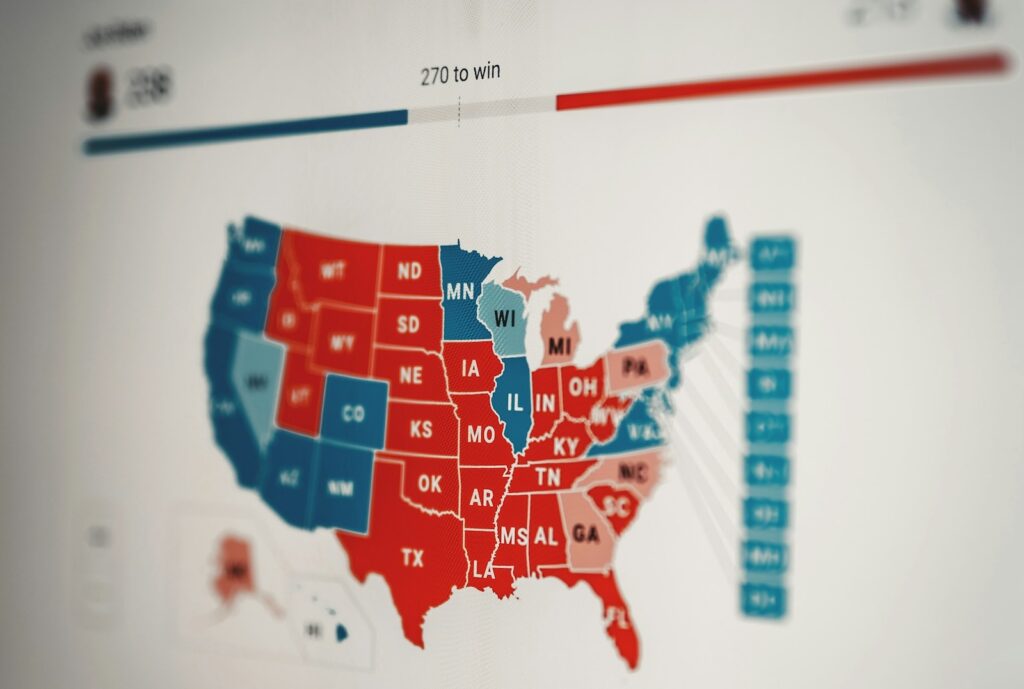
(Photo by Clay Banks on Unsplash)