Data centers can pay their way in Johnson County, Kansas, and deserve a fair hearing
Residents across Johnson County spent this summer raising concerns that data centers will strain the water supply and drive up electric bills. Those worries filled city council meetings from Gardner…
Residents across Johnson County spent this summer raising concerns that data centers will strain the water supply and drive up electric bills. Those worries filled city council meetings from Gardner to Edgerton, and in Edgerton alone, more than 200 residents signed a petition seeking to put a data center ban before voters.
I have followed this debate since it began, and I have reached a conclusion some of my neighbors may not expect: Johnson County should welcome data centers, and the most common concerns have stronger answers than the headlines suggest.
Longtime residents know how much Johnson County has changed. Land that sat open a generation ago now holds neighborhoods and businesses, and communities once considered the outskirts of Kansas City have become economic centers in their own right. The U.S. Census Bureau estimates that the county reached 636,906 residents in 2025, up 4.4 percent from 2020, and each stage of that growth faced skeptics of its own.
Developers seeking the state’s data center tax incentive must invest at least $250 million. Kansas exempts business equipment from property tax, but land and buildings remain on the tax rolls, so a large facility pays far more in property tax than the field it replaces.
Homeowners benefit from that difference because new housing pays property taxes but also brings new students and adds demand on schools, roads, and emergency services. A data center contributes tax revenue while adding few of those costs, which gives schools and local governments new resources without a matching new expense. In a county where rising property taxes remain a persistent concern, that trade deserves serious consideration.
The employers Johnson County hopes to attract depend on computing power, as do the services residents use every day. Even the cloud requires a physical home, and residents now have a say in whether some of that investment lands here or in another community.
Kansas lawmakers wrote protections into law before the first project broke ground. Senate Bill 98 bars data centers from receiving discounted economic development electric rates and requires qualifying projects to sign a ten-year electricity agreement and commit to conserving and reusing water. Each project must also clear a security review by the Kansas Intelligence Fusion Center, whose oversight board can reject any proposal that threatens critical infrastructure.
Johnson County should also hold firm on local incentives. The county does not need to pay companies to locate here, and strong projects should not require it. When Gardner declined to offer public incentives this spring, the developer of a proposed 300-acre campus withdrew, a result that reflects the market working as intended, since the projects worth pursuing can stand on their own.
Case-by-case decisions like Gardner’s are also why blanket bans are the wrong approach. Gardner and Edgerton both rejected moratoriums this summer and chose to evaluate projects one at a time, which makes sense in a county where Overland Park differs from Gardner and Olathe differs from De Soto. A project suited to one community may be wrong for another, and a statewide moratorium would ignore those differences while signaling to every company that Kansas is closed for business.
Residents and local officials should focus this debate on where projects go and on what terms they arrive. Before any project advances, residents deserve to know whether local infrastructure can support it and who will cover the cost if it cannot. A project that depends on local tax breaks to succeed is likely one the county can pass on.
Generations of Johnson County residents built this community by weighing growth on its merits, and the county commissioners and city council members now reviewing these proposals owe every project that can answer those questions the same fair hearing.
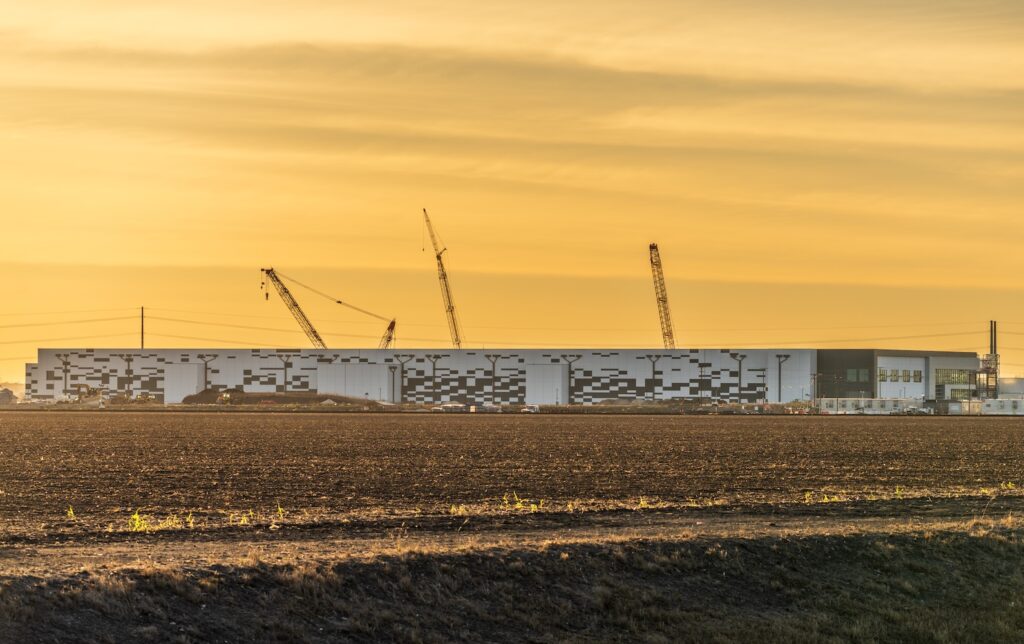
(Image credit: Hutto, TX – 31 December 2025: Sunset view of construction of new Skybox Power Campus data colocation center in North Austin Texas)