Canada, US work on deal hours before high tariffs take effect
Canada is seeking a last-minute deal with the U.S. in an effort to avoid President Donald Trump’s impending 50% tariffs on billions of dollars of goods, set to take effect 12:01 a.m….
Canada is seeking a last-minute deal with the U.S. in an effort to avoid President Donald Trump’s impending 50% tariffs on billions of dollars of goods, set to take effect 12:01 a.m. Wednesday.
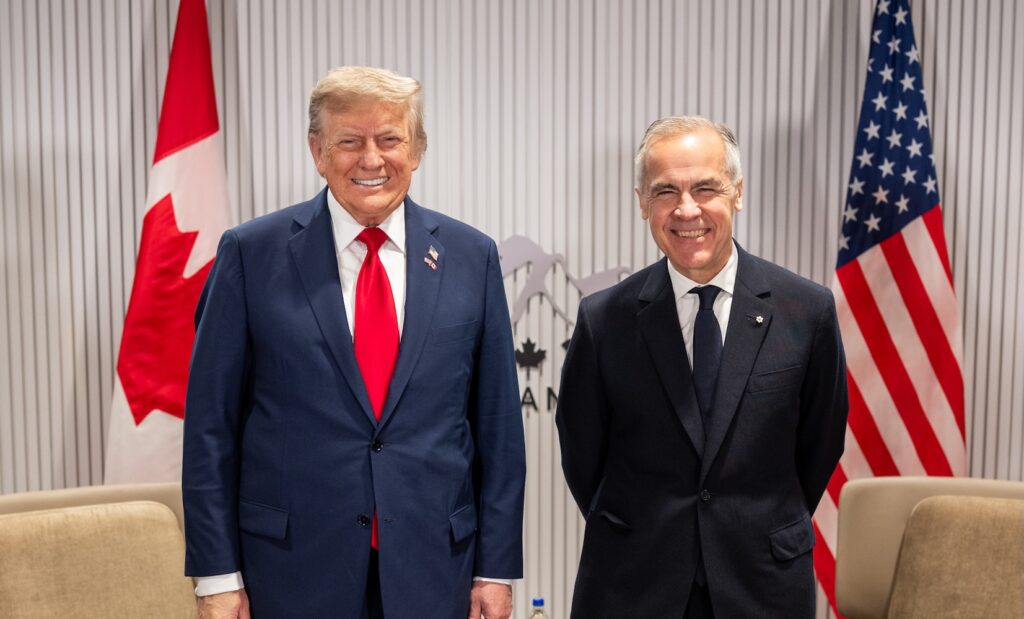
Trump and Canadian Prime Minister Mark Carney spoke on the phone Monday regarding the scheduled tariff deadline and possible trade negotiations, according to AP News.
“We are negotiating,” Carney told reporters Monday. “The negotiations are very intense and delicate. This is not the time to talk about negotiations in public.”
More than $2 billion in goods cross the 5,525-mile U.S.-Canada border daily, according to AP.
Trump announced a 50% tariff in July on Canadian goods including cars, alcohol and dairy, citing Canada’s discriminatory treatment of U.S. commerce in those sectors.
According to a White House fact sheet, last year Canada imported fewer American cars (down 22%) and less alcohol (down 81%), costing Americans an estimated $5.6 billion in car sales and $582 million in alcohol sales. Canada also imposed a high tariff on U.S. cheese but did not inflict such prices on various European imports including cars, alcohol and dairy products, the White House said.
The new tariffs would affect products “ranging from wine to hockey sticks to cement,” and were set to take effect 30 days after Trump’s order, signed July 20.
His action falls under Section 338 of the Tariff Act of 1930, which allows the president to impose tariffs when another country “disadvantages U.S. exporters relative to the exports of another country,” according to the White House.
Trump’s tariff strategy has brought 18 deals for new U.S. export markets and helped domestic manufacturing achieve its fastest growth in four years, the White House says.
“Through negotiations with foreign trading partners and the strategic use of tariffs, President Trump has secured trillions in private and foreign investment to bring American jobs and manufacturing back to the United States while diversifying global supply chains and reducing dependence on adversarial nations,” the statement reads.