Analysis: Trump asks Vance to pivot from Iran war to domestic issues amid criticism of VP
One day after reports surfaced that Vice President JD Vance was seeking direct talks with Iran, President Donald Trump said Vance should focus on problems in Democrat-run cities.
The…
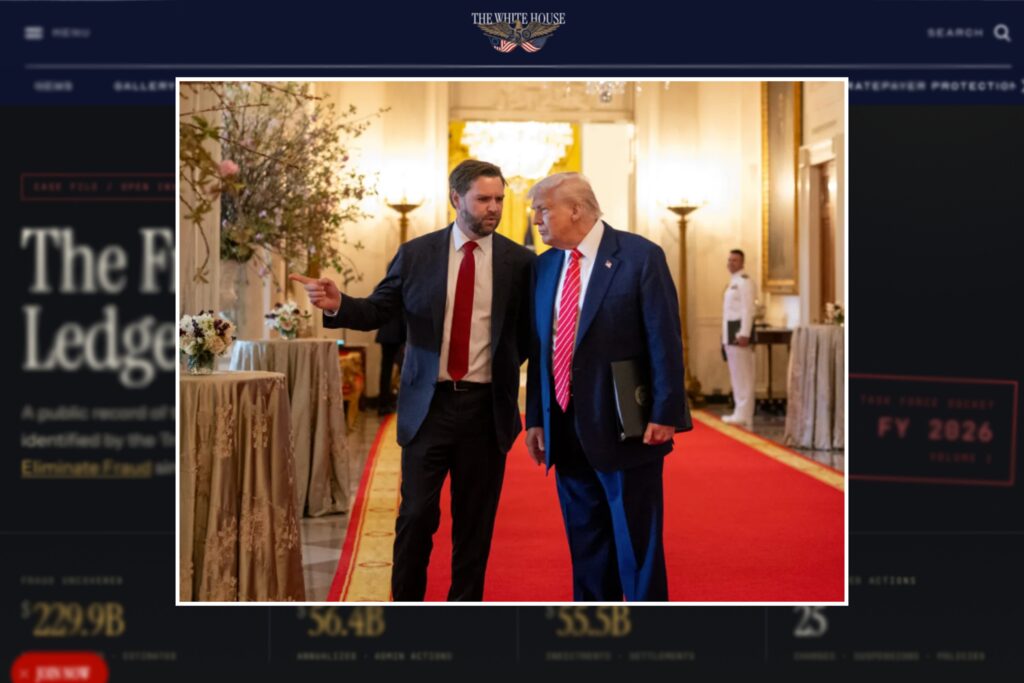
One day after reports surfaced that Vice President JD Vance was seeking direct talks with Iran, President Donald Trump said Vance should focus on problems in Democrat-run cities.
The comments may mark the strongest rebuke yet by the president to his second-in-command for concentrating on the Iran war during the midterms.
Heartlander News reported that Iran was attempting to force the U.S. into peace talks following Republican losses in the midterms, which Vance attributed almost exclusively to the Iran war.
Previously, Reuters reported that the Iranian regime specifically sought Vance as the U.S. negotiator because of his well-known anti-war views.
The Wall Street Journal reported Thursday that the vice president was considering fresh face-to-face talks with top Iranian security officials to end the war.
The talks would presumably follow up on a letter Vance sent to Mohsen Rezaei, Iran’s security chief.
“The President was enthusiastic about the letter,” one anonymous White House official told Axios.
If so, Trump, who is often mercurial, has since changed his mind. Reuters reported that he denied authorizing the letter aimed at restarting talks.
Previously, Heartlander News reported that any communications between Vance and Iran were intended only to facilitate the delivery of humanitarian aid, according to the president.
Rezaei delivered his response to Vance’s outreach while standing next to Russian President Vladimir Putin at the Kremlin in Moscow.
“We told Mr. Putin that we announced seven conditions to the Americans regarding diplomacy, and that until the Americans fulfill our seven conditions, neither the Strait of Hormuz will be opened nor will there be any negotiations,” Rezaei said.
Trump has now apparently responded to Rezaei’s demands by saying the U.S. does not need to sign a peace agreement with the Islamic Republic.
“We don’t need a deal with Iran,” the president said Thursday on Truth Social. “Those days have long since passed. We’ve got their money, Hundreds of Billions of Dollars, and we’ve got their Strait!”
Earlier in the same post, Trump said he was directing his vice president to concentrate on domestic matters and pivot away from the war.
“I have asked Vice President Vance to focus his complete and total attention on the Massive Corruption and Crime taking place in Democrat run Cities and States throughout the U.S,” the Truth Social post said.
Conservative critics blame Vance’s MOU
The post appears to reflect a line of criticism that has gained traction in conservative circles.
Many conservatives have pointed to the June memorandum of understanding (MOU) with Iran negotiated by Vance as the reason the conflict has dragged on.
Critics said the since-aborted MOU halted the war just as the Iranian regime was beginning to totter.
One U.S. senator complained at the time that the Vance agreement gave Iran the time and resources to close the Strait of Hormuz, further destabilizing oil prices.
“Reagan is rolling over in his grave,” wrote Sen. Bill Cassidy, R-Louisiana. “Iran’s nuclear ambitions were not curbed, and they have learned that threatening the Strait of Hormuz works and will undoubtedly leverage it in the future.”
Cassidy called the MOU “the worst foreign policy blunder in decades.”
The MOU was signed June 12, and Iran subsequently closed the Strait of Hormuz on June 20, just as Vance was arriving in Switzerland for talks, NBC News reported. Vance had been leading negotiations with Iran since April, Reuters reported.
“The MOU was a low point of this admin,” Rebeccah Heinrichs, a national security analyst with the Hudson Institute, said Thursday.
Heinrichs claimed the pause threw the Iranian regime a lifeline when it was “so severely weakened and on the path to defeat.”
She called the agreement “laughably indefensible, especially since it was based on the absurd claim that the Iranians really wanted a new cooperative future with the U.S.”
CNN reported that critics of the deal noted Secretary of State Marco Rubio’s absence from the talks while the vice president was the public “face” of the negotiations.
“To make JD Vance the face of it rather than Marco Rubio, it’s not going to increase confidence among Republicans that this is a good deal,” a former senior Trump official told CNN.
The Wall Street Journal reported that Trump has recently criticized the MOU privately.
The president questioned whether it was a costly mistake, according to two administration officials who spoke with the Journal, “arguing that it gave Iran critical time to regroup and rake in oil revenues before the U.S. imposed a naval blockade.”
Vance’s anti-war reputation draws criticism
For now, it appears Vance’s anti-war reputation may have harmed him with U.S. critics – who may now include Trump – more than it helped the U.S. achieve peace, despite the Iranian regime’s apparent preference for negotiating with him.
“JD Vance’s media allies sold him as the man who would end the war. The great negotiator. The restrainer. The diplomat,” said one conservative critic.
Others resorted to historical comparisons to highlight the consequences of the failure of the Vance-Islamabad agreement, which Vance allies said put the region on the “cusp of ushering in a new chapter of peace for the Middle East.”
“As I keep saying: The MOU with the Islamic regime of Iran was merely the 2026 version of the 1938 Munich Accord with Hitler,” said Adam Mossoff, a law professor at George Mason University, responding to Heinrichs’ comments.
Mossoff was referring to the 1938 Munich Agreement negotiated by then-Prime Minister Neville Chamberlain, which historians generally regard as a failed effort to appease Nazi Germany before World War II.