‘Common Sense’: Protections for female sports pass in four states, offering model for ‘bipartisan’ voter initiatives
Voters across four states approved measures to protect girls’ sports, rejecting transgender ideology – and, in one case, surgeries – despite the blue tsunami that swept the midterms. The…
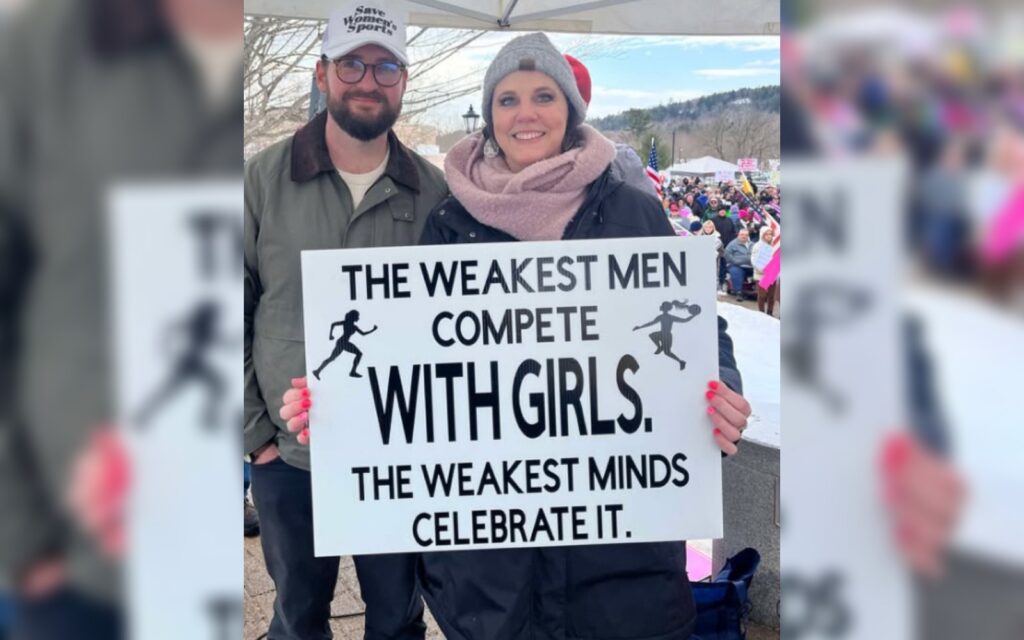
Voters across four states approved measures to protect girls’ sports, rejecting transgender ideology – and, in one case, surgeries – despite the blue tsunami that swept the midterms. The victories came in blue and purple states, as well as one red state, demonstrating their broad appeal.
“We’ve seen nationwide that this is an issue that I think does transcend classic political party breakdown, just because people care about making sure that sports are fair and making sure that they’re safe,” Hallie Herzberg, director of communications for Let’s Go Washington, told Heartlander News in an interview.
As of July 2026, 29 states have laws, regulations or interscholastic association rules to protect female sports teams from male participation. Statutes in 27 of those states enacted those requirements, while Alaska’s State Board of Education approved a regulation and Virginia’s nonprofit interscholastic association for high school sports also passed a regulation, according to Ballotpedia.
Idaho was the first state to pass legislation requiring sex-specific regulation for school sports under the Fairness in Women’s Sports Act, Ballotpedia reports.
The following examines the four states that passed the measures this month.
Arizona
In Arizona, nearly 59% of voters supported Proposition 318, which prohibits public schools and athletic associations from allowing any individual – student, athlete or employee – to use opposite-sex private spaces, such as locker rooms, showers or restrooms.
The proposition defines sex as the “biological status as male or female as recorded at birth on the individual’s original birth certificate,” and expands an existing law prohibiting boys in girls’ sports to apply to “all schools and athletic associations,” according to Ballotpedia.
Arizona is a politically divided state with a Democrat governor.
“I think that people generally do agree that boys should stay in their own leagues, and we already have sex-based designation for sports, but it’s been overlooked and ignored and so I think it’s pretty common sense and pretty normal just to have boys and girls in their own sports,” Herzberg said, discussing a similar initiative in Washington, which also passed.
Colorado
Colorado presented voters with three different initiatives to protect minors in girls’ sports, forbid sex-rejecting procedures on minors and sentence child traffickers to life in prison.
“The people have spoken. The people genuinely came forward, and again, in a nonpartisan way. I mean, the only way we could win this was with support from every party,” Lori A. Gimelshteyn, executive director of Colorado Parent Advocacy Network, told Heartlander News in an interview. “And I think what it tells me about the culture in Colorado is that when people are educated and truly informed about an issue, and they understand their principles, they’re willing to do the right thing, and that is evident in this triple victory that we have on all three of these initiatives.”
Proposition 133, the Require Life in Prison for Human Trafficking of Minors Measure, passed with 62% of the vote, according to Ballotpedia.
Prop 134 and 135 both received more than 52% of the vote after AP News called the races Thursday evening and Friday morning, respectively. Proposition 135, the Prohibit Surgeries for Treatment in Response to Minors’ Perception of Sex or Gender Measure, would forbid health care professionals from providing surgeries “altering biological sex characteristics” and prohibit the use of state or federal funds, including Medicaid and insurance coverage, for such procedures.
Proposition 134, the Sex Requirement for School and College Sports Initiative, would require sports teams at schools and athletic associations to offer three categories for participation: males/men/boys; females/women/girls; and coeducational or mixed. The measure defines females as “person[s] whose biological reproductive system is organized around the production of ova” and males as “person[s] whose biological reproductive system is organized around the production of sperm,” according to Ballotpedia.
Protect Kids Colorado, whose board includes Colorado Parent Advocacy Network co-founder Gimelshteyn, raised approximately $215,600 to support the proposition, while Families Not Politics raised more than $4.4 million against it, as of October, Ballotpedia reports. Despite the 22-to-1 spending gap, Protect Kids Colorado worked “around the clock” with more than 3,300 volunteers to reach all 64 Colorado counties and obtain more than half a million signatures in six months across all three initiatives to get them on the ballot, Gimelshteyn said.
Approximately 500 Colorado churches welcomed the volunteers to collect more signatures, and Colorado’s largest nondenominational church and the “entire Catholic conference” endorsed the initiatives, she said.
“And just without the church, I don’t believe we would have won,” she said, calling the victory “a David moment in Colorado,” referencing the biblical story of the shepherd boy facing the giant Goliath. “And I’m so incredibly thankful and grateful that God is here in Colorado and working in this story, and we give him all the glory. We really do. This cultural shift is because we put God first in everything that we do.”
The Centennial State became the first state to legalize these protections by the vote of the people and the first blue state to do so, Jen Sey, founder of XX-XY Athletics and Prop 134 issue chair, said in a statement. But Gov.-elect Phil Weiser has already promised to oppose the propositions when he enters office through the legislative process.
“What’s so surprising is that his party is the party of No Kings, and the people of Colorado just spoke loudly and clearly. We could not have won these three initiatives without bipartisan support, Democrats, unaffiliated Republicans, all voted to protect children in Colorado. And what Gov.-elect Weiser is suggesting is that because it does not meet his party’s agenda, he’s going to try to reverse them,” Gimelshteyn said, adding that it would be “very unwise and very foolish of Gov.-elect Weiser to go against the will of the people.”
Colorado has become a “model” for other states in how to “educate and inform people” about the actions of their representatives and their policies, she said, given the state’s strong blue lean.
“It is a miracle, and I think all eyes should be on Colorado because what we have built is the answer,” Gimelshteyn said. “It is the model to fix the destruction of America, and we need to do what our Founding Fathers asked us to do. And we need to be engaged, and we need to be self-reliant and we need to remember that we are a system of the people. Our government doesn’t govern us. We give them permission, and people are really stepping up into this role.”
Nebraska
More than 68% of Nebraskans approved the Nebraska Sex Requirement for School and College Sports Amendment, which requires all public schools and any private schools that compete in public leagues to designate each “athletic team or sport” as either “male, female or co-ed.” The measure also forbids female teams from being open to the male sex.
“Voters spoke overwhelmingly in support of protecting girls’ sports, and we are proud that Nebraska has taken this important step to protect girls and women for generations to come,” Nebraska Family Alliance said in a statement.
The measure builds upon the red state’s existing law that only permits public school K-12 or collegiate students to participate on sports teams designated for their biological sex, “according to reproductive systems,” and requires a doctor’s signature confirming the student’s sex, Ballotpedia reports.
“No girl in Nebraska should ever be forced to compete against or share a locker room with a boy. This is a victory for fairness, truth, and common sense,” Nebraska Family Alliance continued. “There are real differences between males and females, and those differences matter – especially in sports. Initiative 442 doesn’t prevent anyone from playing. It simply ensures the category that makes girls’ sports possible can continue to exist.”
Washington
Despite its deep blue voting record, more than 56% of Washington voters supported the Sex Verification Requirements for Female School Sports Initiative 638, which requires both school districts and nonprofits tied to interscholastic activities to keep biological males from competing with or against females. The law requires students to submit forms from their health care providers verifying their biological sex, according to Ballotpedia.
This requirement has received significant pushback during the campaign and since, with claims that such verification would require invasive genital exams. But Herzberg of Let’s Go Washington clarified that the doctor need only confirm their patient’s biological sex based on their health care data, MyChart records and previous history.
“It’s so simple, and they’ve tried to make it into this disgusting, grotesque thing that is just not,” she said. “And it’s a checkbox going right back onto the form that existed up until 2019 in Washington State on that existing sports physical.”
She said campaigning for the initiative involved correcting similar “misinformation” from the opposition, which sometimes “did some of the work for us” because of its lies regarding the measure.
“I think people saw through that and ultimately just wanted to protect fairness in girls’ sports,” Herzberg said.
Several young girls asked Let’s Go Washington to draft the initiative after boys in their sports competitions created unfair and even dangerous outcomes, Herzberg explained. These girls continued to tell their stories to support the initiative on the ballot despite public backlash, slander and harassment, she said.
Herzberg said the initiative needed bipartisan support both to reach the ballot and to pass, calling the issue “common sense.”
“The reality is that almost half of the people that signed the initiative to qualify it in the first place were Democrats and independents. So we had to have a large group of support from Democrats and independents to even get it on the ballot,” she said, adding that it “would never pass if only Republicans voted.”
National polling shows a majority of Americans agree with keeping males out of women’s sports.