Analysis: Progressive wins in governor races could put popular school choice reforms at risk
Just months after being named America’s Most Popular Governor in a July report, Vermont Republican Gov. Phil Scott won reelection, securing 53% of the vote.
That result was one of the few…
Just months after being named America’s Most Popular Governor in a July report, Vermont Republican Gov. Phil Scott won reelection, securing 53% of the vote.
That result was one of the few bright spots for conservatives in an otherwise dismal night in the 2026 midterm elections.
The results could have real-world implications for school reform at the state level.
Scott led all governors with 52% approval in a summer 2026 report by Morning Consult, after posting 58% approval in 2025.
In his reelection bid, Scott won 53% of the vote to Democrat challenger Amanda Janoo’s 46%. An estimated 312,231 votes were cast, nearly 10% more than in 2022.
Of 36 gubernatorial races, Democrats flipped five seats and retained 17, while Republicans successfully defended 12. Kansas was too close to call, although Democrat Cindy Holscher was leading with most votes counted. Alaska, which uses ranked-choice voting, had not completed its count.
Democrats claimed new governorships in Ohio, Texas, Iowa, Nevada and Georgia, winning by margins ranging from 6 percentage points to more than 10 points.
Turnout was heavy across the nation.
States with major education reform initiatives, including New Hampshire, Tennessee, Arkansas, Florida and Alabama, reelected conservative governors.
But in Iowa, governor-elect Rob Sand, a Democrat, could clash with a reduced Republican legislative majority as he seeks to undo one of the country’s more comprehensive school choice laws, which established education savings accounts (ESAs).
“This is just basically a siphon of hundreds of millions of dollars away from public schools,” Sand claimed to Chalkbeat in June about the state’s ESA program, which serves more than 40,000 students after going universal in the 2025-26 school year.
He ruled out a complete repeal of the program only because Republicans hold near-supermajorities in the Legislature.
With vote counting virtually complete, Heartlander News records show Republicans holding 56 seats in the Iowa House, compared with 44 for Democrats. In the state Senate, Republicans hold 32 seats, Democrats hold 17 and one seat is vacant.
When pressed about what he would do if he had his choice, Sand declined to say.
“I hear you asking me, and I’m answering you,” he said. “I don’t deal with hypotheticals. If we can work really hard and get it to a better place, we’ll see where we are.”
When asked whether he intends to exclude private schools from the program, Sand grew testy.
“If you’re telling me you don’t want tax dollars unless you can have them without oversight, that’s your problem, not mine,” he said.
Shock in Texas, Florida race competitive
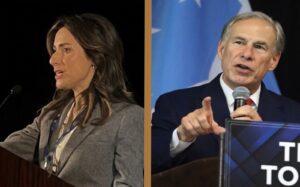
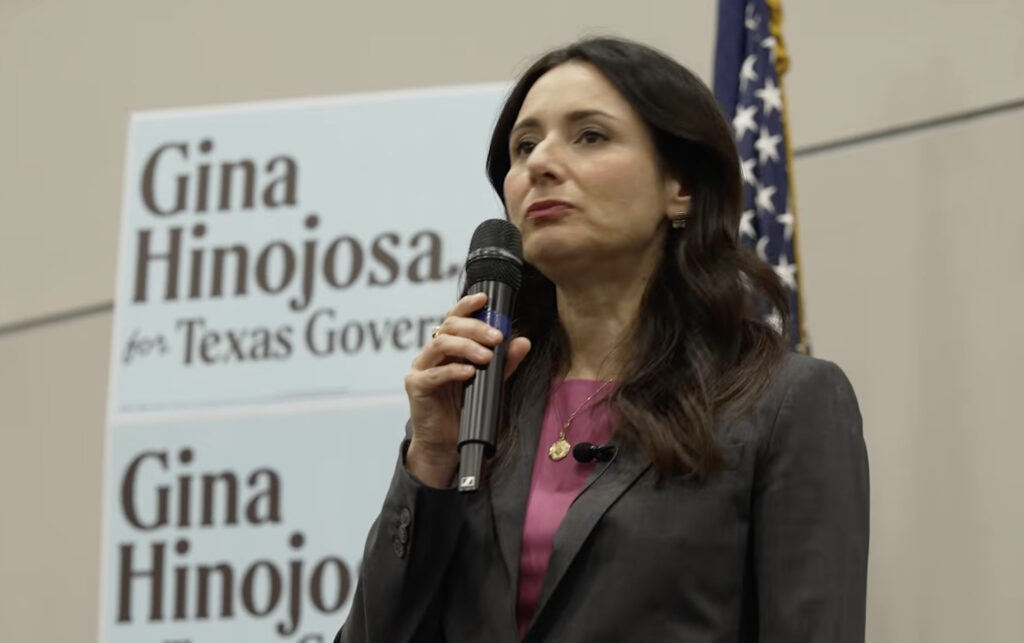
The biggest shock of the night came in Texas, where Republican Gov. Greg Abbott lost by 7 percentage points to Democrat Gina Hinojosa, despite a final private poll shared with Heartlander News showing the incumbent leading Hinojosa 52% to 48%.
Poll aggregator RealClear Polling showed Abbott leading in all but two polls during the final two weeks of the campaign. Those two polls showed Hinojosa with a 1-point advantage.
With 95.5% of the votes counted, 9,453,595 ballots had been cast in Texas, suggesting a total of nearly 9.9 million. That would represent a 22% increase in turnout over 2022 and 13% fewer votes than in the 2024 presidential election.
Hinojosa has called school choice a “scam” and vowed to repeal recent reforms. She derided the $1 billion Texas Education Freedom Accounts, which debuted this year with more than 100,000 students.
Unlike in Iowa, Hinojosa may have a Democratic Legislature to help her, along with some willing Republicans.
Democrats appear poised to take control of the state House, while Republicans may retain their Senate majority.
Texas, however, has been a relative latecomer to education reform, with considerable resistance from some Republicans. Hinojosa may therefore find enough support to block school choice in the Texas Senate, even with Republicans holding a majority.
On the other hand, Florida Republican Byron Donalds fended off a challenge from Democrat David Jolly, winning 50% to 48.7% and claiming the governor’s mansion by a margin of 108,000 votes out of an estimated 8.3 million cast.
That represents a 6.8% increase in ballots over 2022 and 23.8% fewer votes than in the 2024 presidential race.
Under Republican Gov. Ron DeSantis, Florida has been a consistent leader in educational reform.
Overall, gubernatorial races may offer conservatives some comfort when compared with the Republican losses in U.S. House and Senate races.
In those congressional races, Democrats in 2026 appear close to matching the number of seats they gained in the 2008 elections, when they secured a majority that allowed them to pass the Affordable Care Act.
(Image credit: Screenshot/YouTube/Gina Hinojosa)