Liberal groups outspend ‘No on 6’ campaign 73-to-1 as conservatives warn Missouri’s Amendment 6 will create ‘direct dictatorship’
Missouri voters face a constitutional amendment on the ballot Tuesday aimed at radically changing how the state handles initiative petitions, with conservative leaders warning it could destroy…
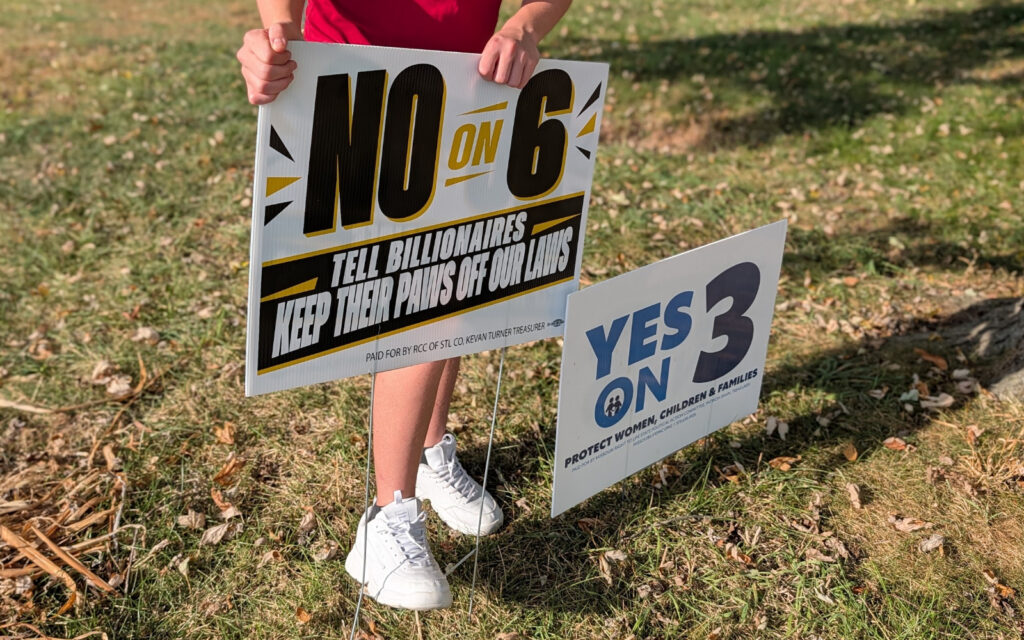
Missouri voters face a constitutional amendment on the ballot Tuesday aimed at radically changing how the state handles initiative petitions, with conservative leaders warning it could destroy representative government in the Show Me State.
If it passes, Amendment 6 will require an 80% vote in both chambers of the Legislature to alter anything passed by an initiative petition, which allows citizens to collect signatures to get a measure on the ballot. The amendment also retroactively applies these rules to voter-approved measures dating back to 2010.
Money has been pouring into the state to support it. Campaign finance records show liberal groups and unions have dumped more than $8 million into the “Vote Yes” campaign, while opponents have spent around $109,000. That means the yes campaign has been spending $73 for every single dollar raised by the opposition.
This massive spending gap mirrors recent liberal efforts to enshrine abortion in the state’s constitution. Left-wing groups spent more than $31 million to pass a pro-abortion amendment in 2024, heavily funded by out-of-state organizations such as the 1630 Fund and the ACLU. Now, those same progressive interests are spending nearly $27.5 million to defeat this year’s Amendment 3, which seeks to reinstate protections for the preborn.
The threat
Dr. Jonathan Swan, a Missouri pastor and editor for The Council for Biblical Manhood and Womanhood, says Amendment 6 will permanently lock in progressive policies and allow liberals in the state’s big cities to override the rest of the state. He calls the “Yes on 6” movement “a silent revolution.”
“A revolution is the complete overturning of a government, and what is being proposed here is really a diminishing, a weakening of the Legislature,” Swan told Heartlander News. “It’s this great strengthening of pure democracy.”
Swan warned out-of-state billionaires are using Missouri’s initiative process to fund their preferred policy proposals, completely bypassing elected lawmakers.
“Many of them are passed through the support of 10 or so counties in a state that has over 100,” Swan said. “You have St. Louis, Kansas City and Columbia using their majority to rule the rest of the state through these 50% plus one ballot initiatives … funded by out-of-state political actors.”
Etched into stone
Kevin Kreutz is a partner at Holtzman Vogel and a former deputy attorney general in Tennessee. He moved from California to escape progressive policies and warns the 80% threshold is an existential threat to the republic.
“I wouldn’t call it direct democracy,” Kreutz told Heartlander News. “I would call it direct dictatorship to a certain extent, just because of what it’s proposing to do.”
Kreutz says he hasn’t seen anything like this in any other state’s constitution. He says it takes dead aim at the representative form of government by making voter initiatives almost unreviewable.
“This is an attempt to essentially enshrine the decisions of the current populist majority, to etch it into stone for as long as possible, and to bind future generations to the winds that are currently blowing,” he said.
He also argued the amendment places an unfair burden on voters to understand highly complex legal language normally reviewed by elected officials.
“When you ask private citizens to stand in the shoes of lawmakers, you’re putting a lot on their shoulders and really that’s not how this country was designed,” Kreutz said. “Our country was never supposed to be based upon the tyranny of the majority, but you’re kind of getting it, I think, with this.”
Empowering special interests
David Stokes is the director of municipal policy for the Show Me Institute. He calls the amendment fundamentally undemocratic and a tool for special interests to sneak bad policy into the state constitution.
“It’s very frightening and it’s fundamentally undemocratic,” Stokes told Heartlander News. “It’s expanding this direct democracy style of government, which is not what we are and not how we’re supposed to operate.”
Stokes pointed out voters rarely read the dozens of pages of legal minutiae attached to pleasant-sounding ballot summaries, making it easy for liberal lobbyists to hide complex mandates. He pointed to a recently passed sick leave policy in Missouri as a perfect example of something the Legislature had to step in and fix.
“It’s going to empower lobbyists and consultants and special interests,” Stokes said. “They’ll make the ballot summary sound as nice and pleasant as possible and then put whatever they want, just like the sick leave stuff, in the legalese nobody reads and make it impossible for the Legislature to change it.”
He says the 80% threshold was designed specifically so lawmakers could never step in to fix flawed policies. Last month, Attorney General Catherine Hanaway, a former House speaker, called it “impossible” to get 80% of the General Assembly to agree on almost anything, noting a lengthy debate to decide the state dirt.
“We elect people to put in the work and go to the committee hearings and negotiate and do the sausage making of government,” Stokes said. “We’re totally neutering the process in favor of primarily outside special interests.”
Rewriting the rules
Amendment 6 also strips power from the secretary of state and gives courts the authority to rewrite ballot summaries.
“You’re basically giving the judicial branch a certain level of executive function or executive branch authority and asking your judges to make that call and giving people the right to take these things to court,” Kreutz said.
Swan says if Amendment 6 passes, it would likely invalidate the pro-life protections in Amendment 3. He argues this is because Amendment 6 requires an 80% legislative threshold to bring previously decided issues back before the voters, a margin the Legislature did not meet when it referred Amendment 3 to the ballot.
“Righteous legislation such as [Amendment 3] would not be able to be seen before the people,” Swan said. “So much for protecting people’s votes. It’s actually preventing people from voting on things that citizens, especially Christians, should care about.”
Heartlander News’ Michaela Estruth contributed to this report.