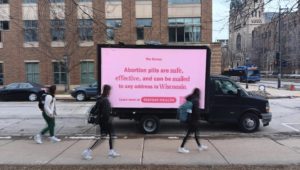
Pro-life states sue over abortion shield laws they say allow ‘activist’ states to ship abortion drugs
Three pro-life states are taking blue-state abortion shield laws to the Supreme Court, arguing that the laws allow “activist” states to nullify their abortion bans.
Louisiana, Alabama…
Three pro-life states are taking blue-state abortion shield laws to the Supreme Court, arguing that the laws allow “activist” states to nullify their abortion bans.
Louisiana, Alabama and Arkansas filed a lawsuit Wednesday against New York, California and Massachusetts, escalating a legal debate that has been unfolding since the Supreme Court overturned Roe v. Wade in 2022.
“When the Supreme Court settled the Dobbs case, the issue of abortion was returned to the states,” Louisiana Attorney General Liz Murrill said at a press conference. “But immediately after that issue was settled, certain pro-abortion states swiftly moved to circumvent the Supreme Court and the Constitution, not by simply codifying abortion in their own territories but by actively seeking ways to nullify the sovereign rights of pro-life states to regulate abortion within their own borders.”
The states’ shield laws restrict cooperation with other states’ law enforcement and protect doctors who prescribe and ship abortion pills into pro-life states, she said.
“They don’t even try to hide their motives,” Murrill said, citing New York Gov. Kathy Hochul’s proclamation that “they can’t stop us, they can’t stop our providers, they can’t stop New York, and that’s how we’re fighting back.”
“These laws are not shields at all. They’re swords disguised as shields and driven into pro-life states,” Murrill said. “We will not allow activist states, activist providers or distributors profiting from killing babies to threaten Louisiana’s sovereignty, violate Louisiana’s laws and endanger Louisiana women and Louisiana babies.”
Lawsuit claims shield laws defy, nullify pro-life laws
The pro-life states are asking the Supreme Court to strike down the shield laws, arguing that they violate the Constitution’s Full Faith and Credit Clause, the equal-sovereignty doctrine, the federal common law of public nuisance and the Dormant Commerce Clause, Murrill’s office said.
Arkansas Attorney General Tim Griffin said the Dobbs decision made abortion a state issue. He added that the three states suing have “each passed laws that prohibit the killing of unborn babies and bar groups outside the state from facilitating abortions inside our state borders.”
Alabama Attorney General Steve Marshall said shield laws are a “coordinated scheme by bad actors from out of state” to defy pro-life laws.
“If state sovereignty means anything, it means Alabama cannot be forced to accept the death of unborn children and the harm it causes to mothers because someone outside our borders disagrees with our choice to protect life,” he said.
The complaint filed with the Supreme Court uses even harsher language, describing shield laws as “one of the most serious interstate aggressions in our Nation’s history.”
Separately, the state attorneys general also filed a district court lawsuit against individuals and organizations they say have “flooded illegal abortion pills” into their states.
Blue states double down on shield laws
New York Attorney General Letitia James said the lawsuit is an attempt by the pro-life states to “impose their abortion bans on New York and punish our doctors for providing legal health care.” She promised to “fight with everything in my power” to defend New York’s shield law and protect providers in the state who prescribe abortion pills.
California Attorney General Rob Bonta agreed, calling the Golden State a “safe haven for reproductive rights” and promising to “fight to keep it that way.”
Massachusetts Attorney General Andrea Campbell told Heartlander News that her office would “vigorously defend” the state’s shield law, which she said “sends a clear message that we protect the privacy of our patients and providers.”
As the lawsuit develops, the stakes will be significant: Abortion pills accounted for nearly two-thirds of U.S. abortions in 2023, up from about half in 2020, according to the Guttmacher Institute.