History, influence, scenery of the Southeast – FL, AL, MS, LA, AR highlighted at the Great American State Fair
(Editor’s note: A series on The Great American State Fair, held in Washington, D.C., in honor of America’s 250th birthday, written by Heartlander News interns.)
From free manatee…
(Editor’s note: A series on The Great American State Fair, held in Washington, D.C., in honor of America’s 250th birthday, written by Heartlander News interns.)
From free manatee plushies and Elvis cutouts to rocket displays and peanut festivals, the Southeastern states turned The Great American State Fair into a lively showcase of Southern identity, innovation and scenery as it wrapped up Friday.
Florida
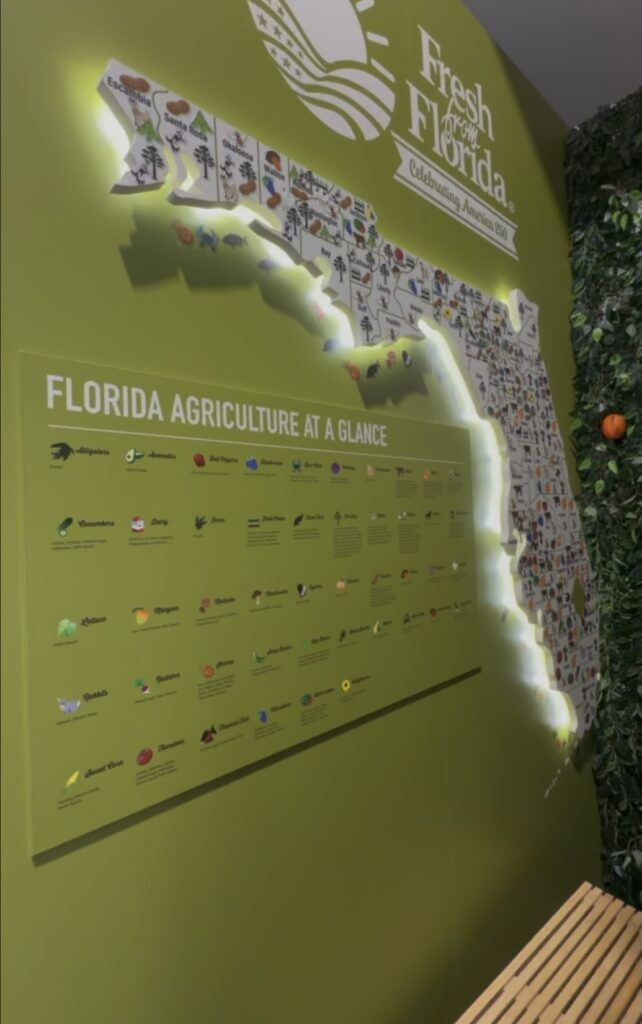
Florida’s booth drew one of the longest lines as visitors waited to receive free manatee and crocodile stuffed animals. Inside the tent, palm fronds surrounded an America 250 sign. Florida wildlife, faux orange trees and greenery added to the scene. A map depicted Florida’s agricultural regions, and model ship sails decorated the room.
Banners highlighted the Everglades, marine life, beaches, freshwater springs and the state’s fishing industry. Other exhibits discussed Florida’s colonial history, including the arrival of Spanish explorer Juan Ponce de León. George Washington also failed to capture the territory during the Revolutionary War, according to the booth’s historical displays. Florida did not become a state until 1845. Until then, the region alternated among periods of Spanish, French and British rule.
Alabama
Visitors rested on benches and at high-top tables in Alabama’s tent to cool off from the summer heat during the fair. Large photographs of the state’s landmarks featured forests, logging, cave exploration, waterfalls and two parks: Battleship Memorial Park and Cheaha State Park.
Murals and statues depicted historical figures from Alabama, including Martin Luther King Jr. and Helen Keller, alongside hiking trails, maps of state attractions and displays highlighting the state’s peanut industry. Photos chronologically showed the peanut production process from growing and harvesting to consumption.
Dothan, Alabama, is the “Peanut Capital of the World,” where much of the nation’s peanut crop is grown within a 100-mile radius of the city. It hosts an annual 10-day peanut festival in November featuring amusement rides, animal attractions, agricultural displays, concerts, livestock shows and a parade.
Mississippi
Mississippi’s booth featured a small art gallery showcasing Native American artwork, including a Choctaw medallion and contemporary sculptures. Another wall displayed a map identifying the hometowns of notable figures in music, literature, sports, civil rights, art and technology.
Mississippi calls itself the “Birthplace of America’s Music,” and the booth featured a stage and microphone where visitors could pose with a cutout of Elvis Presley and other musicians.
The booth also highlighted The Sound and the Fury by William Faulkner, who was born in New Albany, Mississippi, in 1897. A trophy case displayed NCAA championship trophies for both Mississippi State University and the University of Mississippi.
NASA’s John C. Stennis Space Center, located in Hancock County, Mississippi, is the nation’s largest rocket propulsion test facility, according to the booth’s historical displays.
“From Apollo to Artemis, every spacecraft headed to the moon has to first go through Mississippi,” read a quote from Gov. Tate Reeves.
Louisiana
While Mississippi claims to be the birthplace of American music, Louisiana lays claim to being “the birthplace of jazz and a soul all its own.”
Louisiana became part of the United States through the Louisiana Purchase in 1803, which opened the nation to westward expansion. The purchase not only doubled the nation’s size but also provided river access for trade and expansion, according to booth materials. Another display highlighted the state’s contributions to space exploration.
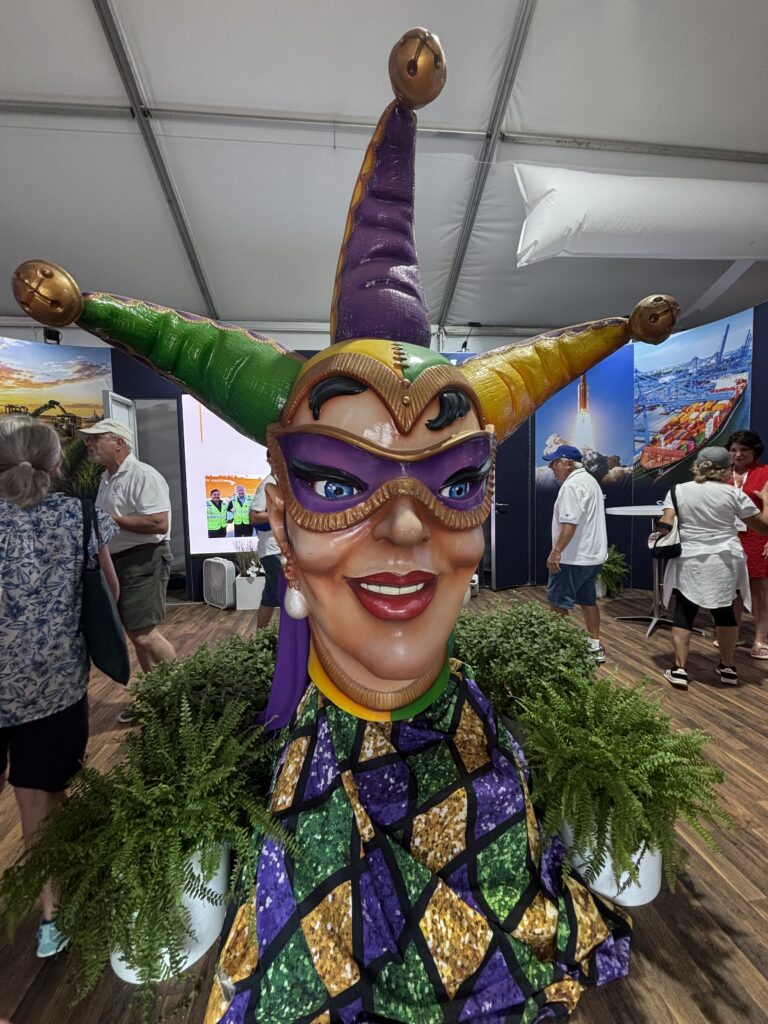
A large Mardi Gras statue greeted visitors to Louisiana’s booth, where attendees also had the chance to win Mardi Gras beads and other prizes through trivia games.
“In 1960, this six-year-old helped desegregate New Orleans schools,” one slideshow question read, with the phrase “250 years of influence” in the background.
Contestants who answered Ruby Bridges moved one point closer to a prize.
Arkansas
The Arkansas booth transported visitors into the state’s forests with greenery and signage about its dense woodlands. In keeping with the state’s outdoors theme, the booth described Arkansans as “restless by nature and resourceful by necessity” and emphasized “trailblazing” across several categories: “Trailblazing Icons,” “Trailblazing Experiences,” “Trailblazing History,” “Trailblazing Creators” and “Trailblazing Flavors.”
Mason jars filled with coffee bean varieties from Onyx Coffee Lab sat beneath the “Trailblazing Flavors” banner.
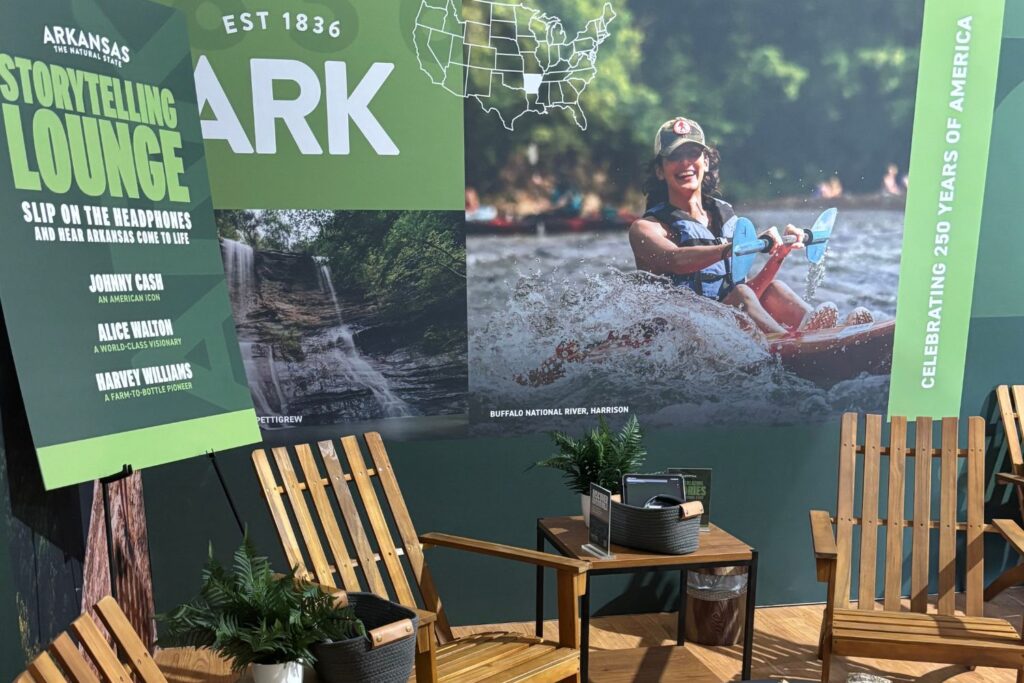
Home to the nation’s first national river, the Buffalo National River, Arkansas also touts itself as the duck capital. The “Trailblazing Experiences” exhibit featured photos of kayakers on the Buffalo National River and hikers on trails.
In another corner of the booth, a storytelling lounge surrounding an unlit fire pit invited guests to listen through headphones to recordings about Johnny Cash, Alice Walton and Harvey Williams, paying homage to the state’s “Trailblazing Creators.”