‘First-class religious support’: Hegseth establishes Pentagon religious affairs office in latest embrace of faith
Department of War Secretary Pete Hegseth established a new religious affairs office at the Pentagon on Wednesday, in the administration’s latest push to incorporate faith into the public…
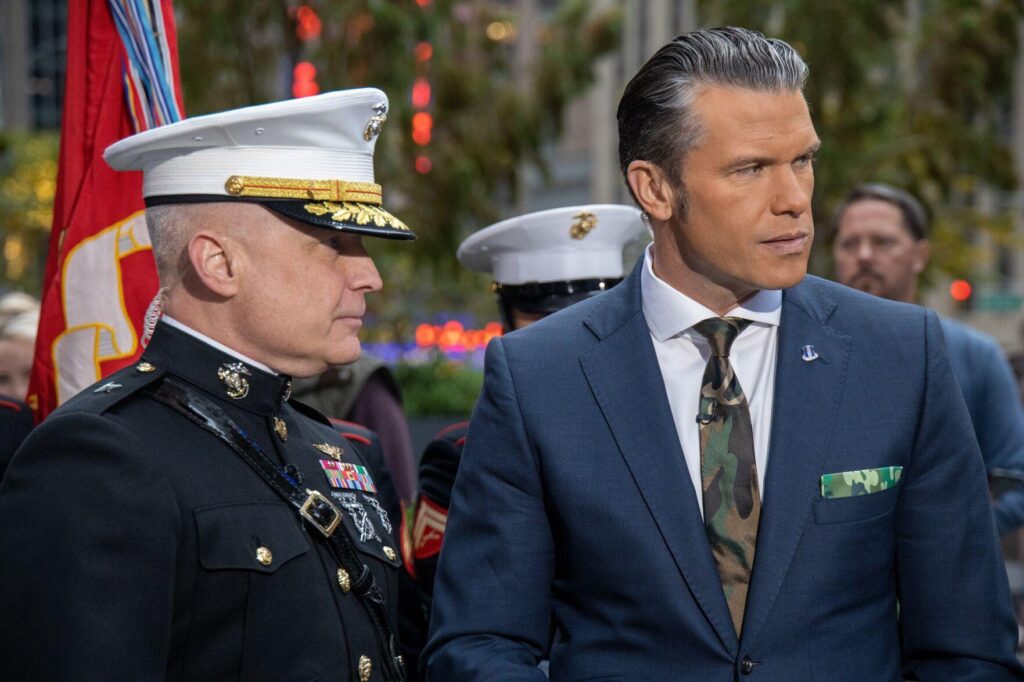
Department of War Secretary Pete Hegseth established a new religious affairs office at the Pentagon on Wednesday, in the administration’s latest push to incorporate faith into the public sphere.
“Less than 5% of our force identifies as nonreligious,” Hegseth said during remarks at Marine Corps Base Quantico in Virginia, “meaning 95% of our force recognizes an Almighty God. Accordingly, our department therefore has a sacred duty: first-class religious support wherever we send our warriors.”
The office will “strengthen the moral, ethical and spiritual readiness of our warfighters,” a War Department memo reads, and will help support service members and their families in “the free exercise of religion as protected by the Constitution.”
“Starting today, and for secretaries of war after me, the Office of Religious Affairs will report straight to the top,” Hegseth told troops Wednesday. “No staff filters, no bureaucratic dilution, a direct line to the secretary. This is not going to be a paper-pushing shop. It’s going to have real teeth.”
The new office is the latest in a broader push across the Trump administration to incorporate faith into various agencies. In a recent list of 250 wins for people of faith, the administration touted the creation of the White House faith office, Education Department prayer guidance, new religious freedom divisions within agencies and Justice Department guidance on protecting religious liberty across all federal policies.
“Psalm 33:12 extols us, ‘blessed is the nation which God is the Lord,’” Hegseth said as he explained the new religious affairs office. “250 years ago we rejected an earthly king an ocean away, appealing instead to a heavenly king above. George Washington made sure that the continental army had chaplains back at the beginning, back in 1775.”
Hegseth said the new office is a way to reaffirm the national motto of “In God We Trust.”
“We’re placing spiritual health at the same level as physical health,” he said, adding that the department is putting on God’s armor. “While we wage physical war, we all know the real battle is spiritual.”
Hegseth said soldiers miss out on births, first steps and goodbyes to loved ones in service of the nation but shouldn’t have to forgo a faith community.
“One of the costs that is rarely thought about or talked about is the loss of your religious community,” he said. “Every time we issue orders to move a warrior to a new location they leave behind the faith community, the church that grounds them.”
Hegseth’s announcement immediately came under fire from civil liberties groups including Americans United for Separation of Church and State, which criticized his frequent biblical references and said he was unconstitutionally “elevating Christianity.”
Others objected to his broader speech, in which Hegseth claimed “we are no longer the woke department or the weak department,” promising “no fatties, no trannies, no beardos, no weirdos, no wimps, no radicals, just warriors.”
“The Pentagon isn’t a personal playground in the culture wars, and Republicans facing voters in five weeks shouldn’t have to defend this tomfoolery,” John Ullyot, a former Pentagon spokesperson, told Politico.
But the War Department said the religious office “will not compel religious participation, favor one faith, or diminish the rights of personnel of any faith or lack thereof” but will instead ensure all service members have access to religious support and community if they want it.
The strength of the military “depends not only on weapons, training and technology, but also on the resilience, conviction and moral strength of those who serve,” it said.