Hawley calls Flock cameras a “surveillance network,” demands greater safeguards
The growing network of Flock cameras, also known as automated license plate readers (ALPRs), is less about helping law enforcement and more about tracking peoples’ movements, Sen. Josh…
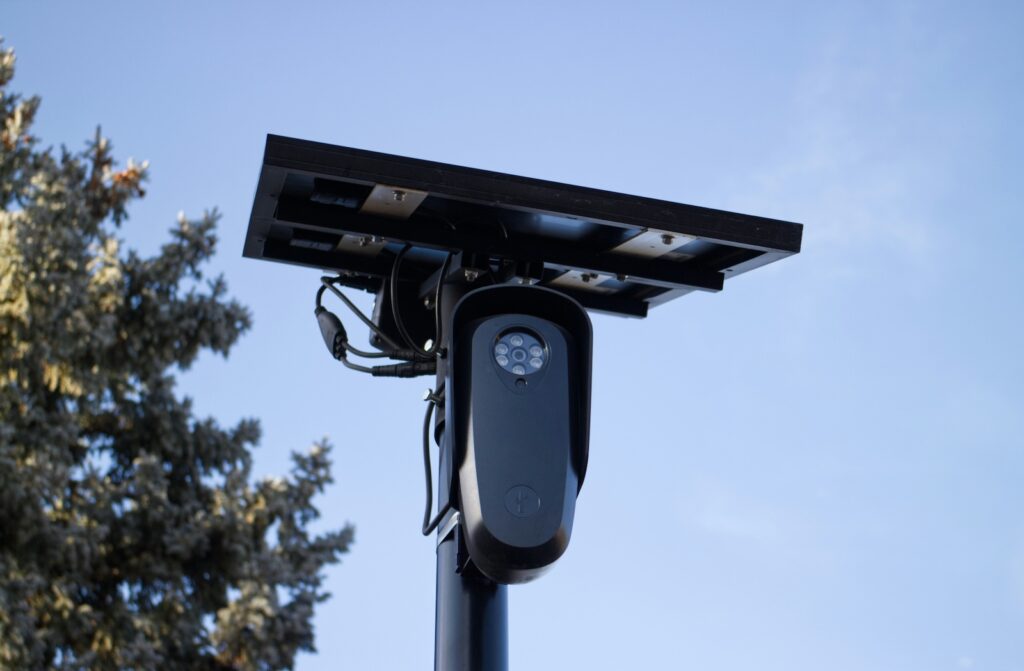
The growing network of Flock cameras, also known as automated license plate readers (ALPRs), is less about helping law enforcement and more about tracking peoples’ movements, Sen. Josh Hawley, R-Missouri, told Heartlander News Thursday.
“Flock is not really a law enforcement tool; it is a surveillance network,” Hawley said in an exclusive interview. “And we’ve got to make sure that it is not abused to become a national surveillance network that tracks every person in America without their consent, violates their rights.”
Hawley, chairman of the Senate Judiciary Subcommittee on Crime and Counterterrorism, held a hearing Wednesday titled “Always Watching: Flock’s Nationwide AI Surveillance Network.” He invited CEOs of four surveillance companies – Axon Enterprise, Flock Safety, Motorola Solutions and Verkada – to testify before the committee, but none appeared.
During the hearing, Hawley detailed Flock’s network of 120,000 cameras that capture 20 billion images monthly across 49 states, adding that “This is still the United States of America, and it shouldn’t be that when you walk out your door in the morning, you just have to agree and assent and accept the fact that you’re going to be on camera morning, noon and night.”
Legislative counsel for the Institute for Justice Alasdair Whitney said Flock cameras are not merely capturing license plates but also images of individuals.
“We’ve heard from the proponents of this technology … that they don’t use it to track people. I think that that’s just simply not true,” Whitney said at the hearing, according to a press release provided to Heartlander News. “The value of this technology is tracking the people and is determining where they are and what they’ve been doing.”
Cybersecurity engineer Benn Jordan said he found images displaying clear text on the phone screen of an individual who walked by a camera. He also said Flock Safety, despite its denial, has been hacked and that current systems lack high security.
“The Flock devices that we tested were running on an old version of Android that has been out of service for years, and newer devices of Flock run on a modified kernel of Android, which is far from government-grade security,” Jordan said.
Hawley told Heartlander News that he supports law enforcement and its investigative tools but believes Flock is miscategorized as such.
“I’m all for law enforcement tools. I’m a former prosecutor and former attorney general, and I’m all for giving law enforcement all the tools that we can to go after criminals, but what I came to the conclusion of yesterday after this hearing is that’s not what Flock is,” he said. “What I heard yesterday was that these Flock cameras don’t merely read license plates. They track cars, they track bikes, they track motorcycles, they track the people inside the cars.”
Four in 10 Americans have an “unfavorable” view of Flock cameras, as previously reported. Flock CEO Garrett Langley also told Hawley in a letter that a federal framework for regulating these cameras is necessary and that the company has instituted new guardrails after public scrutiny, according to a press release.
“The Flock CEO admitted to me in writing that Flock can be used to search for human persons. You can go into this national database and search for people,” Hawley said. “That’s a huge problem. So I think we’ve got to make sure this is not about surveillance. This is about law enforcement, and I think there’s some work to do here.”