National debate over Flock cameras heats up with state suspensions and Senate investigation
As Flock cameras spread across the country, a growing debate over privacy and surveillance is pitting law enforcement’s use of automated license plate readers against concerns about government…
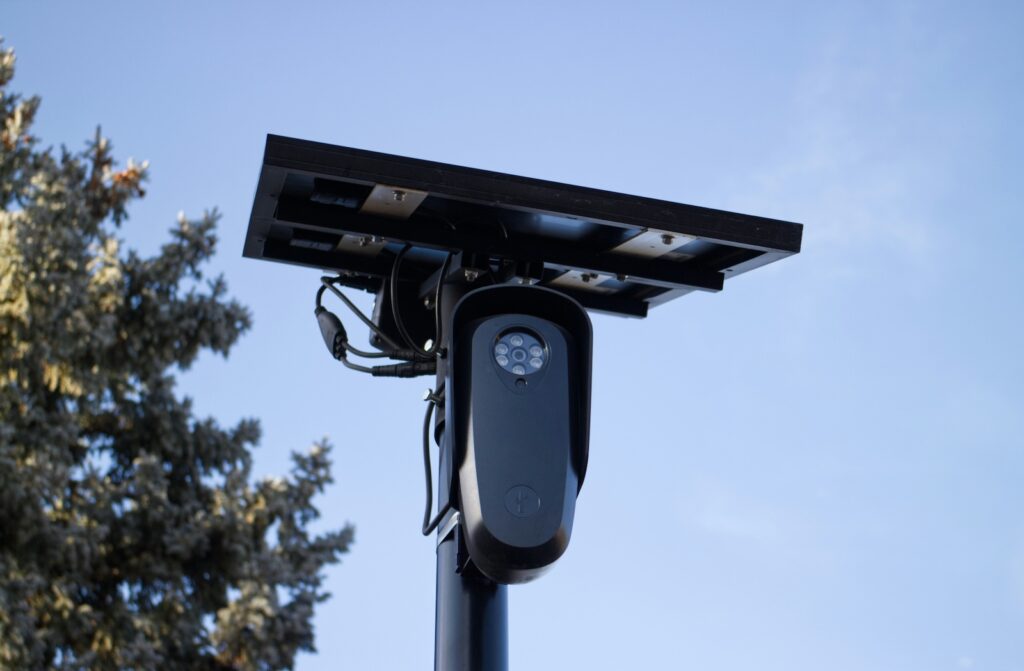
As Flock cameras spread across the country, a growing debate over privacy and surveillance is pitting law enforcement’s use of automated license plate readers against concerns about government overreach and inaccurate alerts.
More than 40% of Americans are skeptical of automated license plate readers (ALPRs), commonly known as Flock cameras, but law enforcement personnel argue the scanning tool assists in numerous criminal investigations.
Approximately 120,000 Flock cameras survey highways, traffic lights and neighborhoods across rural and urban America, according to the American Civil Liberties Union. Flock CEO Garrett Langley launched the license plate readers nine years ago. The cameras scan license plates and alert law enforcement systems when flagged vehicles pass by the sensors. Langley boasts the cameras “detected” more than 1,000 missing people and 20,000 stolen cars in July alone.
“We use Flock for criminal investigations,” Sergeant Philip DiMartino of the Kansas City Missouri Police Department told Heartlander News in a statement.
The cameras recently assisted KCMO police in a probable cause case by identifying a car at the scene of a robbery. Detectives later connected the car to a suspect through “social media posts, physical surveillance, automated license plate reader data, and witness observations,” according to case records sent to Heartlander News.
“This is an additional tool an investigator can use to solve crimes, much like witness interviews, physical evidence collection, or reviewing surveillance footage,” DiMartino said. “They have helped in numerous criminal investigations from homicides, violent crimes, accidents to minor property crimes.”
DiMartino also provided KCMO’s security policies, which restrict criminal justice information to “criminal justice agencies,” and outside requests are “reviewed on an individual basis.”
Americans oppose hyper-surveillance
But many Americans believe the system violates privacy rights, and the skepticism has become a bipartisan issue. Approximately 41% of Americans have an “unfavorable” view of Flock cameras, USA Today reports. In Texas, more than 63% of “likely voters” said they oppose Flock systems, and only 28% supported them, according to an Aug. 24-26 poll from Overton Insights and the Texas Public Policy Foundation.
Sen. Josh Hawley, R-Missouri, as chairman of the Senate Judiciary Subcommittee on Crime and Counterterrorism, recently launched an investigation into Flock cameras, citing surveillance errors and privacy concerns in a letter to Langley on Aug. 26.
“Instead of serving discrete local investigations, as contemplated by our constitutional processes and safeguards, these camera networks harness artificial intelligence to pool what they capture into a national database that customers can search,” he wrote.
The surveillance cameras scan more than 20 billion vehicles every month across 49 states (except Alaska), Hawley said. But these scans do not always produce accurate leads, he added, noting that 71% of Flock alerts were incorrect, according to a California police department. The Los Angeles Police Department ended its Flock contract after 161 vehicles were “incorrectly flagged as stolen” in just two months, Hawley continued.
A woman in Florida was held for seven months after being falsely accused of a crime after Flock cameras linked her plates to the investigation, he said. Florida recently revoked its permits for license plate reader systems and ordered their removal within 30 days, according to an announcement from Florida’s Department of Transportation last week.
“While Florida law limits the issuance of permits for LPR systems to law enforcement agencies, the recent exponential increase in deployments along our roadways, coupled with concerning reports of misuse, data privacy concerns, and surveillance schemes merit immediate action to preserve Floridians’ sovereignty and quality of life,” Will Watts, the chief operating officer and assistant secretary of Transportation, wrote in a memo Aug. 31.
Florida Gov. Ron DeSantis said he believes the system has gotten “out of control.”
“I don’t want to have this become a surveillance state,” he said at a press briefing about the change.
Additionally, civilians have used the Flock systems to search plates for personal advantage. One Milwaukee police officer used the data to search for both his girlfriend’s plate and her ex-boyfriend’s plate more than 175 times combined, Hawley said in his letter.
“To be sure, I want law enforcement to have tools to catch offenders and keep the public safe. But Americans do not surrender their privacy rights when they drive to work, drop their kids off at school or go to church,” wrote Hawley, an attorney. “The Supreme Court has recognized that a comprehensive, retrospective record of a person’s movements is different in kind from ordinary observation in public. Congress never authorized the network your industry has built.”
He asked Langley to report how long Flock data is kept, who controls it, who can search it or buy the content and what protections ensure Americans’ privacy.
Flock promises security updates
Before Hawley sent his letter, Langley promised to roll out broad new security measures before the year ends, according to a statement on the Flock website. Langley said that for every 1 million alerts, only nine are “human-reported errors,” adding that the system grades matches with a confidence score.
The updates include reducing the length of data retention from 30 days to seven days. Additionally, the new protections will require “case codes” to search the system and will implement “Audit Assistance,” which flags abnormal search activity and reports it to an administrator, locking out the user until after a supervisor clears the warning.
“The goal is to intervene before misuse becomes recurring or widespread,” Langley writes.
He also promised to publish a summary of “findings and our remediations” in September after conducting a review of Flock products with security firm Bishop Fox.
“These changes reflect years of work and deliberation,” Langley wrote. “They are not the end of that work, but simply the continuation of our commitment to both safety and privacy. We are not perfect, so we will keep listening, improving and building a better standard for public safety technology together.”
(Image credit: Photo by Mother Flocker on Unsplash)