With eye on midterms, U.S. wages quiet war as Iran tries to get loud
A series of inconsequential attacks from Iran on U.S. assets in the Middle East hit Jordan, Bahrain, Iraq and Kuwait, which the U.S. says resulted in no casualties for Americans.
The…
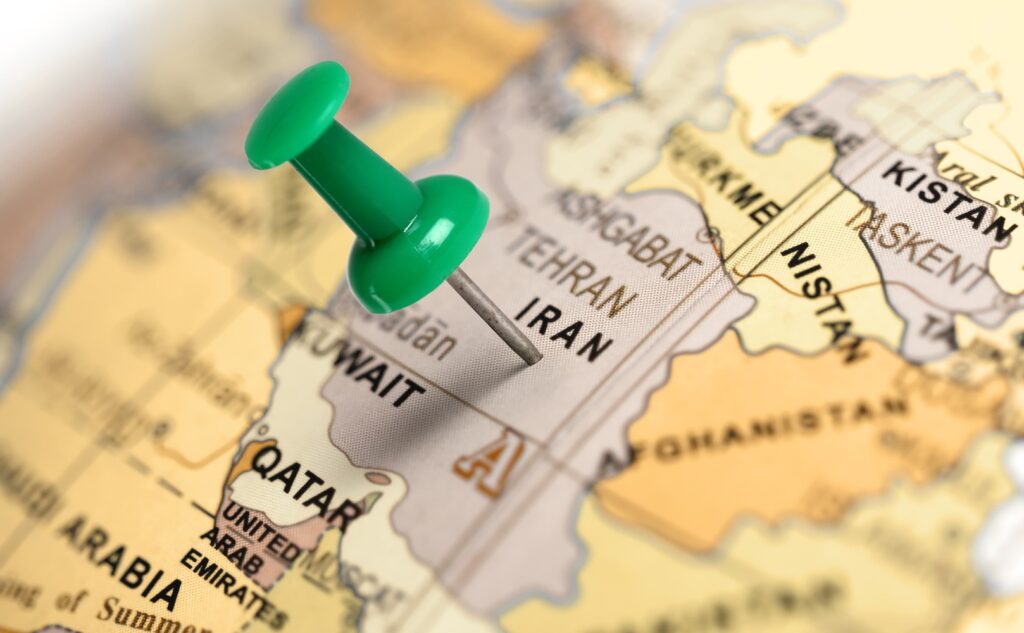
A series of inconsequential attacks from Iran on U.S. assets in the Middle East hit Jordan, Bahrain, Iraq and Kuwait, which the U.S. says resulted in no casualties for Americans.
The attacks come as the U.S. is trying to keep military options quiet, even as Iran hopes to use military strikes to discourage U.S. voters in midterm elections in November.
Bahraini and Jordanian air defense systems successfully intercepted the latest attacks Wednesday, reported the Times Kuwait, while Kuwaiti forces noted on social media that a residential complex was hit by Iranian drones.
The Islamic Republic claimed the attacks are in retaliation against a U.S. strike that killed four and wounded dozens at a civilian wedding, according to Reuters.
The Institute for the Study of War (ISW) said the U.S. attacks were concentrated on radar emplacements being used to attack shipping in the Strait of Hormuz, a key energy gateway handling about 30% of all seaborne crude oil.
“US strikes on radars will likely impose operational constraints on Iranian forces attempting to disrupt shipping in the strait,” ISW concluded in its damage assessment in the top-line bulletin for the day.
The continued military attacks come at a time when the Trump administration has expanded the battlefront to include the financial assets of Iran, Iranian political and military leaders in the Islamic Revolutionary Guard Corps (IRGC), Iranian allies and conduits worldwide.
Secretary of the Treasury Scott Bessent promised Fox Business’ Larry Kudlow on Tuesday at the G20 meeting in North Carolina that the Trump administration planned to financially “asphyxiate” Iran with new sanctions.
“It could be anyone who does business with the IRGC, we are tracking down the IRGC’s assets, and I will say it on worldwide TV, just so you know,” Bessent warned, “we know where in the British Virgin Islands your accounts are at these trust companies, we know the $100 million houses you have around the world, and we are going to freeze those.”
The Trump administration last week announced a new round of sanctions against Iran and any country doing business with it, reported Heartlander News.
“Operation Economic Outcast will sever the economic lifelines that sustain the Iranian regime and the Islamic Revolutionary Guard Corps,” said the U.S. Treasury announcement.
At the same time, the U.S. announced the tentative outlines of a historic oil deal, which will help America control 65 billion barrels of reserve oil in Venezuela, a country from which China imports 4-4.5% of its oil daily.
That’s one reason why Bessent is optimistic that China will cooperate on helping end the Iranian war sooner rather than later.
“We have more in common with the Chinese on Iran than we disagree with [them] on,” Bessent told Kudlow.
He noted China agreed in private talks that Iran should not possess a nuclear weapon or control the Strait of Hormuz.
Currently, the Islamic nation is only shipping about 200,000 barrels per day of crude, down from 2 million barrels per day in March, reported Reuters.
Oil exports are its main source of foreign currency.
The lack of foreign currency means even the wealthy in the IRGC have no hedges against inflation.
In August, Iran experienced 84.4% inflation year-over-year, according to figures released by Iran’s own Central Bank.
An Iranian-American who now serves as a fellow at the Naval Postgraduate School noted that time is on Trump’s side even with the midterms looming.
“This [Iranian] regime will not be able to transact normally with the world if it doesn’t change,” said Bijan Kian, who served in the administrations of former Presidents George Bush and Barack Obama. “The Islamic Republic is the loser, will be the loser.”
That doesn’t mean that the U.S. and global finances aren’t being hit by the war, as well.
Oil is trading near $90 per barrel, after settling in around $80 during several weeks of near-tranquility between the U.S. and Iran.
Energy prices are one reason why Nate Silver reported that 37% of Americans support the war in Iran while 55% oppose it.
Polling on war can be tricky, with studies showing that wartime surveys can vary wildly depending on the context provided about the outcome.
The Trump administration is trying to maintain a relative ceasefire until after the midterm elections, hoping to minimize the damage the war could do to Republicans’ bid to keep control of the House and the Senate.
“We had these six weeks of successful kinetic strikes, then we have imposed the blockade, which is quarantining and isolating the country,” Bessent said, “and now we are applying sanctions like have never been seen before that are going to asphyxiate the regime.”
Multiple media outlets are reporting that Iran, in reply, wants to accelerate the war, trying to maximize the damage they can do to Republicans and maybe eke out a victory on the backs of a Democrat Congress — if they can hold out till next year.
“We are keeping the pressure on Iran,” one anonymous White House official told Reuters, while noting Trump could resume the war aggressively after the election. “But November is a priority.”