Trump, Venezuela announce historic oil deal as Democrats, China fume
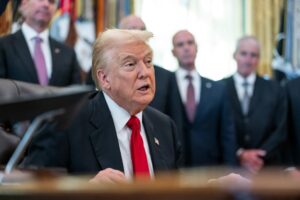
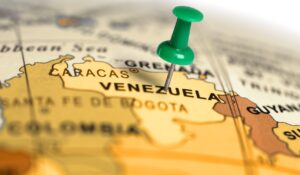
President Donald Trump announced the U.S. is close to completing what he called history’s largest oil deal, with Venezuela, which could give America control of 65 billion barrels of…
President Donald Trump announced the U.S. is close to completing what he called history’s largest oil deal, with Venezuela, which could give America control of 65 billion barrels of proven oil reserves.
He noted that the addition of Venezuelan oil will more than double U.S. oil reserves at no cost to taxpayers while increasing long-term supply, lowering gas prices and helping the South American nation’s economy.
“This Transaction will greatly strengthen the already growing relationship between Venezuela and the United States!” Trump wrote on social media.
The country’s ruling party approved a deal it says will help develop more than 20% of its 300 billion barrels of oil reserves.
The interim leader of the Latin American oil powerhouse said the deal will result in “production, jobs, investment in infrastructure, [and] increased revenue for the government.”
“Each party contributes what it does best,” said Venezuela’s President Delcy Rodríguez, who took office after the U.S. removed former President Nicolás Maduro in January. “Venezuela contributes oil, its industry and the experience of its workers accumulated over more than 100 years. The United States contributes the capital and technology needed to recover and develop those assets.”
What the deal won’t do, however, is lower U.S. energy prices immediately.
Gas prices still high
Oil prices have jumped again worldwide as the U.S. and Iran continue to engage in retaliatory strikes in the Middle East.
The renewed attacks are causing concern that oil supplies could be further disrupted by the war.
Brent crude rose to $90 a barrel, still off its high of $111 but well above the $60 trading range it enjoyed in December 2025.
Gatestone Institute’s Gordon Chang said the joint oil deal’s biggest loser is China, noting Venezuela previously exported its oil to Chinese refineries to pay down an estimated $10 billion-$20 billion worth of debt.
“China needs that money back. And it’s just not gonna get it,” Chang told Fox News on Sunday.
It’s more likely they won’t get that money back without concessions to the U.S.
China has complained previously about the U.S. redirecting Venezuelan oil away from Chinese refineries.
The deal comes at a particularly awkward time for China, as the Trump administration is beginning to roll out sanctions against entities and countries that continue to buy oil from Iran.
In 2025, China imported about 17% of its oil, or 1.4 million barrels per day, from Iran.
By contrast, China purchased the majority of all Venezuelan oil exports, receiving about 4%-4.5% of its total oil imports from the socialist country in 2025, according to the federal government.
Iranian oil exports have dropped 85% since the start of the war, to about 250,000 barrels per day, Reuters reported.
Even allowing that all the current imports are going to China, losing another 400,000 barrels of Venezuelan crude daily would put a severe strain on the Chinese economy, giving its President Xi Jinping another reason to be cooperative with Trump.
Looming political questions
Chang said the only question over the oil deal was whether U.S. companies would invest in Venezuela again after their assets were expropriated by the socialist regime in 2007.
U.S. companies are going to need assurance that when Trump leaves office, they won’t suddenly lose their investment because of Democratic hostility to oil.
“Yes, because there’s been a lot of criticism from Democrats about this deal,” added Chang.
That may be one reason why Trump has emphasized U.S. “ownership” of the deal as part of a joint venture with Venezuela, to help reassure private investors.
The media has concentrated on the difficulties for the U.S. government of owning a private corporation – and whether U.S. or Venezuelan courts would control the agreement.
But they misunderstand that the deal is predicated on a simple leaseholder agreement common to energy deals.
“The 100-year oil field lease will create the world’s second-largest oil company, measured by total reserves, behind Saudi Aramco,” noted a CNN analysis.
Ryan Payne of Payne Capital Management said the deal has long-term implications for both the U.S. and Venezuela.
“Gas prices aren’t going from $4.00 to $2.00 tomorrow,” he told Fox News, noting that Venezuela oil production is about the same as North Dakota’s, which would hardly make a dent in global demand.
The big advantage for the U.S. long term would be that Venezuelan crude oil is of a type that American Gulf Coast refiners are especially suited to process, according to Fox News.
“Many U.S. refineries are tailor-made for Venezuelan oil,” agreed the CNN analyst. “So an increase in Venezuelan oil imports would make America’s refineries more efficient.”
It would also provide relief to the U.S. Strategic Petroleum Reserve, which has been under pressure since the COVID-19 crisis.
Still, Democrats oppose the deal.
“Will prices come down for Americans?” asked Democratic Sen. Tim Kaine of Virginia in an X post criticizing the deal. “Who knows but likely not as much as Trump has forced them up thru his idiotic Iran War.”
(Image credit: Photo by aboodi vesakaran on Unsplash, cropped from original)