Analysis: ‘Talking-while-fighting’ pattern may be more productive in US-Iran war
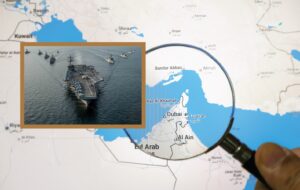
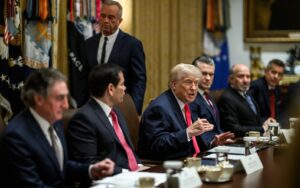
President Donald Trump said peace talks would resume with Iran this week, after postponing what he described as the largest military attack since World War II.
“We had an…
President Donald Trump said peace talks would resume with Iran this week, after postponing what he described as the largest military attack since World War II.
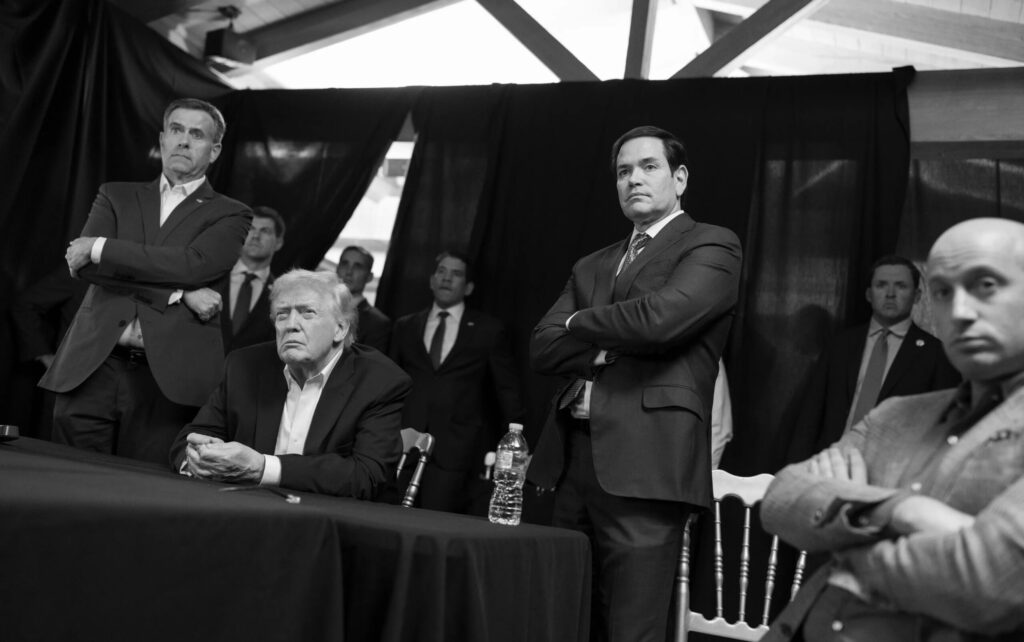
“We had an attack [planned] that would have been the biggest attack since World War II,” Trump told reporters aboard Air Force One. “It would have been disastrous for them.”
The Trump announcement marks a repeated pattern of fighting-while-negotiating that at least one analyst says is more productive than fighting until a breakthrough.
In a carefully crafted response, Iran denied direct talks with the U.S. while admitting it is negotiating with Oman, one of the mediators in the war.
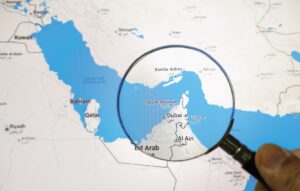
Iran’s Foreign Ministry Spokesman Esmaeil Baghaei said the talks are focused on securing transit through the Strait of Hormuz. Oman shares coastline along the strait with Iran.
Heartlander News reported Baghaei made a similar statement when the U.S. paused strikes to let talks continue in late July after a June ceasefire was agreed to.
“Mediators may convey messages to us from the American side regarding ongoing developments in the region. But at present, we have no negotiations with the American side,” said Iran’s foreign ministry spokesman.
Still, in a social media post Monday, Iranian President Masoud Pezeshkian said the ceasefire signed with the U.S. in June is the best basis for a lasting peace.
“I believe this memorandum will be the center of gravity of our foreign relations in the future. We must strive to compel the enemy to remain committed to what it has signed,” the Iranian president wrote.
Since the war began, multiple ceasefires and multiple resumptions of fighting have occurred, yet both sides have continued to talk.
The disconnect between Trump and Iran may have more to do with internal politics than the state of negotiations.
The Institute for the Study of War (ISW) reported in its latest update that the Iranian pragmatist faction, which wants a lasting ceasefire, and the country’s hardline faction, which seeks maximalist demands including control of the Strait of Hormuz, are battling internally.
The Iranian president reportedly forced the hardliners to sign the ceasefire in June after threatening to resign if the war continued without talks, ISW said.
But the hardliners say the tactic won’t work again.
“Senior cleric Mohammad Bagher Kharrazi, who has familial ties to [Supreme Leader] Mojtaba, claimed on August 3 that Mojtaba formally warned Pezeshkian that he would accept Pezeshkian’s resignation if Pezeshkian tried to resign again,” ISW wrote.
For the U.S., the factions are more likely made up of U.S. allies than administration officials.
U.S. officials said Saudi Crown Prince Mohammed bin Salman in a weekend phone call expressed reservations directly to Trump about the massive military strikes planned by the U.S., Axios reported.
Iran has reportedly threatened retaliation against Gulf State allies and Israel, if the U.S. followed up on the promised attacks.
“When the allies ask to call it off, you gotta sort of say, ‘Well, let’s see.’ The reason they asked is they think there’s a deal,” Trump said.
One analyst sees the fighting-while-talking framework as more productive than the hammering typical in war before parties sit down to negotiate.
“Iran and the United States have defaulted to talk-fight for pragmatic reasons,” wrote Emily Harding, director of intelligence and national security at the Center for Strategic and International Studies.
Trump fights because militarily the U.S. clearly has the upper hand. Iran fights to remind the world of the real cost to fighting, she said.
But both sides also gain by continuing to talk.
Trump wants to wrap up the war more quickly with midterms looming.
For Iran, “it has the patience to outwait its counterparts,” Harding said, “the domestic power to ignore the suffering of its people, and a track record of winning negotiations.”
Harding admits both sides risk miscalculating by continuing to fight.
Iran might harden Trump’s resolve to reauthorize a large attack on Iranian energy infrastructure, which could widen the war.
Indeed, the U.S. president warned Iran the latest talks present “the last chance” for it to make a favorable deal without suffering massive strikes.
Trump was asked what his message to the American people was “after he again backed down on further attacks against Iran to allow for negotiations,” CBS News said.
“I think we’re going to maybe get something,” the president told reporters. “But I want to give them every last chance before decapitation. Very tough to do what we have planned, still planned. We’ll see what happens.”
Negotiators should remain steadfast despite efforts to derail the process, Harding noted previously.
Both parties will compete for leverage on and off the battlefield, and both regard violence as an acceptable instrument of policy, she added.
“The fastest way to achieve a real peace for the people of the Gulf and relative economic normalcy for the world is to talk on, no matter what,” Harding concluded.