Michigan Senate primary becomes high-stakes proxy war over Democratic party’s future
A Democratic Senate primary next week will be the latest test of the party’s direction, pitting the establishment against a progressive insurgency, with implications that could stretch into the…
A Democratic Senate primary next week will be the latest test of the party’s direction, pitting the establishment against a progressive insurgency, with implications that could stretch into the 2028 presidential race.
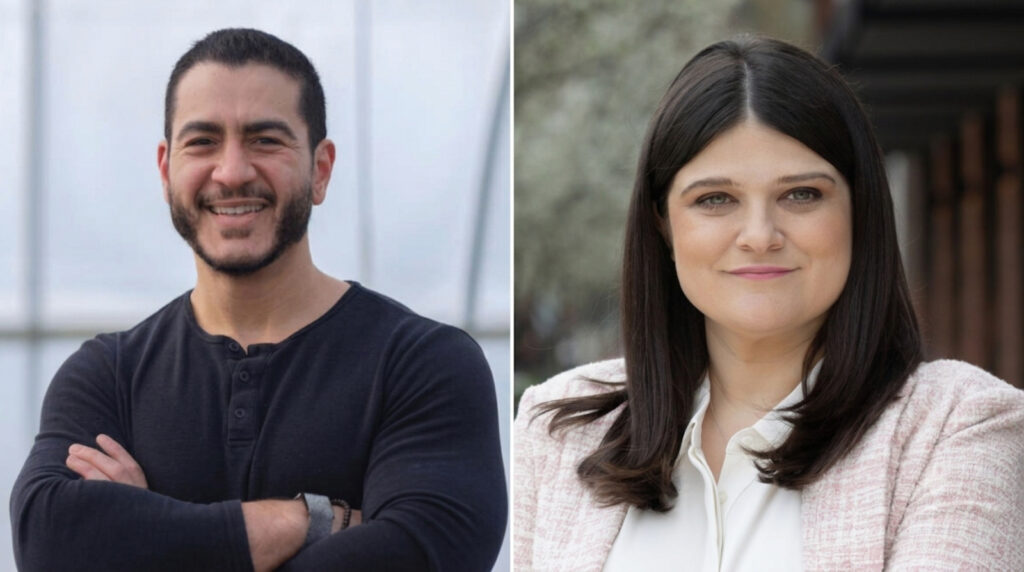
The winner of the Aug. 4 contest between centrist Haley Stevens and progressive Abdul El-Sayed will face off in the midterm election against the presumptive Republican nominee, former Rep. Mike Rogers. President Donald Trump, who endorsed Rogers and campaigned with him Monday in Michigan, called him “one of the best candidates we have anywhere.”
Both parties see the general election in November as crucial – Democrats hope to retain retiring Sen. Gary Peters’ seat in a bid to control the Senate, while Republicans see it as an opportunity to grow their majority or cushion losses elsewhere.
With the Democratic primary just days away, El-Sayed is favored to win, according to RealClearPolling’s most recent polling average, which shows him ahead by 8 percentage points.
The choice between the two Democratic candidates could reverberate well beyond Michigan, offering an early verdict on which wing of the party is better positioned to win in battleground states.
“It is certainly going to be seen that way nationally,” Matt Grossmann, a political scientist, author and director of Michigan State University’s Institute for Public Policy and Social Research, told Michigan Advance. “This would be the first test of, ‘well, this succeeded in a swing state.’ Or it will be taken as a sign that swing-state victories are harder. People do have some concerns about the electability of further left candidates.”
Haley Stevens
The favorite of the Democratic Party establishment, Rep. Haley Stevens said she is running to fight for the economy “while standing up to the Trump-Musk chaos agenda.”
“When elected, she will fight to lower costs, protect the benefits that Michiganders paid into and earned over a lifetime of work and defend our personal freedoms,” her campaign website says.
Stevens has received high-profile Democratic endorsements, including from Peters and Michigan Gov. Gretchen Whitmer.
“As governor, I’ve had one strategy: get things done,” Whitmer said in a video endorsing Stevens. “Just like me, Haley will do whatever it takes to get things done for the people of Michigan, and we need her more now than ever,” she said, adding that “Haley is as Michigan as it gets.”
Stevens, in Monday’s final debate against El-Sayed, portrayed herself as the better-positioned candidate to take on a Republican in the general election.
“Abdul is running for celebrity. Republicans are propping up his campaign,” she said. “I’m going to stop Mike Rogers from getting anywhere close to the United States Senate, which is why he doesn’t want to run against me.”
Israel has been a major issue in the race, as it was during the 2024 presidential election in Michigan, with Democrats divided on the issue.
Asked by the moderator whether voters should be concerned about “more than $46 million” in spending supporting her campaign by the American Israel Public Affairs Committee, or AIPAC, Stevens said, “Absolutely not.”
“I want to see long-term peace. I want to see a two-state solution,” she said, adding that she is proud to represent a large Jewish community. “I don’t think there’s much difference between super PACs going in for Abdul or super PACs going in for me. We have a problem with campaign finance reform in this country.”
Abdul El-Sayed
El-Sayed, a former public health official endorsed by Vermont Sen. Bernie Sanders and New York Rep. Alexandria Ocasio-Cortez, lists abolishing ICE and Medicare for All among his top campaign priorities. He has framed the race as a contest between grassroots support and establishment money.
“I don’t take money from the corporations who are jacking up your prices in the first place,” he said when asked during Monday’s debate about addressing the high cost of living. “When you’re bought off by DTE and Blue Cross and Big Pharma and Big Tech and AIPAC, don’t be surprised that there’s a quid pro quo that comes with that,” he said, adding that he is “the only candidate in this race who doesn’t take any money from corporations.”
He also criticized AIPAC’s support for Stevens.
“The difference between us is $46 million of AIPAC spending. They’ve set a record in this race to help elect my opponent because they know that she’ll be a reliable vote,” El-Sayed said.
Heartlander News reached out to both campaigns for comment on the upcoming primary but did not receive a response by the time of publication.
Republicans
As Rogers runs unopposed in the Republican primary, polls suggest he fares better against El-Sayed than Stevens in a general election. In a recent Michigan Education survey, Rogers leads El-Sayed by 10 percentage points while running essentially even with Stevens.
As Democrats debate their party’s direction, Rogers has made clear whom he would rather face in November.
“If he wins, I think we’re in good shape,” Rogers said of El-Sayed in a private call reported by CNN. “I mean, I think he’s so radical, I think he’s going to lose big parts of the west part of the state. We think we can do well in part of the southeast part of the state. I think we’ll do well if he in fact is the nominee.”