Jesus in the classroom: How chaplains can morally reform American public education (part 2)
Chaplains are entering public schools in numerous states across the U.S., marking a return to a system supporters say is both necessary for moral and social stability and older than the nation…
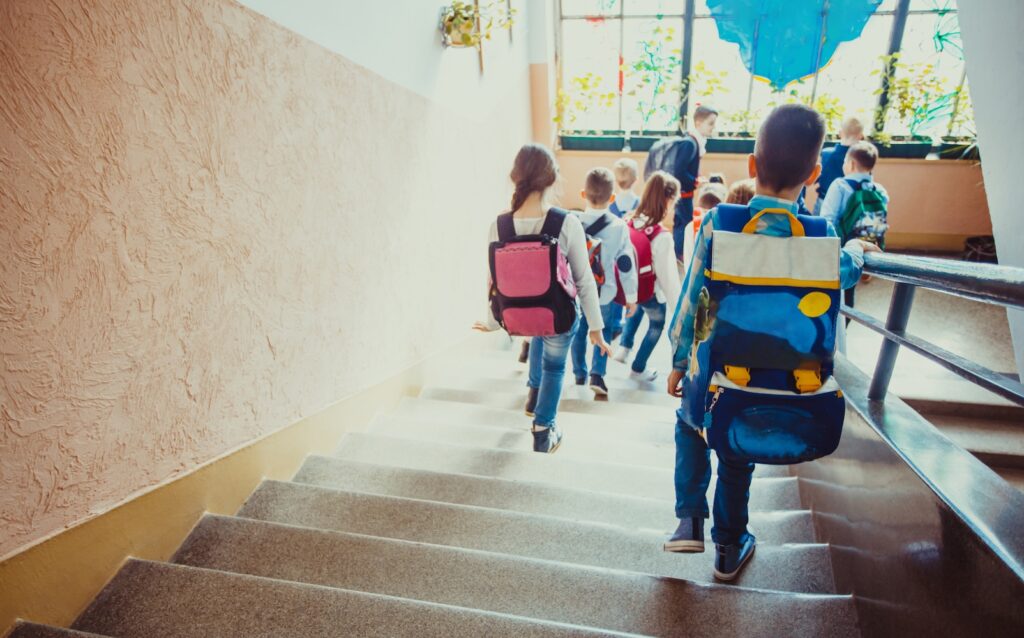
Chaplains are entering public schools in numerous states across the U.S., marking a return to a system supporters say is both necessary for moral and social stability and older than the nation itself.
“Chaplains are the very definition of free exercise of religion,” Rocky Malloy, founder of the National School Chaplain Association, or NSCA, told The Lion in an interview.
The chaplaincy today and its history
Today, approximately 7,000 chaplains serve in the U.S. armed forces as federal employees, Malloy said. That includes chaplains serving on active duty, in reserve components, the National Guard, service academies, the Coast Guard and special assignments.
Additionally, more than 35,000 chaplains serve the public in industries including public safety, health care, higher education and transportation.
“From a constitutional and policy standpoint, school chaplaincy aligns naturally with existing public-sector chaplain models already operating nationwide,” Malloy said in a statement.
As protected federal clergy, the office of chaplain predates the U.S. Constitution, he said.
“The very first act of Continental Congress was to establish chaplaincy,” Malloy said. “So, chaplains are the oldest existing institution in the United States.”
Mission work that became educational
Malloy first employed chaplains in schools during missionary work in Latin America in the early 2000s. While in Bolivia, he witnessed crimes committed against children living on the streets.
He said he realized keeping children in school was one of the best ways to protect them from street life. Children were also more likely to remain in school after hearing the Gospel and learning about Jesus through the Bible, he said.
Malloy and his wife developed a biblical curriculum teaching principles such as love, creation, purpose, work, productivity, leadership and family. The curriculum spread as communism gained more control over the country, he said, leading to opposition to biblical instruction.
In response, Malloy shifted the program from curriculum-based to chaplain-based, allowing biblical teachings to remain in schools through relationships with chaplains. He said the program expanded to 22 countries, which witnessed decreases in teen pregnancy, drug addiction and violence.
Concerns about American education
Meanwhile, violence, sexual misconduct and teacher burnout increased in American schools, Malloy said.
During the 2015-16 school year, more than 80% of students reported being sexually assaulted, 24% reported participating in a school fight and fewer than half of teachers remained in the profession after five years, according to data Malloy cited from the National Center for Education Statistics. He also pointed to more than 1.4 million crimes reported in schools during that period.
Malloy argued American schools need renewed spiritual authority.
“Our public schools are creating brain damaged kids by denying them the ability to be the spiritual beings they are,” Malloy said, citing research from Dr. Lisa Miller, a Columbia University psychology professor who found religious belief and spiritual practices correlate with thicker brain cortices.
Spirituality and the military
The U.S. Army partnered with Miller in 2021 to launch the Chaplaincy Integration Pilot program focused on soldiers’ “spiritual readiness.” The Navy later hired additional chaplains in 2023 as part of suicide prevention efforts.
Gen. David H. Berger, who served as commandant of the Marine Corps until 2023, compared spiritual fitness to physical fitness for service members.
Malloy said the military’s increasing emphasis on chaplaincy demonstrates a similar need in public schools.
“Teachers are some of the most valuable people in our society,” he said. “Certainly, K-12 students – they’re the whole future, right? So, why would we deny them the same spiritual care that we provide military, police, hospitals, and all of the other first responders?”
Bringing chaplains to U.S. schools
In 2021, Malloy moved his family to Houston to help expand school chaplain programs in the United States. Two years later, Texas enacted the Texas Chaplain Act, which Malloy helped write. Since then, Alabama, Florida, Louisiana and Missouri have passed similar laws, and legislation has been introduced in roughly 30 additional states, he said.
Malloy said schools nationwide may hire chaplains even without state legislation because chaplaincy is already recognized federally.
“Any school in the United States can have a chaplain on the payroll. No legislation needs to be passed,” he said.
Missouri’s law, passed in 2025, specifically protects principals and superintendents from legal liability tied to hiring chaplains, which Malloy said encouraged schools to move forward with the practice.
Church and state concerns
Malloy argued school chaplains do not violate the principle commonly referred to as the separation of church and state.
“Separation of church and state” does not appear in the Constitution, he said, adding that chaplains instead protect religious liberty as federally recognized public servants.
“Our chaplains carry a badge. That badge says first responder,” Malloy said. “Their credentials are on the back. You’re a badged official on campus. You’re an official first responder.”
Chaplains receive training in CPR, first aid and emergency procedures, but Malloy said their primary role is spiritual and relational support.
If a chaplain encounters a struggling student from a Jewish family, for example, the chaplain would help connect the student with a rabbi while also ensuring the student’s safety, he said.
“The chaplain’s role is relational,” he said. “You’re not a street evangelist.”
Malloy said a chaplain’s greatest value is often a “ministry of presence” that discourages misconduct before it happens.
“People check themselves: ‘That man or woman, they know what’s supposed to be happening here. They talk to God, and what we’re doing is not godly,’” he said. “It checks people. It changes the culture of the school. And I’ve got 39,000 schools to prove it.”
Becoming a certified chaplain
Any school staff member may become certified through NSCA’s 80-hour training program. Candidates must pass state and federal background checks, submit recommendation letters and provide a pastor’s endorsement confirming at least 2,000 hours of ministry service.
Malloy said the U.S. program differs from versions used in Latin America because each country’s laws vary. Since many Latin American countries are predominantly Catholic, those programs are more explicitly biblical, while U.S. chaplains operate under constitutional protections for religious liberty.
As a private organization, however, NSCA only certifies Bible-believing Christians, he said.
Malloy said the organization has certified more than 50,000 chaplains serving in 39,000 schools across 23 countries and reaching approximately 37 million students daily.
NSCA is also partnering with the United States Family Chaplaincy Network on an 18-month initiative called Project Save America. According to a proposal shared with The Lion, the effort aims to “recruit, train, certify and support” 1,500 school chaplains nationwide.
“Project Save America applies the historic American chaplaincy model to the modern school campus,” the proposal states. “Properly structured chaplaincy provides Christians with a lawful, constitutional pathway to live out, express, and share their faith in public service while operating within clear professional boundaries.”
The proposal describes school chaplaincy as a “child-protection, teacher-support, and campus-stabilization strategy.” While chaplains would not replace counselors, social workers or administrators, the proposal says they would serve school communities often “disconnected from God, prayer, biblical truth, moral clarity, and Christian influence.”
“The chaplain focuses on the relational, emotional, moral, and spiritual condition of the school community itself,” the proposal states.
Read part 1 of the series: Jesus in the classroom: How a chaplain movement saving Bolivian street children could impact US schools