WNBA standout reaffirms opposition to transgender males in women’s sports
Indiana Fever guard Sophie Cunningham recently said female athletes should not have to compete against males who identify as transgender.
Cunningham, who has gained noteriety for…
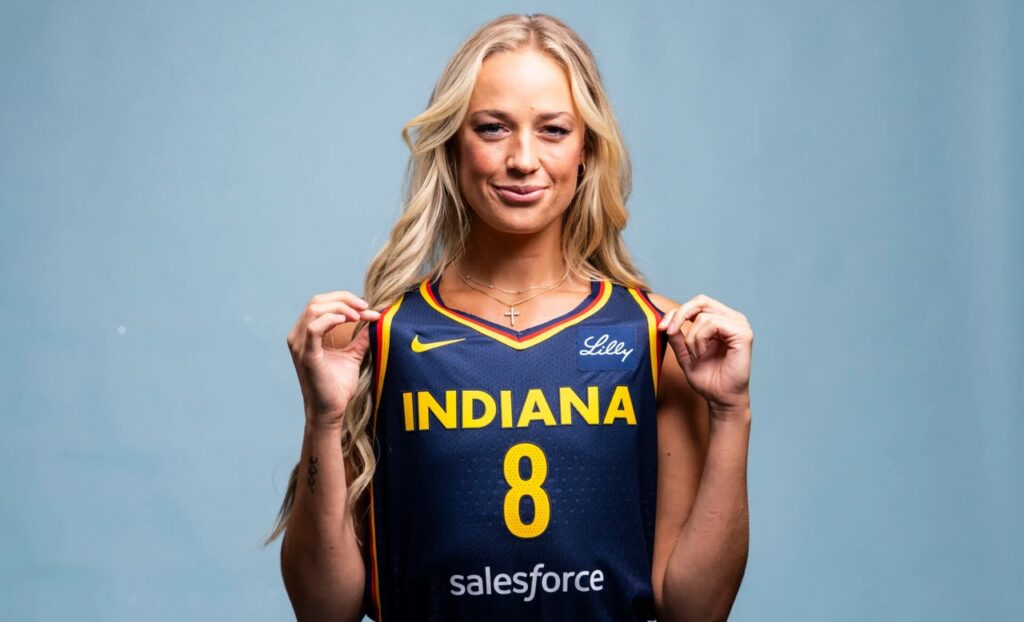
Indiana Fever guard Sophie Cunningham recently said female athletes should not have to compete against males who identify as transgender.
Cunningham, who has gained noteriety for defending teammate Caitlin Clark, addressed the issue in a new ESPN profile after facing criticism over her views.
“I got a lot of negative feedback about me hating trans. And I’m like, ‘I never once said that,’” Cunningham said, adding treating others with care does not require ignoring the truth about anatomical sex.
“I think that I am here to extend love,” she said. “But I also think with that love is truth, being honest. And I want to protect young girls in a locker room, or young girls in sport who shouldn’t have to go against biological men.”
The athlete said she does not consider herself firmly tied to either major political party.
“I’m very much in the middle,” she said. “I agree with things on both sides, disagree with things on both sides. And that’s all I’ve ever said about my political beliefs. But people love to assume.”
The Columbia, Missouri, native helped the Rock Bridge High School girls basketball team win four straight Class 5 state championships, scoring 1,983 points over her career. She then played for the University of Missouri from 2015 to 2019, becoming the Tigers’ all-time leading scorer with 2,187 points.
She started all 129 games she played at Missouri and helped the school reach the NCAA Tournament for four consecutive years. Mizzou inducted her into its Athletics Hall of Fame in 2025.
The 6-foot-1 Cunningham, who turns 30 next month and wears a cross around her neck, has spoken about biological differences in sports before.
As Heartlander News previously reported, she said in November 2025 that elite male athletes have physical advantages over female athletes.
“I don’t want to be unrealistic or delusional,” she said at the time. “Like, men are just stronger, bigger, athletic. They just are a different build. So if you put them up against females, yeah, they’re gonna win.”
Her latest comments come as more sports groups and government bodies move to protect female competition.
The NCAA changed its rules in February 2025 to bar males from competing on women’s teams. President Donald Trump also signed an executive order directing the federal government to enforce Title IX based on biological sex.
In June, the U.S. Supreme Court upheld state laws reserving girls’ and women’s teams for females. The court said sex-based sports rules can help prevent injuries and provide fair competition.
The ruling also recognized that when a male takes a place on a female team, a girl may lose a roster spot, playing time or a medal.