Texas Democrats target state abortion restrictions before blue wave candidates even take office
Texas Democrats are looking to modify or circumvent the state’s abortion restrictions after winning the governorship, state House and attorney general’s office in the midterm…
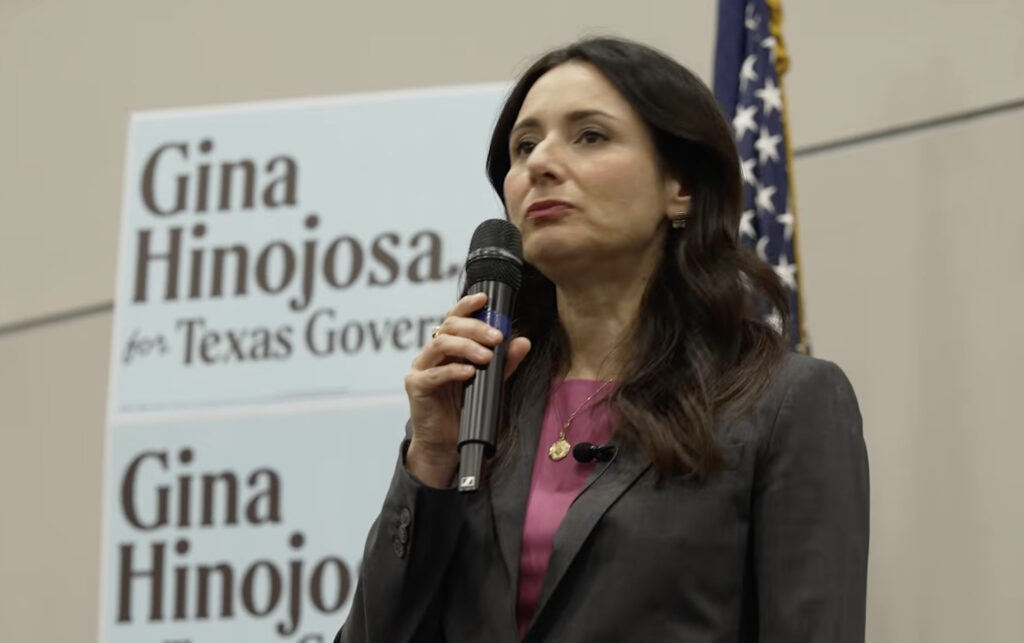
Texas Democrats are looking to modify or circumvent the state’s abortion restrictions after winning the governorship, state House and attorney general’s office in the midterm elections.
Texas law currently restricts abortion at all stages of pregnancy except in rare cases in which the mother’s life is threatened. State Democrats say they will attempt to change those restrictions through legislative bills, constitutional amendments and executive actions.
“I think that the midterms really have changed some of the thinking around what is possible for legal protection for reproductive rights in Texas,” Rachel Rebouche, a professor at The University of Texas School of Law, told CBS Austin.
Bill would overturn state abortion restrictions
State Rep. Donna Howard, a Democrat representing the Austin area, introduced a bill Nov. 9 targeting three state abortion laws: the 2021 Heartbeat Act, a 1925 law and the 2022 trigger ban, which took effect after the U.S. Supreme Court returned abortion policy to the states in Dobbs v. Jackson Women’s Health Organization.
Howard’s House Bill 126 would also repeal the law requiring a pre-abortion sonogram and the state’s 2021 restrictions on abortion medications, according to CBS Austin. Additionally, the measure would abolish restrictions on sex-rejecting procedures for minors, such as cross-sex hormones and surgeries.
The legislation would have to pass both chambers of the Texas Legislature in 2027 – the Democrat-controlled House and Republican-controlled Senate – before reaching Gov.-elect Gina Hinojosa’s desk. The Texas House will have 82 Democrats and 65 Republicans, while the state Senate will have 12 Democrats and 19 Republicans, according to The Texas Tribune.
“I think what that does is it puts on record the people who will vote against it,” Rebouche told CBS, acknowledging that the legislation may not succeed this year. “I also think it builds coalitions and momentum for a time when such a bill can pass.”
Proposed constitutional amendments would legalize abortion up to birth
Howard’s bill is not the only legislation targeting the state’s abortion restrictions. Rep. John Bucy, a Democrat who also represents the Austin area, filed a resolution Nov. 9 proposing an amendment to the state constitution that would assert “an individual’s right to personal reproductive autonomy.” House Joint Resolution 24 would legalize abortion up to 24 weeks of pregnancy, or later in cases involving the unspecified health of the mother.
Constitutional amendments require a two-thirds vote in both chambers of the Legislature, followed by approval from a majority of voters in an election.
“Sometimes there’s more bipartisan support in constitutional amendments because then you allow the voters to decide,” Bucy told CBS. “Sometimes the other approach works better. So we’re gonna be running both avenues.”
If passed, however, a constitutional amendment becomes part of the state constitution, making it more durable, Rebouche explained.
“There’s much less durability for a statute as compared to a constitutional amendment, which is much harder to pass, has more staying power, cannot just be rewritten or repealed by a future legislature,” she told CBS, “so it has a permanency, and it forces courts to think about future abortion restrictions as constitutional matters.”
Newly elected Rep. Samantha Lopez-Resendez, another Democrat representing part of Austin, also filed a constitutional amendment that would prevent the Legislature from restricting access to abortion, CBS reported.
Executive actions and lawsuits involving abortion
Beyond the Legislature, Gov.-elect Hinojosa has also promised to circumvent Texas abortion laws. Although she cannot repeal the restrictions, she can change how they are applied, University of Houston political science professor Brandon Rottinghaus told The Texas Tribune.
“She can influence how portions of the law are implemented, and how certain exceptions are interpreted and other reasonable additional restrictions that might become law eventually,” he said.
Hinojosa, who currently represents Austin, has promised to protect doctors who perform abortions from legal penalties, even though lawmakers previously established such protections for cases in which the mother’s life is threatened, according to The Texas Tribune.
Texas Attorney General-elect Nathan Johnson has also promised to stop enforcing state laws against chemical abortion pills shipped from other states, The Texas Tribune reported.
“I will not pursue the judicially absurd position that Texas law has extraterritorial effect. I can honor other states’ shield laws,” Johnson said, referring to Attorney General Ken Paxton’s lawsuits against other states for shipping abortion pills into Texas.
The Department of Justice joined a Texas lawsuit Nov. 6 alleging that Planned Parenthood fraudulently billed Medicaid after Louisiana and Texas moved to end the funding and the payments expired. Paxton joined the case in 2022 and is seeking more than $1.8 billion in reimbursements, penalties and fees, according to The Texas Tribune.
The case is expected to go to trial in April 2027 before U.S. District Judge Matthew Kacsmaryk, whom President Donald Trump appointed and who worked on anti-abortion cases as a lawyer, The Texas Tribune reported.
Johnson, who will replace Paxton in January, has said he is reviewing the case. However, with the DOJ involved, the case is unlikely to end even if Texas withdraws, according to The New York Times.
“We are reviewing this action closely, including what it means for Texans and what the law allows,” Johnson told The Times. “When I take office as Attorney General, I will take appropriate action in the interests of my state.”
(Image credit: Screenshot/YouTube/Gina Hinojosa)