Texas chief justice-elect seeks to end religious exemption for judges who decline same-sex weddings
Texas Supreme Court Chief Justice-elect Maggie Ellis wants to eliminate a rule protecting judges who refuse to perform same-sex weddings because of their religious beliefs.
The Democrat and…
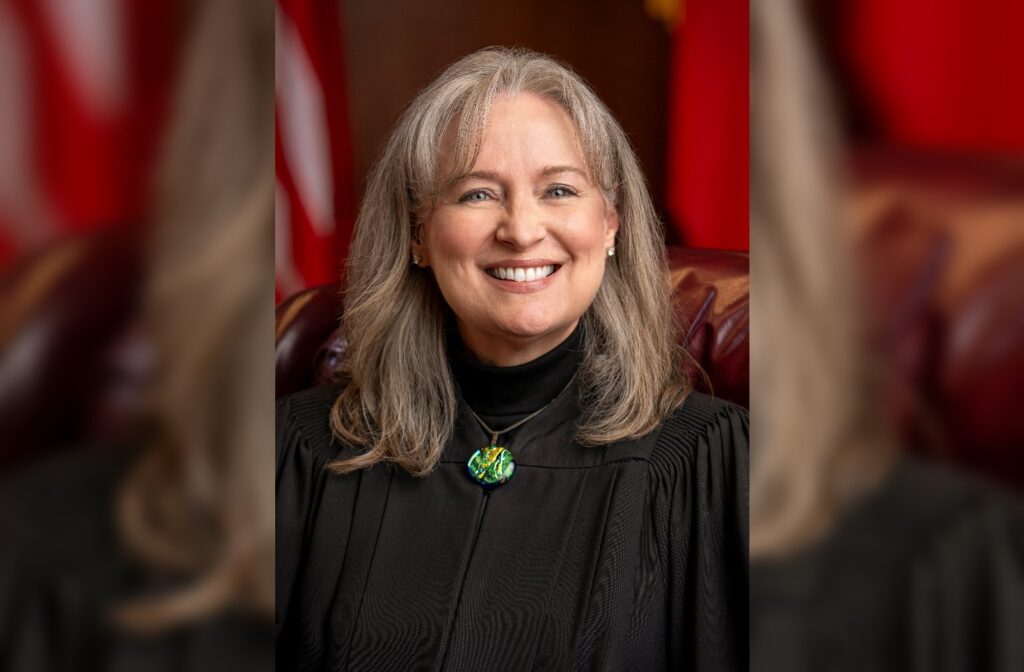
Texas Supreme Court Chief Justice-elect Maggie Ellis wants to eliminate a rule protecting judges who refuse to perform same-sex weddings because of their religious beliefs.
The Democrat and first openly LGBTQ person to win statewide office in Texas says judges who perform weddings should serve every legally eligible couple or stop offering the service, KWTX reported.
“It’s really the wrong direction for our Supreme Court,” Ellis told the station. “It’s back-door discrimination.”
Ellis, who will become the court’s first female chief justice, cannot make the change alone. Republicans will retain a 5-4 majority when the new justices take office Jan. 1. All five returning Republicans signed the order adopting the protection.
A separate court judgment also protects a Christian judge who refuses to perform same-sex weddings.
First Liberty Institute defended the judge in court and says it will fight similar cases.
“It’s sad that an incoming Justice’s first public statement is one against religious freedom,” First Liberty President Kelly Shackelford said in a recent statement.
“We’ve won in litigation on this very issue,” he added.
Religious discrimination?
Ellis defeated Republican Chief Justice Jimmy Blacklock last week. Democrats won all four Supreme Court races on the ballot, according to the state’s election results.
She previously worked as a prosecutor in Travis County and as a state administrative law judge, according to her court biography. Ellis won a seat on the Austin-based Third Court of Appeals in 2024 and specializes in juvenile law and child welfare law.
She also previously worked as a public school teacher and was a foster mother, according to her campaign biography. She earned her law degree from Baylor University.
Ellis told KXAN that she and her former wife married in New York on June 26, 2015. That same day, the US Supreme Court ruled in Obergefell v. Hodges that same-sex couples have a constitutional right to marry.
Ellis said the wedding rule was one reason she ran for chief justice. She also argued that it could allow judges to refuse weddings because of a couple’s race or religion.
“It’s essentially a government actor saying, I am open for business unless you are X, Y, and Z,” she said.
The Texas Supreme Court unanimously adopted the protection in October 2025. The comment protects the right of “a judge to publicly refrain from performing a wedding ceremony based upon a sincerely held religious belief.”
Texas judges may perform weddings, but state law does not require them to offer the service.
At least five of the nine justices must support a rule change, according to the court’s rules guide. Even if Ellis wins the support of all three incoming Democratic colleagues, she would still need at least one Republican vote.
However, Ellis could face legal challenges even if the court changes the rule.
Prior court ruling protects judges
McLennan County Justice of the Peace Dianne Hensley resumed performing weddings for opposite-sex couples after the Obergefell ruling. Her Christian faith prevented her from performing same-sex ceremonies.
Hensley arranged referrals to other officiants who charged the same price, including one located three blocks from her office, as Heartlander News previously reported. No same-sex couple had complained about her referral system, according to her lawsuit.
“Judge Hensley came up with a way that actually helped everybody,” First Liberty Executive General Counsel Hiram Sasser previously told Heartlander News.
However, the State Commission on Judicial Conduct warned Hensley in 2019. She sued under the Texas Religious Freedom Restoration Act.
In a separate case, the Texas Supreme Court ruled in January that the ethics provision at issue did not bar judges from declining to perform same-sex weddings for moral or religious reasons while continuing to perform opposite-sex weddings.
Hensley later secured a final judgment awarding her $10,000 in damages and $630,000 in attorney fees.
The court also barred the commission from investigating or punishing Hensley for refusing to perform same-sex weddings because of her religious beliefs, “regardless of whether Judge Hensley continues to perform marriages for opposite-sex couples.”
Even if the Texas Supreme Court changes its rules, the order protecting Hensley would remain in place unless a court changes or overturns it.
Other judges could also seek protection under Texas’ religious freedom law. Under the law, the government must have a compelling reason to restrict someone’s religious freedom and use the least restrictive means to achieve that goal. Judges can seek court orders to block violations.
Changing the rule would not eliminate those legal protections.
“But Judge Hensley stood strong and ultimately changed the rules and prevailed,” Sasser told Heartlander News.
Hensley, who won another term last week, told KWTX that Ellis’ plan “sounds unconstitutional and tacky to me.”
(Image credit: Maggie Ellis, Texas Judicial Branch)