Supreme Court to kick off next term with high-stakes climate change case
The Supreme Court is set to begin its next term with a blockbuster climate change case that will determine if local governments can hold oil companies accountable for their alleged contributions…
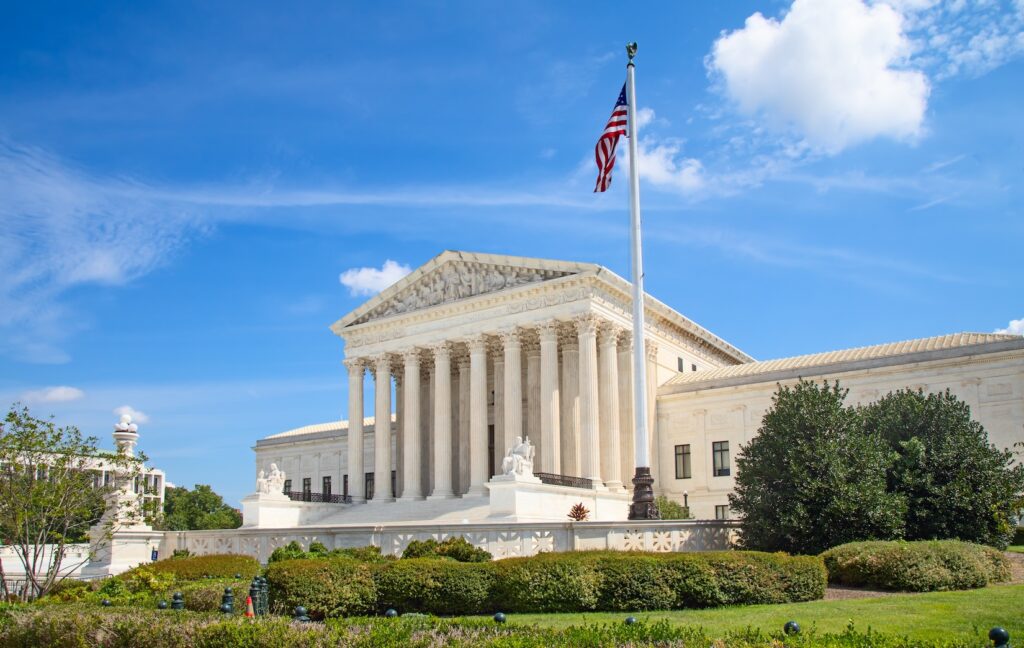
The Supreme Court is set to begin its next term with a blockbuster climate change case that will determine if local governments can hold oil companies accountable for their alleged contributions to climate change.
The justices are scheduled to hear arguments on Oct. 5 in the case, Suncor Energy v. County Commissioners of Boulder County, in the first arguments of the new term. Exxon Mobil and Suncor, a Canadian energy company, are appealing a Boulder, Colorado, lawsuit that seeks to hold them accountable for emissions-related damages. The case is expected to have implications for dozens of similar climate lawsuits across the country – with potentially billions of dollars at stake. It comes at a time Democratic jurisdictions have targeted oil companies while the oil industry argues it shouldn’t be sued in state courts over a national and international issue.
New polling commissioned by the America Leads Alliance, an energy group that has been fighting climate lawsuits, found that while most Democratic and Republican voters surveyed in Dallas, Detroit and Philadelphia view climate change as a problem, only 6% believed climate lawsuits were the right way to address it, and 62% supported limiting lawsuits over operations that were legal when they occurred.
“If it was legal at the time, you can’t go back and retroactively punish them,” one participant, a swing male voter in Detroit, said, in the poll reported by Daily on Energy.
The poll found that 73% of voters surveyed feared taxpayers and consumers will end up footing the bill of the lawsuits due to higher energy prices. Of those who supported lawsuits against oil companies, only 39% said they would be willing to pay more for energy as a result of them.
Energy companies ask the justices to weigh in
After the Colorado Supreme Court allowed Boulder’s lawsuit against the oil industry to proceed, the companies asked the U.S. Supreme Court to weigh in, arguing it provided the high court with its “best opportunity yet to resolve one of the most important questions currently pending in the lower courts.”
“Energy companies that produce and sell fossil fuels are facing numerous lawsuits in state courts across the Nation seeking billions of dollars in damages for injuries allegedly caused by the contribution of greenhouse-gas emissions to global climate change,” the companies wrote in their petition. “But as the Court has recognized for over a century, the structure of our constitutional system does not permit a State to provide relief under state law for injuries allegedly caused by pollution emanating from outside the State. This case presents the question whether that longstanding principle precludes the state-law claims in the nationwide climate-change litigation.”
The oil companies argued that there are “few, if any, more consequential questions pending in the lower courts concerning the relationships between state and federal law,” asking the justices to “definitively” weigh in before “the energy industry is threatened with potentially enormous judgments.”
The companies urged the court not to let Boulder “make energy policy for the entire country,” arguing that state law cannot “impose the costs of global climate change on a subset of the world’s energy producers chosen by a single municipality.”
Heartlander News reached out to an attorney for the oil companies but did not hear back by the time of publication.
Boulder argues it’s a state court issue
Boulder has urged the Supreme Court to let the case keep moving through Colorado’s courts rather than jumping in now, arguing the oil industry’s “novel constitutional theory would vest judges – not legislators – with broad authority to decide in which policy areas ‘federal law must govern,’ and which subjects the states can be trusted to address.”
Boulder Mayor Aaron Brockett said the city is facing “more extreme weather, increased wildfire risk and growing strain on critical infrastructure.”
“At the same time, proposed federal efforts attempt to shield fossil fuel companies from accountability, leaving local communities and taxpayers to shoulder the financial burden alone,” he said in a statement provided to Heartlander News. “Our community should not bear the rising costs of climate impacts caused by decades of deception from the fossil fuel industry.”
Boulder County Commissioner Ashley Stolzmann encouraged the court to allow the case to proceed in state court and “not bail out the oil companies before hearing the facts.”
“Boulder County experienced one of its driest winters on record and is facing deepening drought,” she said in a statement to Heartlander News, adding that the county is paying the consequences for climate change. “Our state claims raise serious issues that must be decided in state court.”
Trump administration weighs in
The Trump administration also has weighed in on the case, urging the justices to stop what it sees as growing climate lawfare nationwide. Boulder’s lawsuit is “just one of many that have been filed by States and local governments across the country.” Without the Supreme Court’s intervention, “every locality in the country could sue essentially anyone in the world for contributing to global climate change,” according to the Justice Department’s brief.
The Trump administration argued Colorado “may not apply its law to the companies’ conduct outside the State” and that “allowing Colorado to deem the effects of the companies’ worldwide conduct tortious ‘cannot be reconciled with the decision making scheme Congress enacted’ in the Clean Air Act.”
Following oral arguments in the case, a decision is expected by late June or early July 2027.