Supreme Court to hear arguments over prolonged immigration detention in October
The Supreme Court will soon consider whether prolonged immigration detention eventually triggers a constitutional right to a bond hearing, as courts across the country have grappled with whether…
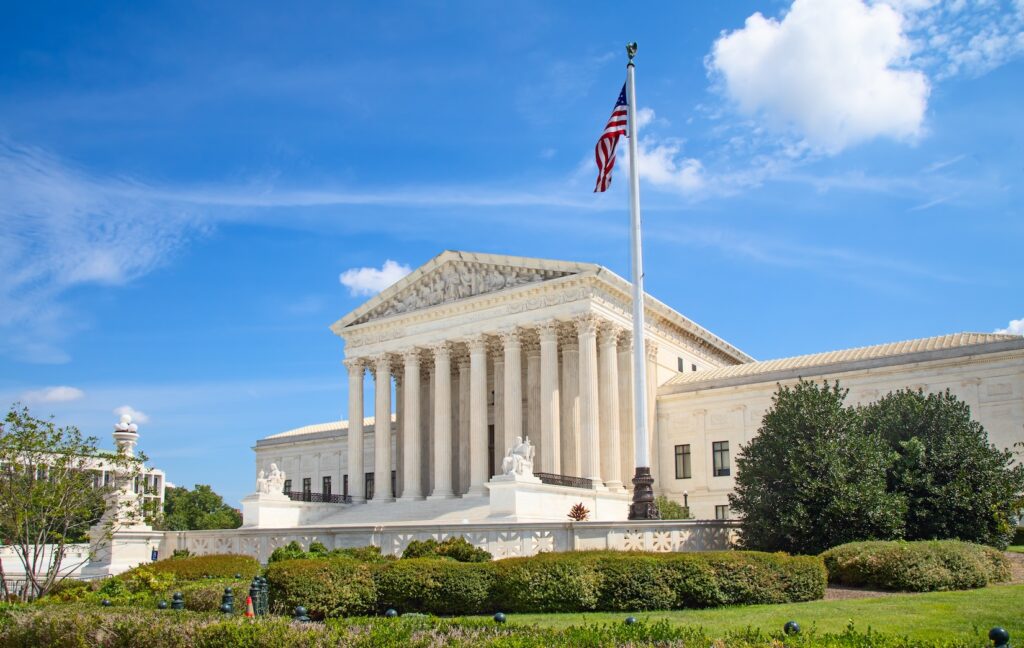
The Supreme Court will soon consider whether prolonged immigration detention eventually triggers a constitutional right to a bond hearing, as courts across the country have grappled with whether migrant detainees have due process rights.
The court will hear arguments Oct. 13 in Genalo v. Black, centering around two Immigration and Customs Enforcement detainees with criminal convictions.
Carol Williams Black, a native and citizen of Jamaica and lawful permanent resident of the U.S., was detained for seven months without a hearing following his conviction of sexual abuse of a minor. Keisy G.M., from the Dominican Republic, was detained for 21 months following a conviction of second-degree assault.
The court is set to consider whether there is a point at which an alien’s detention “pending a decision on whether he is to be removed, becomes ‘unreasonably prolonged,’ such that due process requires a bond hearing.” If a bond hearing is constitutionally required, the court will also weigh whether due process places the burden on the government to “justify the alien’s continued detention by clear and convincing evidence.”
The federal government argued in its brief that Congress has already allowed for detention of criminal aliens without bond for public safety reasons.
“The statute at issue in this case, 8 U.S.C. 1226(c), governs the detention of ‘criminal aliens’ while their removal proceedings are pending. Before Congress enacted Section 1226(c), many criminal aliens could seek release from immigration detention on bond. But experience showed that bond hearings failed to prevent substantial numbers of criminal aliens from absconding or further endangering the public after their release,” the government argued, noting that Congress therefore required the government to “keep criminal aliens in detention while their removal proceedings are ongoing.”
The government pushed back against a Second Circuit court panel’s decision that detention that has become “unreasonably prolonged” triggers a due process right to a bond hearing in which the government bears the burden of proving the detainee is a flight risk or danger to the community.
“Those holdings have no basis in the Constitution,” the brief noted. Even if “the Constitution required a statutorily unauthorized bond hearing, it would not entitle the alien to a presumption of release – let alone one that could be overcome only by clear and convincing evidence.”
The government argued that because lower courts are split on the issue, the case provided a “clean vehicle” for the Supreme Court to chime in.
The American Civil Liberties Union, which is representing Black and G.M., disagreed, saying the cases are “strikingly poor vehicles” for the court’s consideration. ACLU attorneys argued the case was moot because Black voluntarily left the U.S. and withdrew his appeal of his removal order, while G.M. was released from federal detention in 2022.
The Justice Department and the ACLU did not return Heartlander News’ request for comment ahead of the oral arguments.