State Department report details Cuba’s deep ties to American radical-left groups
A State Department report alleges the Cuban government spent decades cultivating domestic political organizations, radical activists and terrorist networks in the United States as part of…
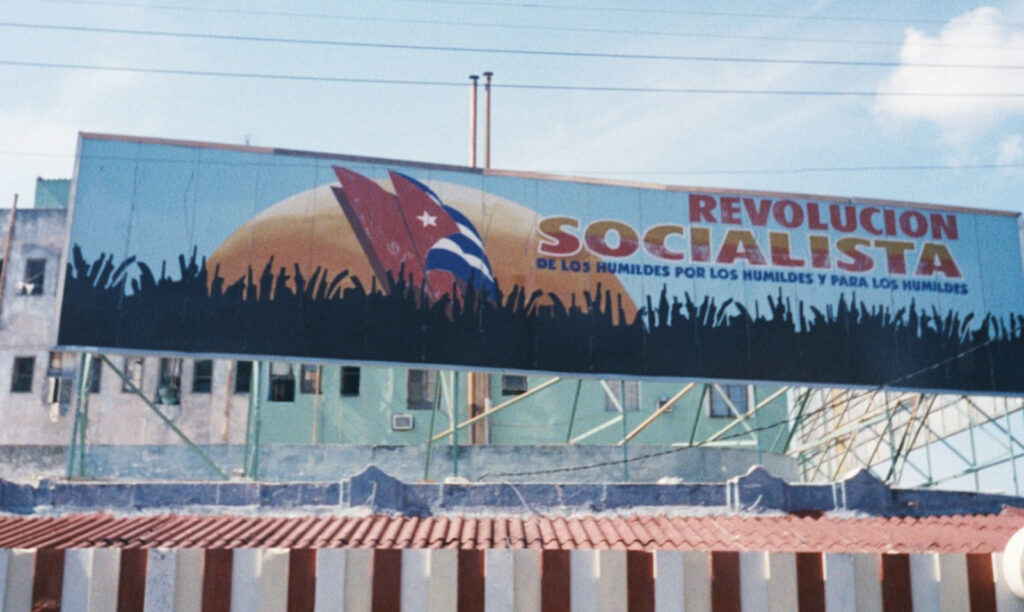
A State Department report alleges the Cuban government spent decades cultivating domestic political organizations, radical activists and terrorist networks in the United States as part of a sustained campaign of subversion.
“It is a campaign that has infiltrated the highest reaches of the U.S. government, recruited and cultivated generations of American activists, backed an unprecedented wave of left-wing terrorism on American soil and carried out one of the most durable and damaging foreign intelligence penetrations in American history,” the report states.
One intelligence analyst said that while the report contains little substantially new information, it is an important document because it signals the administration’s intentions toward the Cuban regime.
“We can infer that the report is the rationale for a whole-of-government action plan, abroad and at home, to put an end to Cuban Communist subversion once and for all,” J. Michael Waller, senior analyst for strategy at the Center for Security Policy, told Heartlander News. “That’s why we should be enthused about this historic document.”
The 100-page report, titled Cuba: The Capital of 21st Century Communism, traces Havana’s relationships with American groups dating to the 1960s, including the Weather Underground and the Black Panthers.
The report identifies several present-day organizations that it says are connected to or participate in networks cultivated by Cuba’s revolutionary apparatus.
Those groups include the Democratic Socialists of America (DSA), the National Lawyers Guild, Code Pink, the Party for Socialism and Liberation and Antifa-affiliated networks.
One group, the People’s Forum, helped organize the Oct. 8, 2023, Times Square rally praising the Hamas attack on Israel as a “liberation struggle.”
In 2026, the same group partnered with New York’s DSA to recruit up to 4,000 activists for anti-ICE operations, modeling the effort on similar networks in Minneapolis, with training sessions held at the People’s Forum headquarters in New York City.
Since 2021, the People’s Forum’s reported revenue has grown from $486,926 to $4.43 million – an increase of more than 800%, according to the report.
“The overwhelming bulk of that funding has come from the political network of Neville Roy Singham – the Shanghai-based American technology magnate who has emerged in recent years as one of the most influential living sponsors of far-left groups and causes, with a reach that now rivals even that of George Soros,” the report states.
In March, Heartlander News detailed the rise of Singham as a leftist political financier with ties to China.
With new funding sources, Cuba’s proximity to the United States makes it easier to project influence, the report argues.
“This is 90 miles from our shores,” Secretary of State Marco Rubio said about Cuba following the report’s release. “This is a regime that has spent the better part of 50 years destabilizing the region.”
The report mentions DSA at least 25 times, noting that the group started a fund in 2022 to help organize pro-socialist activities across multiple countries as part of the Venceremos Brigade, which was founded by radical U.S. activists in the 1960s.
According to the report, the brigade’s purpose is to show support for Cuba and help export revolution.
Los Angeles Mayor Karen Bass is identified in the report as a prominent brigade organizer who traveled regularly to Cuba before entering elected office.
The DSA has publicly described its political objectives.
“DSA’s Cuba Solidarity Working Group has reportedly expressed its intent to include more ‘endorsed electeds’ in the delegations as a vehicle to ‘cultivate Cuba’s solidarity in up-and-coming politicians’ and build a ‘pro-Cuba block basically of elected officials … especially at the federal level,'” the report states.
The report identifies the National Network on Cuba as another major component of Havana’s American infrastructure.
The coalition includes more than 60 organizations, including DSA, the Communist Party USA, the National Lawyers Guild, Code Pink, the Party for Socialism and Liberation, the United Church of Christ, Armed Queers, the Venceremos Brigade and Antifa-linked networks.
The report comes less than a week after the administration announced an alleged effort within the U.S. government to conceal a 2020 Chinese government hacking incident that reportedly exposed more than 220 million voter files.
Progressive critics have described the Cuba and China reports as an effort “to emulate the anti-communist hysterias of the 1910s and the 1950s.”
“It is clear that all of this is a response to the recent success of insurgent left-wing candidates in Democratic primaries, especially those with ties to the Democratic Socialists of America,” New York Times Opinion columnist Jamelle Bouie wrote in defense of DSA.
The Cuba report itself offers relatively few policy recommendations.
Instead, it calls for exposing the Cuban regime’s influence networks, scrutinizing organizations and travel programs used to cultivate American activists, and recognizing Cuba as part of a broader alliance with adversaries including China, Russia and Iran.
“To mistake Cuba’s poverty for harmlessness is to misunderstand the threat entirely,” the report concludes. “Its material weakness was never the measure of its danger. Its power was always ideological, subversive, and parasitic – and it has proven remarkably durable, outlasting the Soviet empire that helped build it.”
(Image credit: Wikimedia Commons, cropped https://commons.wikimedia.org/wiki/File:Cuba_Banner.JPG)