Rhode Island Democratic Party chair resigns after husband charged in alleged $20 million theft of education funds
The Rhode Island Democratic Party chair resigned this week after prosecutors accused her husband of helping steal about $20 million in public money meant to help college students.
Michael…
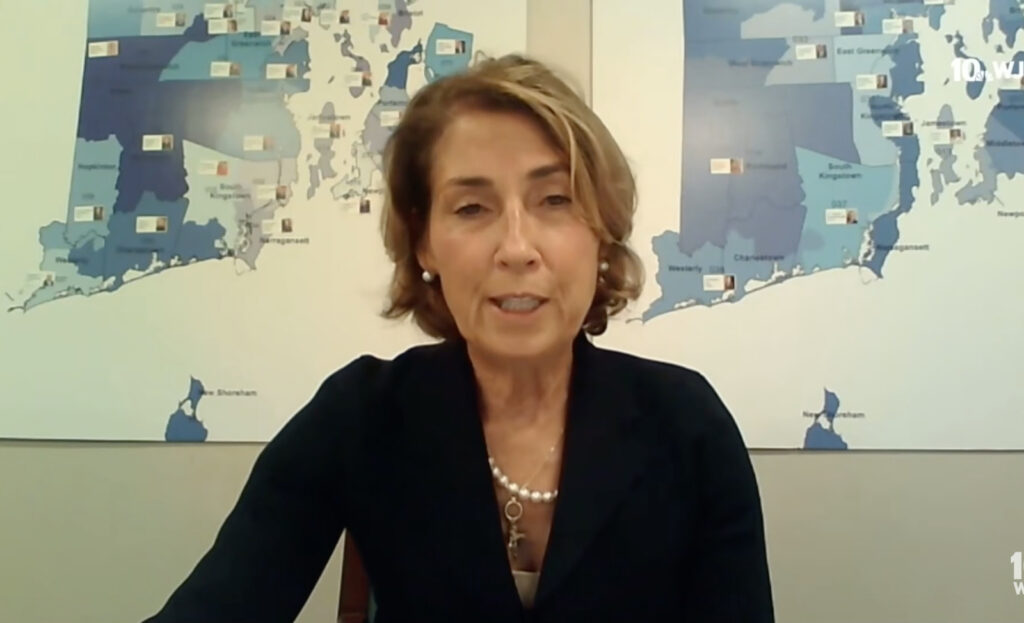
The Rhode Island Democratic Party chair resigned this week after prosecutors accused her husband of helping steal about $20 million in public money meant to help college students.
Michael Perik, the husband of Liz Beretta-Perik, faces 12 felony charges in Ohio. Rhode Island Current reported that he has given more than $100,000 to Rhode Island Democrats over the past 18 years.
Beretta-Perik faces no charges, and her husband has pleaded not guilty.
“I am resigning effective today as Chair of the Rhode Island Democratic Party,” she wrote in an email to party leaders.
She resigned two weeks before the Nov. 3 election. Democratic gubernatorial nominee Helena Buonanno Foulkes urged her to step down Monday night.
“These are serious and concerning allegations,” Foulkes said. “While everyone is entitled to due process, we are weeks away from a pivotal election that will determine the future of our state for years to come. I thank Liz for her service but in the best interest of the future of Rhode Island, she should step aside at this time.”
Allegation concern a closed Ohio college
The Ohio case involves Eastern Gateway Community College, a public community college in Steubenville that shut down two years ago. The alleged scheme involved money from federal student aid and state subsidies between 2017 and March 2022.
Perik faces charges including aggravated theft, bribery and money laundering.
Other defendants are Nicole Rowe Colclasure, president and part owner of the private Student Resource Center, and former college President Michael Geoghegan. Geoghegan was also the college’s chief financial officer. Perik was CEO of the Student Resource Center.
Perik and Colclasure each face 12 felony counts. Geoghegan faces nine.
The college’s free-tuition program helped increase student enrollment. It offered union members and their families a way to attend college without paying tuition.
WJAR reported that enrollment grew from about 8,500 students to more than 60,000 during the period under review. More than 90% took only online classes, and roughly 80% lived outside Ohio.
However, prosecutors say the program’s promise hid how the college actually paid its bills.
The indictment says the defendants made students think unions themselves funded their scholarships. Instead, the program relied largely on Pell Grants for needy students, along with tuition the college wrote off. Some students’ aid helped pay for less-needy students and illegal payments to the companies, prosecutors say.
“Students were also victims of this fraud,” the indictment says.
Ohio Auditor Keith Faber said Perik used four companies to take money from the college. His office alleges the businesses controlled key school functions while receiving payments that violated federal rules.
Officials say the college paid aid for students who didn’t qualify and didn’t check whether students attended classes or dropped them.
The indictment mentions a consultant who found the school owed the federal government about $3.6 million. Geoghegan told him to stop correcting the records because the school had already spent the money, prosecutors allege. The college then fired the consultant after he insisted that it return the money.
Prosecutors allege Colclasure offered a college official an extra $10,000 to influence her work. Perik helped arrange the payments. The company then billed the school for the payments as business costs.
The alleged scheme also involved COVID-19 pandemic stimulus money.
Prosecutors say Perik obtained forgivable Paycheck Protection Program loans for payroll costs the college had already reimbursed. That means his companies received money twice for the same costs.
This wasn’t the college’s only financial problem.
Faber’s office said a federal review found that the college had to repay $44.4 million. The federal review projected more than $259 million in liabilities after the college closed and failed to supply required records. That’s a separate matter from the alleged $20 million theft.
The auditor’s account of the college’s collapse shows enrollment fell 48.9% in fall 2023 after the free-college program ended.
Ohio provided the school with another $6 million in state funding, but its board determined that wasn’t enough to keep the college afloat.
Classes ended in July 2024. The college dissolved three months later.
State auditors questioned more than $17 million in spending from fiscal year 2023. They found problems with financial records and student attendance records, among other issues.
“These public resources were supposed to help disadvantaged students in an area of the state where educational opportunities were scarce,” Faber said earlier this month.
Perik’s political donations also now face scrutiny.
He gave $2,000 to Foulkes’ 2022 gubernatorial campaign. Her current campaign recently told Rhode Island Current it would put the money toward a scholarship at the Community College of Rhode Island.
(Image credit: Screenshot/YouTube/WJAR)