REVIEW: A Christian guide to Christopher Nolan’s ‘The Odyssey’
Odysseus is a victorious Greek warrior-king who is scarred by battle and haunted by the horrors of war – and trying to find his way home to his family in Ithaca.
He and his men set sail…
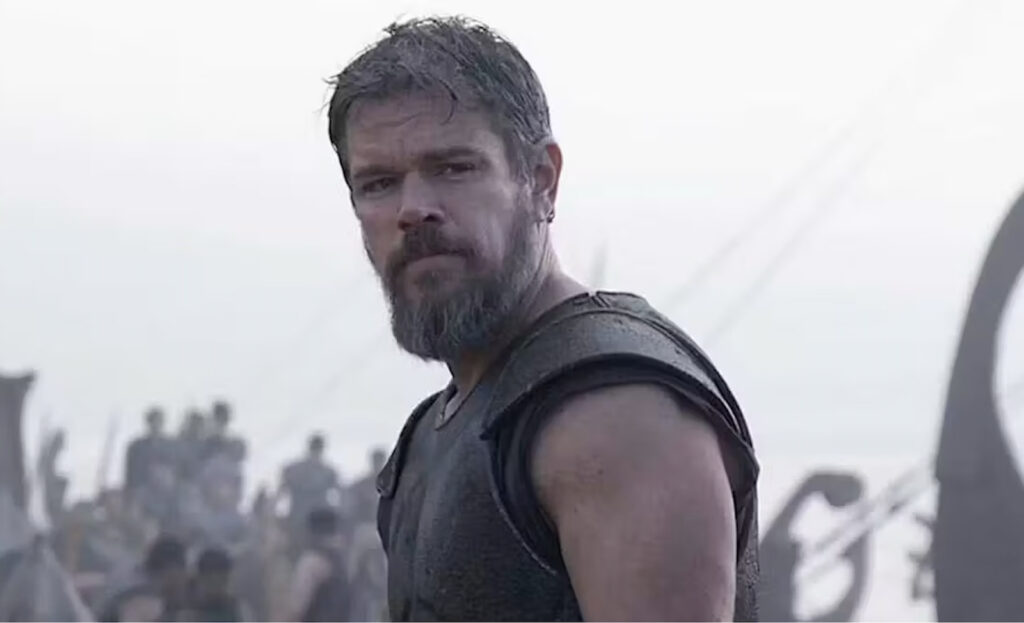
Odysseus is a victorious Greek warrior-king who is scarred by battle and haunted by the horrors of war – and trying to find his way home to his family in Ithaca.
He and his men set sail across the sea, only to be trapped by a giant, man-eating Cyclops and then a witch who turns his soldiers into animals. Then come a deadly whirlpool, a terrifying sea monster and countless other dangers.
Now Odysseus is alone on a mysterious island, with no memory of how he got there.
Christopher Nolan’s new film The Odyssey (R) recounts the epic story of Odysseus, based on Homer’s ancient Greek poem of the same name, following a soldier whose 10-year journey home from the Trojan War is marked by seemingly impossible odds.
As Odysseus (Matt Damon) struggles to find his way home, his wife, Penelope (Anne Hathaway), waits faithfully in the palace, refusing to give up hope that he is still alive. Meanwhile, their son, Telemachus (Tom Holland), sets sail in search of his father, even as a growing number of suitors compete for Penelope’s attention, convinced Odysseus is dead and eager to claim his throne.
It’s a nearly three-hour mythological adventure that recalls old-school epics such as Ben-Hur and The Ten Commandments, unfolding one epic sequence after another with little concern for the clock. Thankfully, the film glides along like a sailboat on a calm sea, making you wish the journey weren’t over when the credits roll.
Part of that is due to the restraint Nolan shows throughout the film. Although rated R, it lands on the lighter end of the spectrum and could have easily earned a PG-13 rating if not for a handful of F-bombs (I counted four) and a few moments of violence that briefly cross the line. Most of the action is intense but largely bloodless – think dozens of warriors being struck down by arrows with little graphic detail. (And because the story unfolds in the world of Greek mythology, viewers won’t hear the misuse of Jesus’ name.) Perhaps the best example of Nolan’s restraint is the Cyclops, who is nude but filmed only from the upper torso and from the feet down.
Contrasting worldviews
For Christian parents and teens interested in worldview, the film offers a sharp contrast between the gods and goddesses of Greek mythology and the God of Scripture. The polytheistic gods encourage virtues such as hospitality and kindness, yet they are also humanlike and consumed by rage, covetousness and emotional outbursts, behaving more like fallen humanity than the holy, sovereign God revealed in the Bible. The difference becomes especially apparent when Odysseus laments early in the film, “Why can’t the gods speak in ways we can understand?”
That isn’t the only apologetics connection. Christian thinkers have long compared the manuscript evidence for the New Testament with that of Homer’s Iliad and Odyssey, arguing that if historians regard Homer’s epics as reliable, the New Testament deserves at least equal consideration. Biola University apologist Clay Jones made that case in a 2025 paper, noting that Homer’s works survive in 1,757 manuscripts, compared to 5,795 Greek manuscripts of the New Testament, whose earliest copies date to within roughly 40 years of the originals instead of about 400 years for Homer’s writings. The New Testament, Jones concluded, is in “a class by itself.”
Of course, most moviegoers don’t buy a ticket for apologetics but for entertainment and inspiration. At its heart, The Odyssey is a story about a longing we all share: the desire for home, family and community, coupled with the courage and perseverance we hope to display when life’s journey becomes difficult. On that front, Nolan’s film soars.
(Image credit: Universal Studios)