‘Resilience and Resolve’: 3 years after Oct. 7, fight against antisemitism continues in Israel and abroad
Three years after the bloody terrorist attacks in Israel on Oct. 7, 2023, the country still faces daily threats of violence and what some consider an even more monstrous enemy:…
Three years after the bloody terrorist attacks in Israel on Oct. 7, 2023, the country still faces daily threats of violence and what some consider an even more monstrous enemy: antisemitism.
“The blood was still not dry in the streets of the kibbutzim before wet ink was being printed on propaganda posters in the United States for college students to be championing terror, and that was funded,” Aaron Evans, vice president of the D.C. Young Professionals chapter for Friends of the Israeli Defense Forces (FIDF), told Heartlander News in an interview.
Evans joined FIDF after watching videos of Hamas terrorists murder more than 1,200 people and capture 251 hostages, committing inhumane crimes against Israel on Oct. 7. The IDF was the front-line defensive and offensive force in trying to rescue the hostages and protect the nation, Evans explained. He likened the attacks to the Holocaust and said he refused to be apathetic as so many Europeans were in the mid-20th century.
“Ultimately, the only thing that would allow something as horrendous as the Holocaust to occur is apathy, silence and cowardice, largely over a period of time where people who knew better were silent,” he said.
Evans said he will never forget watching the reported events of that day, adding that many of the brutal acts were never released to the public. He believed the evil was beyond clear and that politics could not possibly deny the blatant bloodshed in Israel.
“In my mind, there’s not going to be any debate in America about this being evil and wrong, and we’re going to support the victims,” he said in recollection. “And then the next morning, I wake up and it’s the opposite. And we actually have people championing rapists and terrorists and murderers in our streets and in our colleges. And it’s very organized.”
The coordinated demonstrations protesting Israel, and more specifically supporting the Hamas attacks, showed widespread ideological funding and organizational movement, Evans explained.
“On one side, antisemitism exists. On the other side, real propaganda efforts to turn people against Israel massively exists and is well funded,” he said, adding that many young students may not be truly antisemitic but simply join the protests and are ideologically captured. “And I think that is one of the big problems we’ve had here in the United States.”
Antisemitism rising globally
Antisemitism has surged globally, not only in America and Arab countries, paramedic Aryeh Myers with Magen David Adom (MDA), Israel’s Emergency Medical Services (EMS) organization, told Heartlander News.
“One of the things that we have seen a huge increase in since the start of the war, since the seventh of October, is the amount of antisemitism that it has caused across the world, including in the United States,” he said. “We’ve seen horrendous events happening in the States, in Canada, in Australia, in many places around the world, where the Jewish community there has been directly affected because of what’s happening here in Israel, which is a horrendous situation to be in.”
As a result, the organization has begun training partners around the world in mass casualty preparedness.
“Should, God forbid, an event happen, we want to make sure that we have people who are trained and who can respond in the best way,” Myers said.
MDA is Israel’s emergency response fleet and blood bank that answers more than 6,000 emergency calls and collects more than 1,000 blood donations daily. The organization partners with the Red Cross Movement, provides nearly all the blood reserves to Israeli hospitals and transports more than 1 million people to emergency rooms each year.
Israel’s emergency response on Oct. 7
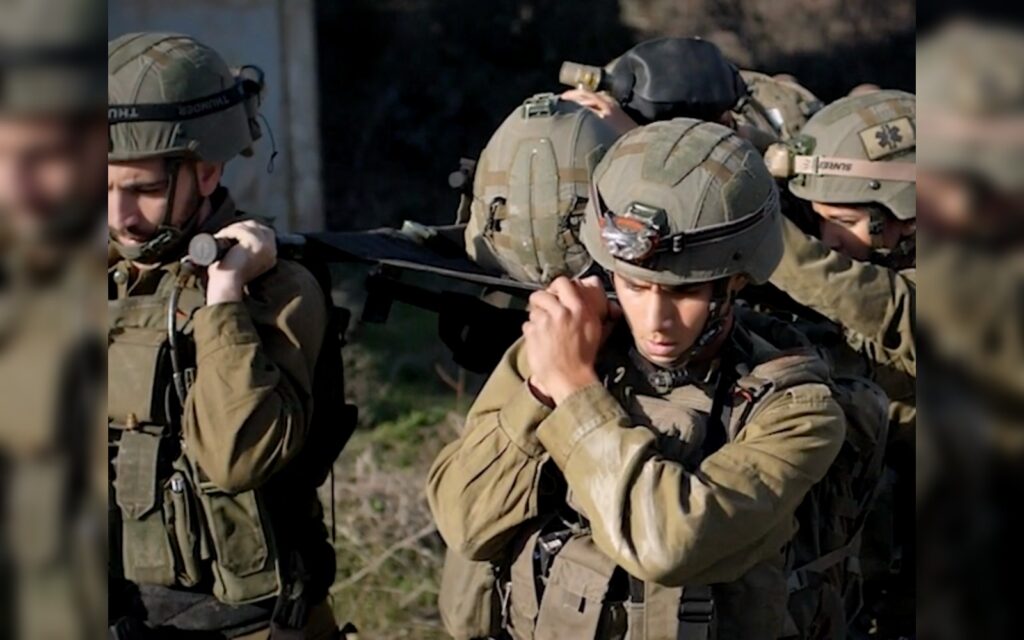
Approximately 40,000 people comprise the EMS group – 90% of whom are volunteers who undergo paramedic and first-response training, Myers said. Before Oct. 7, 2023, MDA’s daily calls likely included strokes, heart attacks, labor and delivery needs and occasional rocket missile injuries. But in the early hours of Oct. 7, 2023, Myers said he knew these attacks were different.
“It very quickly started becoming apparent that the significance was much greater than previous red alerts we had, where there were maybe one or two rockets that had been fired by Hamas at communities in southern Israel,” he explained. “This time we were talking about hundreds of rockets across the country.”
Myers said he headed south while most Israelis fled north to escape the Hamas terrorists who had infiltrated the Israel-Gaza border before 6 a.m. that morning.
“We started receiving reports very, very early on of the fact that there were terrorists in the streets, ambulance crews of ours who were shot at, EMTs, paramedics who were injured,” Myers said, adding that he lost seven MDA members that day.
Myers brought his emergency response unit to Ashkelon, a town about 10 miles from Gaza with more than 160,000 residents. MDA personnel opened field hospitals “as close as we could possibly get” to areas of attack, including at “major road junctions” or at operating MDA stations, Myers explained.
MDA treated thousands of people in the first 72 hours while continuing to respond to routine emergencies, including heart problems, seizures and childbirth, Myers said. “That was an amazing thing to see.”
One MDA paramedic, 22-year-old Amit Man, opened a clinic inside Kibbutz Be’eri – one of the main villages first attacked by Hamas terrorists – and lost her life after the attackers overtook the clinic several hours into the fighting, Myers explained.
The Hamas terrorists knew the layout and population of the kibbutzim where they attacked after years of studying and working among these villagers, Evans said.
“A lot of those who even attacked on Oct. 7 had been living within that community where the folks in the different kibbutz areas surrounding Gaza had welcomed them and their community with open arms,” he said. “One of the ways that they even knew where to attack and how to attack was because they’d been eating their bread and been hosted in their homes and had turned around and showed up to use that goodwill to take their lives and slaughter their children.”
The ongoing war after Black Saturday
The EMS group has lost 39 team members in the resulting war after Oct. 7, Myers said, adding that the fight is still ongoing and many Israelis remain “stuck” on the horrors of that day three years ago. Since then, MDA has advanced its technology and response equipment, increasing the number of ambulances from 1,400 to 2,000 and training half a million people in emergency response.
“We want to be prepared for anything that might happen,” Myers said. “So, whether that’s increasing the number of ambulances, whether that’s ensuring that we have more armored ambulances. Again, a concept that is probably foreign to most Western countries – to have to have bulletproof or armored ambulances in a civilian setting – but that is the reality of what it is that we’re dealing with.”
While the violence is high and Israel faces daily rocket threats from Iran, the organization has still gained a surge of volunteers, he added.
“And in a time when you think that people would be kind of running in the opposite direction, that they wouldn’t want to head into this danger, we’ve actually seen an increase in people who want to come and volunteer with Magen David Adom to come and help in times of crisis,” Myers said.
In addition to the rockets and violence, Israel has seen a large increase in post-traumatic stress disorder cases, both Evans and Myers said.
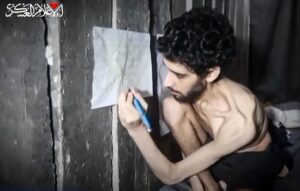
“There was one young lady who was one of the actual hostages taken into Gaza and she was talking about how she never felt so isolated in her life, and as a hostage, never had any women around her,” Evans said, detailing when he met some hostages and their families on a trip to Israel. “It was always men and it was very psychological, very emotional.”
But the young woman was never bitter and only thankful for her survival, he added.
“She knew it was miraculous that she was even standing there telling the story, and I think just the resolve that she had to have to come out of that and share her story.”
While in Israel, Evans also met several IDF soldiers and spoke of their upstanding character while facing daily “moral dilemmas.” He detailed one story of IDF soldiers refusing to fire at a Hamas terrorist who hid in a group of women and children as “human shields,” despite the loss of their own colleague at that terrorist’s hands.
“Meeting the troops was really amazing because I didn’t know what to expect,” he said. “But what I actually found was, it’s honestly one of the most humble armies.”
Evans, who first traveled to Israel seven months after October 2023, said seeing the “remnants of the atrocities” revealed how onlookers watching the news outside the country could not possibly imagine the horror.
“Talking firsthand to survivors and hearing those stories that they personally experienced and that (it) was a bunch of kids there to love life, celebrate life, dance, and a lot of them weren’t even Jewish, and they’re raped and slaughtered by animals,” Evans said, detailing the attacks at the Nova Music Festival in southern Israel, where Hamas terrorists crossed the Gaza border and fell upon thousands of young Israelis at an all-night event.
“I think just that level of evil, and then obviously what happened in the kibbutzim, but the fact that it’s even up for a debate in the world on what’s right or what’s wrong is beyond fathomable to me,” he said. “But it shouldn’t even be a political conversation at all.”
(Image credit: Screenshot/Friends of the Israel Defense Forces)