Portland Public Schools, Oregon governor face off over $65 million deficit, potential closures
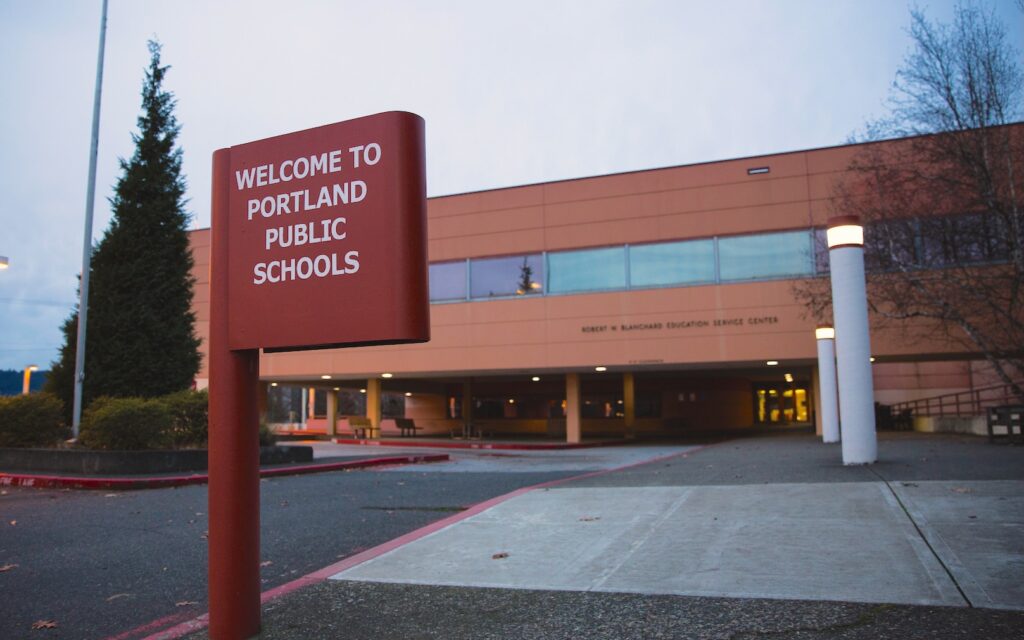
A delicate dance has developed between Oregon’s governor and Portland Public Schools (PPS), with both acknowledging a massive budget deficit but each asking the other to address it.
In…
A delicate dance has developed between Oregon’s governor and Portland Public Schools (PPS), with both acknowledging a massive budget deficit but each asking the other to address it.
In her latest move, Gov. Tina Kotek rejected the district’s request to use state reserve funds to help cover the estimated $65 million gap. Two-thirds of the shortfall stems from increased retirement and labor costs, Oregon Public Broadcasting reported.
“What I expect from districts is clarity on what the trade-offs are,” Kotek said, as reported Friday by the local ABC affiliate. “Portland needs to do everything it possibly can to cut administrative costs and other things before it talks about closing schools.”
While school closure discussions have faced community protests, the district argues it needs to “rightsize” amid declining enrollment and rising expenses.
“We cannot continue to spread fewer resources across the same number of buildings and expect to deliver the educational experiences our students deserve,” PPS Superintendent Kimberlee Armstrong said at a Nov. 2 press conference.
Armstrong plans to recommend one of two closure proposals to the school board later this month. The proposals could save an estimated $1 million per building “over time,” according to OPB. The board is scheduled to decide on a proposal Dec. 15.
‘Trust is already fragile’
As previously reported by Heartlander News, the board agreed this fall to let the district research closure options for up to 20 schools.
“Simply put, expenditures are rising faster than revenues,” PPS Chief Financial Officer Michelle Morrison said earlier this year. “Enrollment is declining, and because so much of our budget goes to staffing, fewer students means fewer dollars, which also means fewer staff.”
An internal report criticized the district’s 2026-27 budget plan as “extremely optimistic” in May, warning that a second consecutive midyear budget deficit could damage public trust “at a time when trust is already fragile.”
Because of the latest shortfall, the district is weighing a reduction of up to 450 full-time equivalent positions – 223 at schools, 167 in central office and administrative roles, and the remaining 60 in support positions, OPB reported.
The district is considering its “bare legal and contractual minimums” for staff, KGW-TV reported. For example, each school is required to have access to a school counselor, but not every school must have a full-time counselor on site.
The district had suggested using Oregon’s $1 billion Educational Stability Fund (ESF) to help cover the deficit. The fund receives revenue from the lottery, according to OPB.
“PPS has saved the state $500 million since 2002, when those pension obligation bonds were originally sold,” Morrison argued at the Nov. 2 conference. “The market does not allow that strategy today.”
However, Kotek, a Democrat, made clear she did not consider this an option.
“To tap the one-time reserves for this particular instance goes against what we are talking about around enrollment-driving state investment,” she said.
“Maybe enrollment is the wrong marker. That was established almost 30 years ago. … But that is a longer conversation than what is happening in districts right now.”