‘Pandora’s box has been opened’: How foreign funding has flooded into American K-12 education
Organizations from several countries in tension with the U.S. have poured more than $25 million into American K-12 education since 2009, according to a new report from the Foundation for Defense of…
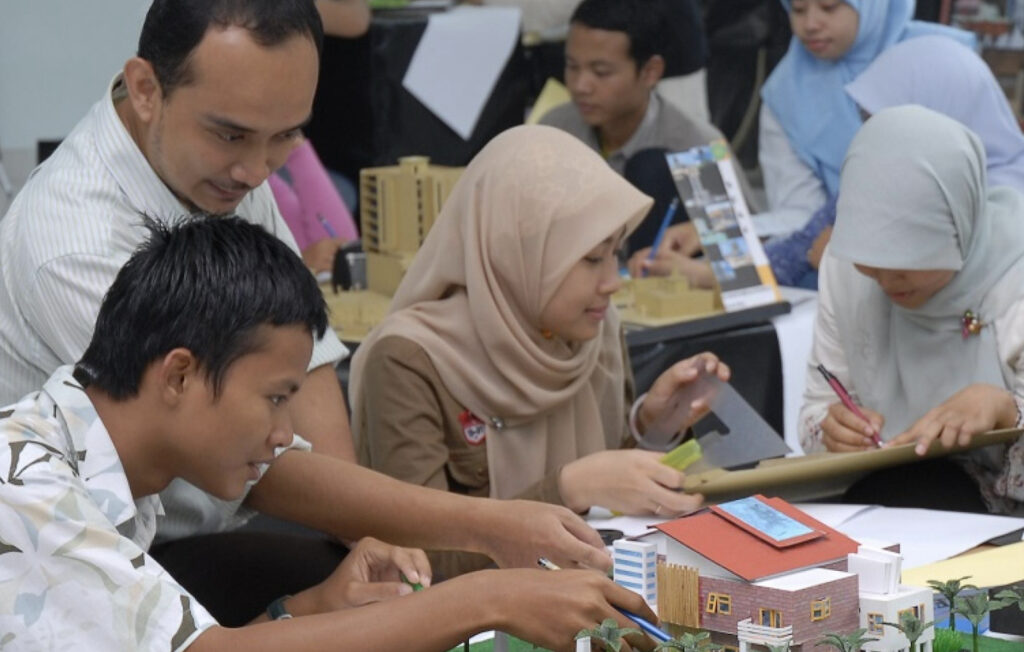
Organizations from several countries in tension with the U.S. have poured more than $25 million into American K-12 education since 2009, according to a new report from the Foundation for Defense of Democracies (FDD).
“Our K-12 system really has had an open door for foreign and malign actors to come directly in and work with our kids,” FDD Education and National Security Program Director Brandy Shufutinsky told Heartlander News in an interview.
FDD launched its Education and National Security Program in April 2025, after college students nationwide repeatedly marched in support of Hamas terrorists who murdered, raped and captured Israeli citizens on Oct. 7, 2023. After finding more than $20 billion in foreign influence in higher education, FDD examined K-12 education, hypothesizing that foreign actors had infiltrated the entire “relationship between higher ed and K-12,” Shufutinsky explained.
“The question came up: ‘If we’re seeing this in university campuses, is it possible we’d find the same type of thing in the K-12 space?’ and I think that our research shows that unfortunately, this didn’t start when kids turn 18 and go step foot on their college campus. They’ve been primed the years before.”
FDD filed nearly 1,500 public records requests with school districts nationwide in partnership with Open The Books. While many requests remain unanswered, FDD uncovered millions of dollars in foreign influence across dozens of school districts. The report divides the foreign funds into three main subgroups.
Qatar Foundation International
The Qatar Foundation International, an organization launched in 2009 through its parent organization, the Qatar Foundation, which has ties to the country’s royal family, poured $10 million into nearly two dozen major school districts, including those in New York, Chicago, Houston and Washington, D.C., according to the report.
Qatar hosts the International Union of Muslim Scholars (IUMS), previously led by the late Egyptian cleric Yusuf al-Qaradawi, “the de facto spiritual leader of the Muslim Brotherhood,” according to the report. In March 2025, IUMS ordered Muslim governments to support Hamas “militarily, economically, and politically” in the war with Israel.
QFI presents itself as a charitable organization, emphasizing that it provides grants but does not dictate what happens in the classroom, Shufutinsky explained. But QFI switched from a nonprofit to a limited liability company in 2012, a change that allows the organization to be “more opaque” or “shielded a little bit more from disclosing what their funding source is,” Shufutinsky said.
FDD found that Arabic language and culture instruction in K-12 education funded by QFI explicitly taught principles of Islamist ideology, including aspects of Shari’ah law and antisemitic content. Every Middle Eastern map labels Israel as Palestine, Shufutinsky said, noting the “pattern” in classrooms receiving these funds coast to coast.
“We also found some concerning things with the language and culture part of that program, including American public school girls putting on hijabs, including American public school kids reciting from the Quran and the Hadith as part of their Arabic language instruction,” Shufutinsky said.
Teachers could request grants directly from QFI for Arabic language and culture materials, and QFI even offered to send foreign nationals into schools to teach Arabic, Shufutinsky explained. Some teachers received not only grants but also full or partial salaries underwritten by QFI.
“So the question that brought up is: ‘Okay, who does this public school teacher work for? The American taxpayer who is funding the school district or a foreign entity who’s paying their salary?’” Shufutinsky said.
The funds also supported professional development training for teachers and sponsored immersive educational trips to Qatar and Jordan for teachers and students.
QFI announced its closure in June, but Shufutinsky suggested the organization would likely “take another form because they’ve spent a lot of time and money investing in the American public school student.” In its announcement, QFI said its website would go offline Sept. 15 but promised that “selected resources that will be made available through other organizations.”
“And one of the things that we’ve seen is there is this network of nonprofits of community-based organizations. If a foreign entity is sending them funds, then they’re operating in the schools,” Shufutinsky said. “We’ve seen that recipe before. We’ve seen that manifest in schools before. I think that that’s possibly a model that they may try to take.”
Regardless of the form such funding takes in the future, more than a decade of funding has brought Arabic and Islamic indoctrination into K-12 schools through curricula and teacher training, Shufutinsky emphasized.
“This is a really important part for people to understand: this is K-12 education. These curricular materials are already in the classroom. There’s nothing stopping them from being used,” she said. “The teachers that attended QFI funded teacher professional development training already were trained by QFI. There’s no magic switch that’s going to stop them from using the pedagogy and the resources, the materials that they were trained on in the classroom. . .”
“Pandora’s box has already been opened, which is why it’s so concerning when we have foreign and malign entities funding and influencing our public school system and our private school system.”
Islamic Development Bank funds private schools
In addition to QFI funding, the Islamic Development Bank (IsDB) poured $17 million into K-12 Islamic schools across America. IsDB is headquartered in Jeddah, Saudi Arabia, and is closely affiliated with the Organization of Islamic Cooperation (OIC), which seeks to promote economic and social progress according to “the principles of the Shari’ah” among its 57 member countries, according to the report. Iran is the third-largest shareholder in IsDB, alongside others such as Qatar, Turkey and the Council of Islamic Schools in North America (CISNA).
CISNA previously partnered with Cognia, a large private school accreditor, but received its own lead accreditor status in 2022 to approve Islamic schools across the U.S., according to its website. Approximately 300 K-12 Islamic schools across America serve roughly 50,000-60,000 students, according to the report.
“The concerning part is the funding they receive from this bank because Iran is the third largest shareholder in this bank, and they have a seat on the board of executive directors, which determines the direction of the funding of the bank,” Shufutinsky said.
One school in Texas, Brighter Horizons Academy, which received $995,000 from IsDB, uses textbooks that praise “extremist clerics who have justified suicide bombing and defended Hamas,” according to the report. The textbook also advises against male-female communication “unless they have a good, Islamic reason to communicate.”
“We have Iranian money mixed in going to fund schools here in the United States,” Shufutinsky said. “And I think that a lot of people should consider what that means when those kids are educated in this environment that includes foreign money and Iranian support and funding, and they graduate and go on to university with all other students across the country.”
She clarified that the issue is not private education or even Islamic schools themselves, but the influence of foreign organizations and powers on education. She challenged the status quo that permits foreign funds to support schools that already receive taxpayer dollars through tax credit programs and education savings accounts.
“A question I would pose to the American taxpayer and to the elected officials that we’ve voted into office to make sure that certain laws and rules and regulations are being followed is: Should American taxpayer money be going to an institution that’s also receiving Iranian money?” she said.
Chinese Communist Party
The report also uncovered continued Chinese Communist Party (CCP) influence through Confucius Classrooms and nonprofit support. In the early 2000s, the head of the Publicity Department of the Chinese Communist Party’s Central Committee, commonly known as the Chinese minister of propaganda, recommended establishing cultural institutions abroad to promote CCP ideology.
“It really wasn’t Chinese culture. It was Chinese Communist Party culture,” Shufutinsky said.
The first Confucius Institutes launched in 2004, and the University of Maryland welcomed the program on its campus in November of that year. Within a decade, more than 100 Confucius Institutes had been established on American college campuses, as well as in K-12 schools under the name Confucius Classrooms.
In 2014, however, these programs began closing after political and academic pushback against what critics viewed as “an arm of the Chinese state,” according to the report. In their place, several U.S.-based nonprofits, such as the Center for Bridging Cultures, launched to advance Chinese culture, with likely ties to CCP influence, Shufutinsky explained.
“Now, whether that was coordinated or not, or whether people just realized, ‘hey, we now have an opportunity,’ we’re not completely sure,” Shufutinsky said. “We have found some of these same actors who were running Confucius Institutes who are now running those nonprofits. So, we’ll let the readers make up their own mind on that.”
At least 10 Confucius Institutes were still operating as of 2023, according to the National Association of Scholars. Others have morphed into public school programs, such as the Chicago Public Schools Chinese World Language Program, which has “seemingly absorbed the Confucius Institute’s K-12 programming,” according to the report. In the 2025-26 school year, the Confucius Institute of Chicago allocated nearly $300,000 to the Office for Multicultural-Multilingual Education for the World Language Program, the report states.
Solutions
The end of the report flags specific examples in 10 states that received foreign funding from all three groups: QFI, IsDB and CCS. Shufutinsky said the starting point for combating foreign funding is educating parents and taxpayers about the interference.
“I don’t know how many parents would be comfortable with their children reciting from other religions’ texts supposedly as part of a culture program or their children trying on religious garments that don’t match the faith that they practice in their home,” she said. “Those types of things I think are concerning.”
She also highlighted Georgia’s recent legislation, prompted by FDD’s research, that requires K-12 public schools and universities to disclose foreign grants of $10,000 or more beginning in July 2027, according to FDD. Currently, federal law requires universities to report foreign funding greater than $250,000, the report notes.
The report also highlighted several laws and recommended tighter restrictions, including changes involving the Foreign Agents Registration Act (FARA), which currently exempts foreign agents from registering if they support “educational activities.” Likewise, the report suggested greater scrutiny of nonprofits from nations on various government watch lists and recommended requiring more financial reporting for nonprofits under the Fiscal Sponsorship Transparency Act.
“The American K-12 education system is vulnerable to foreign influence,” the report concludes. “Neither federal nor state governments have developed mechanisms to ensure the transparency, or even rigorous scrutiny, of foreign funding and related programs. Foreign entities have taken advantage of this to extend their influence without raising alarms among either parents or lawmakers.”
Currently, the Transparency in Reporting of Adversarial Contributions to Education (TRACE) Act is before the Senate after the House passed the legislation by a 247-166 vote in December 2025, according to the report.
Shufutinsky again emphasized the long-term effects such foreign targeting of children and youth could have on America.
“I think that this research highlights the danger of allowing a malign actor to have access to our most vulnerable population,” she said. “Our children are literally our future; they’re the future of our nation. And if they’re the ones being influenced by a malign actor, I think that every decent American should be concerned and actually looking for solutions so that this can’t happen anymore.”
(Image credit: Screenshot/Islamic Development Bank)