Op-Ed: Voters choose competing visions for America’s economic future
While political pundits spent election night dissecting congressional races and partisan victories, another consequential story was unfolding across America. Voters in several states were making…
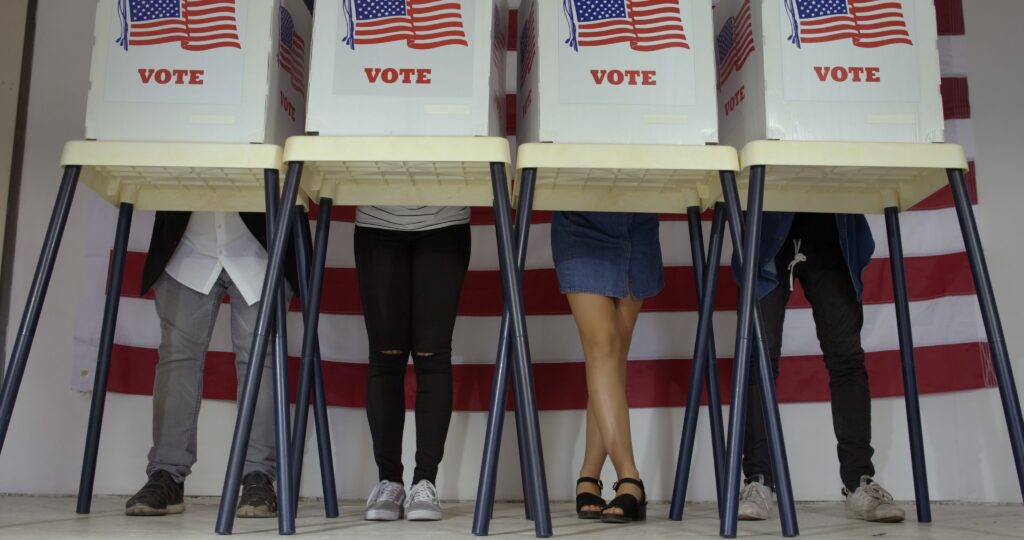
While political pundits spent election night dissecting congressional races and partisan victories, another consequential story was unfolding across America. Voters in several states were making decisions that could shape their economic futures.
Ballot measures offered Americans a choice: to limit or expand the government’s ability to tax and spend.
The results were mixed, but they revealed an important truth. In a competitive economy, state policies can attract jobs, investment and opportunity or force them to migrate elsewhere. Therein lies the beauty of federalism and states’ abilities to chart their own course.
Consider the contrasting approaches taken by voters in North Carolina and Colorado.
North Carolina voters overwhelmingly approved a constitutional amendment lowering the state’s maximum allowable income tax rate from 7% to 3.5%. The measure passed with 62% support, reinforcing the state’s commitment to competitive tax policy.
This was hardly a leap into the unknown. North Carolina, which was ranked 26th in economic outlook in the American Legislative Exchange Council’s (ALEC) 2011 edition of Rich States, Poor States, has spent years embracing the flat tax revolution, steadily reducing income tax rates while building one of the nation’s most competitive economic environments.
Today, North Carolina ranks fourth nationally for economic outlook. Thanks to its predictable, competitive tax environment, it also leads the nation in state-to-state migration.
Colorado voters, meanwhile, appear to be heading in the opposite direction.
Despite opposition from Democratic Gov. Jared Polis, a proposal to replace Colorado’s flat income tax with a progressive structure was narrowly passed, nearly doubling the state’s flat 4.4% personal income tax to a top rate of 8.4%.
Voters also approved a measure weakening Colorado’s landmark Taxpayers Bill of Rights (TABOR), which has served as the gold standard for protecting taxpayers from unchecked government spending growth for more than 30 years. This approved measure raises the state’s revenue limit and redirects approximately $4.6 billion in surplus funds (under the guise of education spending) rather than returning those dollars to hardworking taxpayers as TABOR mandated. The state, which was ranked second in economic outlook as recently as 2010, may be ranked below 30th next year.
While North Carolina voters strengthened constitutional limits on taxation, Colorado voters increased taxes and loosened longstanding fiscal restraints.
Similar differences emerged elsewhere.
In Iowa, voters approved a constitutional amendment requiring a two-thirds supermajority in both legislative chambers before income taxes can be increased.
The measure builds upon Iowa’s recent adoption of a flat 3.8% individual income tax. It also provides taxpayers and employers greater certainty that future tax increases will require broad legislative consensus.
Meanwhile, Washington voters rejected an effort to repeal the state’s 9.9% income tax on household taxable income exceeding $1 million annually.
Supporters of such taxes often argue that targeting wealthy households carries few economic consequences for everyone else. But this overlooks a fundamental reality: Businesses and people are mobile.
Washington has already experienced high-profile departures, including Starbucks shifting approximately 2,000 jobs from Seattle to income-tax-free Tennessee. Former Starbucks CEO Howard Schultz relocated to Florida, another state without an individual income tax. States cannot assume their most productive taxpayers and employers will stay indefinitely regardless of the policies imposed upon them.
In California, voters made a similar mistake – though one bright spot emerged.
According to the latest tally, California voters appear poised to reject Proposition 40, a one-time 5% tax on the wealth of billionaires. The proposal generated bipartisan opposition, including from Democratic Gov. Gavin Newsom, and prompted warnings from prominent entrepreneurs and investors about leaving the state.
For California, which ranks 47th nationally for economic outlook, the apparent rejection of Prop 40 reveals that even for the Golden State, some tax hikes are a bridge too far.
But California’s results also delivered troubling news for taxpayers. Sixty percent of voters approved Proposition 3, making permanent a “temporary” income tax increase on high earners scheduled to expire in 2031. The measure preserves California’s top marginal income tax rate of 13.3%, the highest in the nation. Making the nation’s highest income tax rate permanent only reinforces the policies that are driving people elsewhere.
These ballot measures underscore a larger lesson about America’s federalist system. States are laboratories of democracy, free to pursue different economic policies.
Though they may have elected new leaders who favor big government, voters in North Carolina and Iowa also chose stronger protections against future tax increases.
Colorado, Washington, and California, meanwhile, embraced policies that weaken their economic outlook. These states could soon be left wondering where their jobs, investment and taxpayers went.