North Carolina charter school enrollment doubles after cap removed
North Carolina families are clamoring for more educational opportunities in both the public and private sectors.
The North Carolina State Board of Education revealed in…
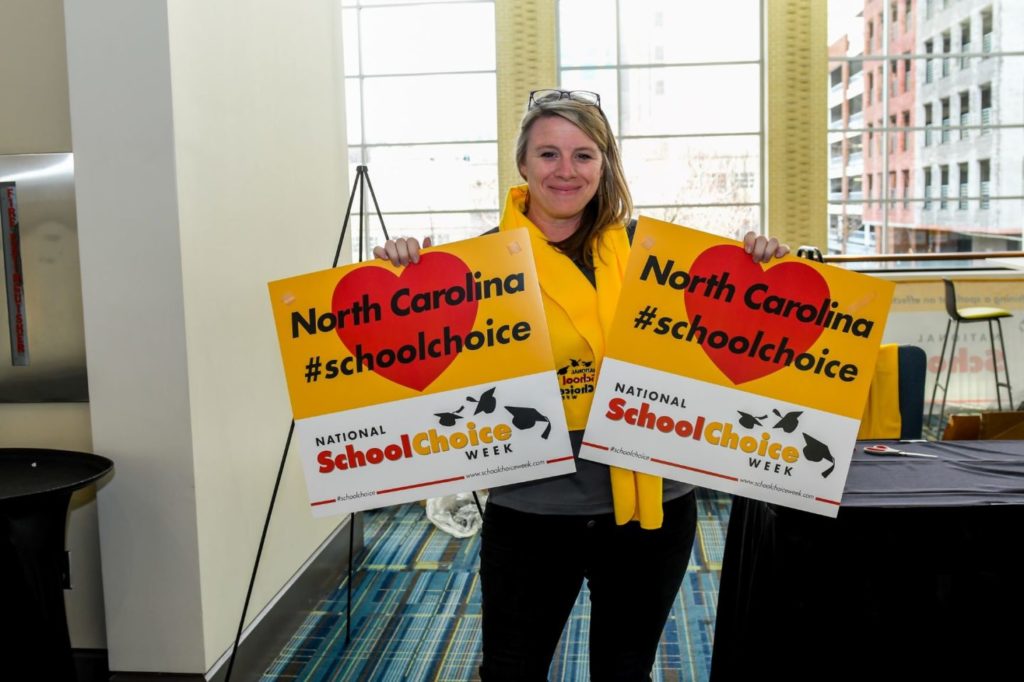
North Carolina families are clamoring for more educational opportunities in both the public and private sectors.
The North Carolina State Board of Education revealed in its annual report that charter school enrollment has more than doubled since the statewide cap was removed, while private school choice is also booming.
North Carolina first implemented charter schools in the late 1990s with a 100-school cap. But when the limit was reached in 2011, the Legislature lifted the cap, leading to an explosion of growth.
Now, the Tar Heel State has more than 210 charter schools serving more than 160,000 students – 10% of the state’s overall public school population.
“The overall trajectory reflects a sustained demand for education tailored to individual student needs and specialized missions,” the state board observed.
While charters are public schools – publicly funded and regulated – they have more freedom to innovate than traditional, government-run public schools. They often have smaller class sizes, don’t have teachers’ unions and can specialize in areas such as STEM or fine arts.
Unlike government-run schools, no student is ever assigned or zoned to attend a charter school, making them a form of school choice.
According to the state report, about 140 charters have long waitlists, totaling nearly 60,000 students.
Meanwhile, private school choice is equally popular.
North Carolina launched its Opportunity Scholarship program in 2014, which became universal in 2023.
Participation has grown steadily and recently topped 100,000 students, making it one of the nation’s largest private school choice programs.
But despite their popularity among families, both school choice and charter schools face opposition from politicians and the education bureaucracy.
For example, charters are chronically underfunded nationwide, receiving funding less than their government-run counterparts.
Nevertheless, charters outperform traditional public schools academically, even among minority students.
In North Carolina, 55% of public school students meet grade-level standards, compared with 61% of charter students.