New York Amish communities ask SCOTUS to protect religious beliefs, residency after state law forces vaccines on kids
A group of Amish New York residents are again asking the U.S. Supreme Court to reverse a decision that mandates Amish schoolchildren be vaccinated – a demand that violates Amish communities’…
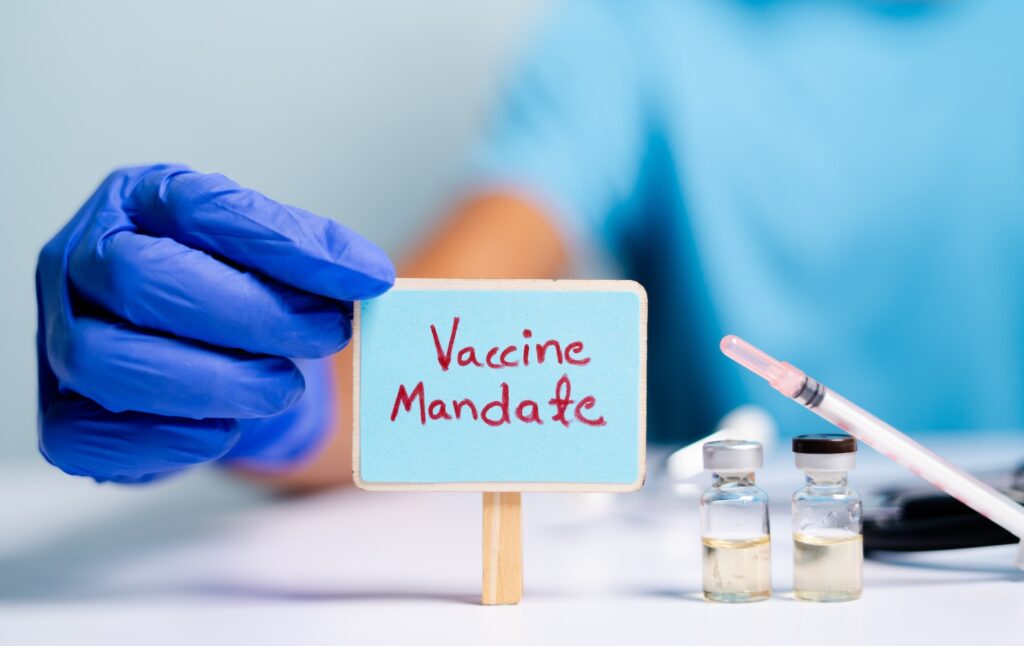
A group of Amish New York residents are again asking the U.S. Supreme Court to reverse a decision that mandates Amish schoolchildren be vaccinated – a demand that violates Amish communities’ religious beliefs and would require them to vacate the state.
“The bigger issue is that if the Amish do not win this case, they could be forced to leave the state of New York,” senior counsel at First Liberty Institute Becky Dummermuth told Heartlander News in an interview. “They’ve lived in New York for nearly 200 years now, and this is part of their way of life to educate their students in schools and also not to vaccinate, so it could have an enormous impact on their community.”
No religious exemption
For more than 50 years, New York granted religious exemptions from the state’s school vaccination requirements, according to a press release, but in 2019, it reversed course. At the time, several lawmakers said religious beliefs against vaccination were “fake” and “garbage,” and that those holding such beliefs are “selfish and misguided,” according to the petition.
New York is one of only five states with a vaccine policy that denies religious exemptions, the petition notes.
“Now, at this point, there are 45 other states that do allow religious exemptions as well as the District of Columbia,” Dummermuth said. “So, New York is a real outlier in not allowing those religious exemptions.”
In 2022, New York brought enforcement action against several Amish schools and imposed “catastrophic fines,” Dummermuth said.
“And these are schools that are attended by only Amish children,” she said. “They’re in rural schools on Amish land, funded by the Amish, just separate from the modern world. But New York still went after these schools.”
Amish faith opposes vaccines
The Amish hold a sincere religious objection to vaccination and will “choose prison time or a martyr’s death before going against their convictions,” Ezra Wengerd, a member of an Amish community in New York, said in the petition. Wengerd explained that the Amish believe receiving vaccines would require placing faith and trust in medicine and not in Almighty God.
“Yes our Almighty God wants us to fully put our faith + trust in Him,” he said in the petition. “Which is in conflict to put our trust in vaccines. We are also commanded to not be conformed to this world. Romans 12:1-2. If we honestly obey this, then it will affect everything we do, yes even in the way we try to remain healt[h]y.”
Because of their religious beliefs, the lawsuit says New York’s law is forcing Amish communities to choose between their homes and their faith.
“New York has effectively prohibited the practice of the Amish faith within its borders,” the lawsuit states.
The Amish communities fought the enforcement action in court but lost at both the district level and at the U.S. Court of Appeals for the Second Circuit. They appealed to the Supreme Court in 2025. The Court ordered the Second Circuit to reconsider the case in light of a 2025 SCOTUS decision – Mahmoud v. Taylor – which protected parental rights “to direct the religious upbringing of their children” in response to LGBTQ curriculum in classrooms, according to the press release.
The Second Circuit heard arguments again and maintained its initial ruling, claiming that the SCOTUS case involved curriculum, not vaccinations, and does not apply. So, the Amish schools, which have remained open, are appealing to the Supreme Court again, asking the Court to protect their faith and preserve their residence in New York.
Law not neutral, generally applicable
The lawsuit argues New York cannot apply a general law if it targets religious communities because the law is then no longer “neutral.” If a law is not neutral, the state must prove it has a “compelling interest” to apply it against a religious community, Dummermuth explained.
Additionally, New York permits medical exemptions and does not require faculty to be vaccinated, demonstrating again that the law is not generally applicable, she said.
“So, the law doesn’t require that teachers or aides or bus drivers or other people in the schools that they be vaccinated, just that the students are,” Dummermuth said, adding that “tens of thousands of students” are unvaccinated without a medical exemption, making the law even more inconsistent.
Supreme Court precedent also favors the Amish communities, Dummermuth explained. In the 1972 Wisconsin v. Yoder case, which considered a similar question regarding Amish customs and state law, the Supreme Court ruled that “forced migration of a religious minority was an evil that lay at the heart of the religion clauses,” Dummermuth said.
But, as the case stands, if the Amish lose, they may have to vacate New York, where they have lived for more than 200 years.
“For decades, New York accommodated the sincerely held beliefs of the Amish,” representing attorney Shannon Denmark, partner at Lehotsky Cohn, said in a statement. “We are simply asking the Supreme Court to protect the Amish so that they can continue to live out their faith in New York.”