New report ranks America’s medical schools on admissions, DEI, grading
Students seeking a strong medical education without ideological fluff should consider the University of South Florida Health Morsani College of Medicine and avoid Michigan State University College…
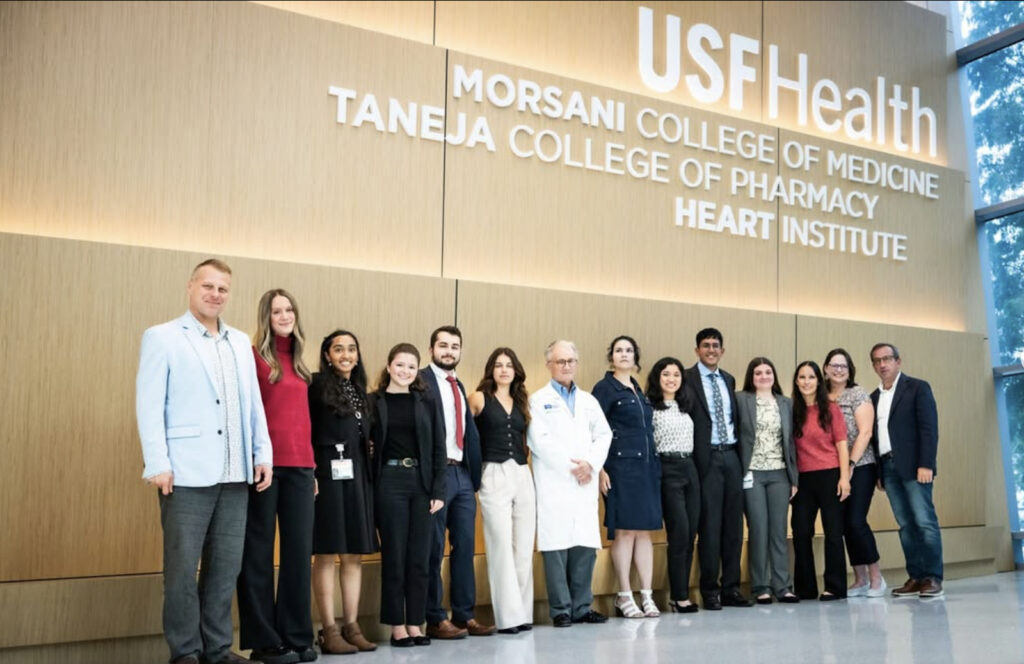
Students seeking a strong medical education without ideological fluff should consider the University of South Florida Health Morsani College of Medicine and avoid Michigan State University College of Human Medicine, according to a new report.
USF Health Morsani College of Medicine placed first for the second consecutive year on Do No Harm’s Medical School Index.
“The school has established itself as a model of what medical education can look like when academic standards remain paramount and ideological capture is resisted,” the report said.
But Michigan State University College of Human Medicine fell to last place after declining student GPAs and adding a Diversity, Equity and Inclusion office (DEI), according to the report.
“Across the country, medical schools are abandoning merit and excellence in favor of divisive diversity, equity and inclusion mandates,” Do No Harm’s website states. “Instead of training the best and brightest future physicians, too many institutions are forcing students to conform to ideological litmus tests and discriminatory practices.”
The organization, founded in 2022, opposes “divisive trends in medicine, such as ‘Diversity, Equity and Inclusion’ and youth-focused gender ideology,” which includes sex-change operations for minors.
The report separately graded allopathic (MD-granting) and osteopathic (DO-granting) programs on a letter grade scale (A-F). Allopathic and osteopathic medical schools teach the same biomedical curriculum and train students in the same clinical rotations, but DO schools offer additional training in a whole-body philosophy.
The second annual review added DO evaluation this year and found allopathic schools are more likely to “succumb” to “ideological corruption,” according to the report. The index aims to inform students and patients about medical education in the country and which schools perform best for apolitical, fact-based instruction.
“We created the Medical School Excellence Index so that patients and aspiring medical school students have clear information about which schools are doing the best job of recruiting and training physicians,” Ian Kingsbury, director of the organization’s Center for Accountability in Medicine, said in a statement provided to Heartlander News.
“Since launching the Index last year, we’ve seen several schools change their mission statements and applicant essay prompts in ways that eschew DEI-aligned activism,” he said. “Unfortunately, we’ve also seen some backsliding by schools that infuse DEI into admissions and student grading policies.”
The index evaluated schools based on admissions (60%), DEI inclusion (25%) and grading (15%). The admissions review considered both the school’s incoming class scores and graduated students’ MCAT scores, as well as whether the school uses the Association of American Medical Colleges (AAMC) PREview Professional Readiness Exam. PREview evaluates students’ situational judgment, commonly focusing on diversity and inclusion.
“Including PREview in the Index reflects the reality that schools relying on such instruments are likely seeking ways around objective academic standards in pursuit of racial or ideological goals,” the report explains.
The criteria for admissions evaluation also consider whether secondary essay prompts imply or outright assert “racial or ideological discrimination.”
“Many prompts effectively require applicants to affirm contested claims about structural racism, social determinants of health or identity-based disadvantage,” the report states.
Do No Harm’s index also considers whether a school uses DEI departments or language, which indicates the university has “elevated political goals above clinical competence.” Finally, schools with pass/fail systems receive zero points in Do No Harm’s report because of the lack of evaluation and clear performance.
Dell Medical School of the University of Texas at Austin and Vanderbilt University both rejected DEI ideology and improved their scores to place within the top five, with four schools tied for second place. Both the University of California, Riverside School of Medicine and California University of Science and Medicine fell to the bottom five schools after adding DEI offices, according to the report.
“As we continue to make progress to restore excellence to medical education, this tool will be invaluable to the public and students who want medical schools to focus on training the next generation of highly qualified medical professionals,” Kingsbury said.
Nationally, schools in Republican states tended to perform better, with a lower likelihood of DEI offices and greater academic standards, including grading, according to the report.
The index exists to serve both students researching medical degrees and the American public at large, who should know what education their doctors and physicians receive, the report argues.
“Medical education shapes the physicians who will care for Americans for decades,” the report states. “Schools that prioritize cognitive excellence, reject commitments to DEI, and maintain transparent standards of student performance serve patients best. Those that subordinate these priorities to political fashion do not. The 2026 Medical School Excellence Index exists to make those choices visible to all.”
(Image credit: Instagram/usfhealthmedicine)