New report: Dems rule Ivy League governing bodies
Two-thirds of those in charge of Ivy League schools are from one political party, and just 1 in 10 are from the other.
The Buckley Institute, a free…
Two-thirds of those in charge of Ivy League schools are from one political party, and just 1 in 10 are from the other.
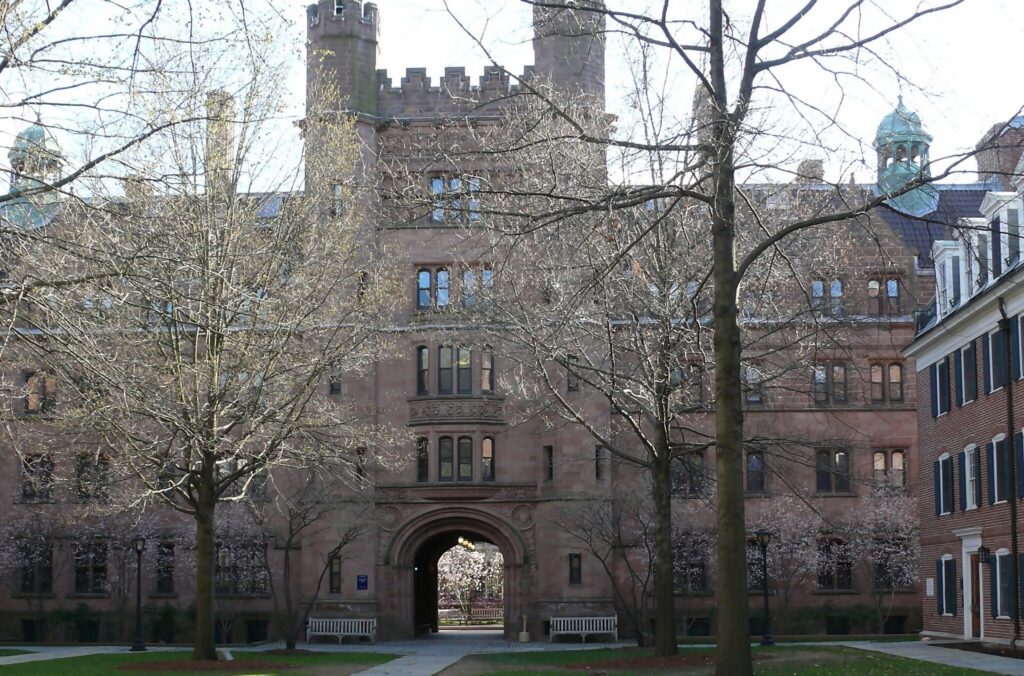
The Buckley Institute, a free speech group at Yale University, examined the political affiliations of all eight Ivy League governing bodies, finding an undeniable monopoly.
Two-thirds of all Ivy League trustees (66%) are Democrats. Only 11% are Republican, leaving 22% who identify as unaffiliated.
The most lopsided schools include Yale, whose governing body is 88% Democrat and has no registered Republicans; Brown, 80% Democrat; and Princeton, 72% Democrat.
Political donations were similarly skewed to the left, with over $85 million given to Democrats compared to $22 million to Republicans.
“Looking at the dramatic ideological imbalance across Ivy League governing bodies, it’s little surprise that so much has gone awry on campus,” said Buckley Institute Executive Director Lauren Noble. “If America’s top universities truly want to fix the echo chamber in the classroom, they will need to address the echo chamber among their own leadership.”
But the echo chamber isn’t only in the Ivy League.
According to an analysis of educators’ 2022 political donations, most American college professors (93%) support Democrats.
The same is true of K-12 teachers, who gave 68% of their donations to the left.
The Education Freedom Institute’s Senior Managing Fellow Jay Greene explained how easily a left-wing majority can create an echo chamber within a university – or even a field of study.
“The national lock that left-leaning professors hold over who is hired as new professors, who is able to publish in top journals, and who receives tenure, helps solidify the extremely high and unvaried rate of support for the Democratic party among faculty,” Greene explained.
“If quality education involves exposure to a diversity of perspectives, the status quo is incredibly deficient in this regard.”
The news comes as university students acknowledge self-censoring conservative views at alarming rates.
In a recent study of 1,400 undergraduates, 88% admitted to having “pretended to hold more progressive views than you truly endorse to succeed socially or academically.”
An overwhelming number said they had self-censored their opinions on transgenderism (78%), politics (72%) and family values (68%). Meanwhile, more than 80% of students confessed to misrepresenting their own views on homework assignments to please their professors.
“In a campus environment where grades, leadership, and peer belonging often hinge on fluency in performative morality, young adults quickly learn to rehearse what is safe,” researchers observed.
These trends may have influenced Americans who report losing trust in their once prestigious institutions.
A 2025 survey found only 20% of voters had a great deal of trust in public colleges and universities, with 38% reporting some trust, 23% not much trust, and 14% no trust.
And the Ivy League schools fared even worse.
Only 15% of Americans now consider them very trustworthy with almost half (46%) saying they have little to no trust in the supposed bastions of higher learning.