New initiative launches to encourage Muslim Americans to vote
(The Center Square) – A new national initiative has launched to encourage Muslim Americans to vote ahead of the Nov. 3 midterm elections.
The initiative comes after Christian, Jewish and…
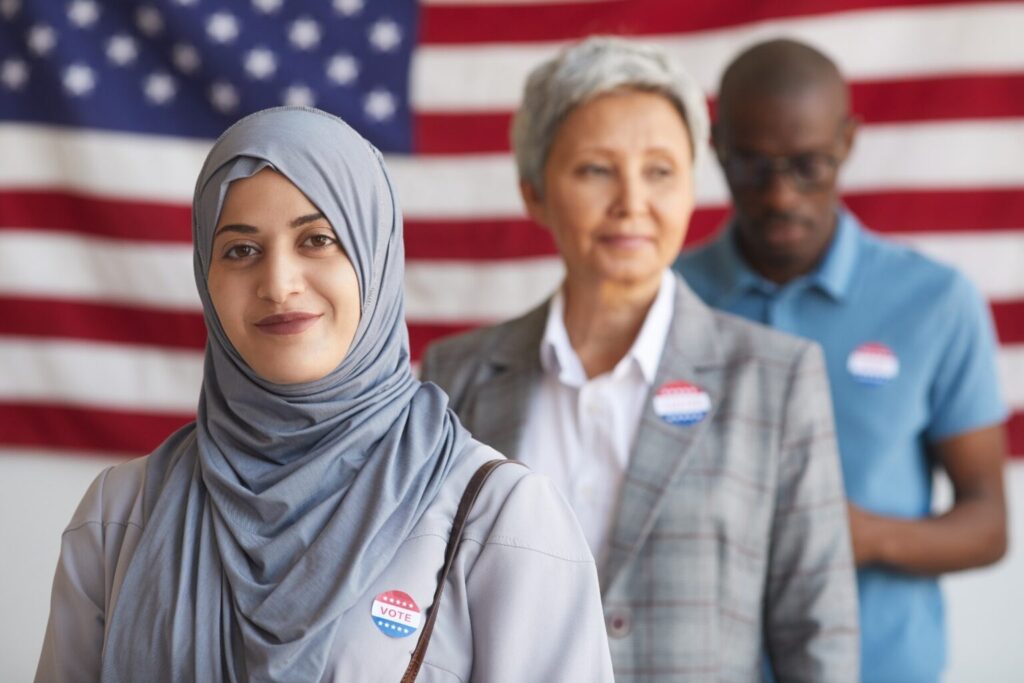
(The Center Square) – A new national initiative has launched to encourage Muslim Americans to vote ahead of the Nov. 3 midterm elections.
The initiative comes after Christian, Jewish and nonpartisan nonprofit organizations have launched similar voter registration and get out the vote initiatives.
The Council on American-Islamic Relations (CAIR), the largest Muslim civil rights and advocacy organization in the U.S., launched Muslims.Vote, a non-partisan civic engagement campaign to equip American Muslims with tools and resources to vote.
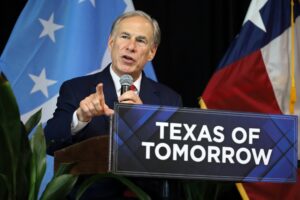
Republican Govs. Ron DeSantis of Florida and Greg Abbott of Texas have designated CAIR a foreign terrorist organization. CAIR rejects the designation and sued both governors. CAIR won its lawsuit in Florida. Its lawsuit in Texas is ongoing.
Of the estimated more than 8 million Muslims in America, more than 2.5 million are registered to vote.
Muslims in America already have “the power to shape elections, especially in key swing states. But millions more eligible Muslim voters must register, show up, and make their voices count,” CAIR argues. “When we show up, our voices are heard, our votes matter, and our communities help build a more just future.”
The Muslims.Vote platform doesn’t endorse candidates. It provides voter registration information, personalized election information, ways to look up polling places, voting rights information, voting planning tools, civic engagement resources and advocacy toolkits.
CAIR is also working with mosques to register people to vote, as well as campus outreach and other initiatives, it says.
“Voting is more than a constitutional right – it is an amanah, a trust and responsibility,” CAIR Government Affairs Director Robert S. McCaw said. “Muslims.Vote was created to remove barriers to civic participation by putting everything voters need in one place.”
CAIR has identified 12 states where it says concentrated Muslim communities are located and Muslim voters can make an impact: Arizona, Florida, Georgia, Michigan, Minnesota, Nevada, North Carolina, Pennsylvania, Ohio, Texas, Virginia and Wisconsin.
The outcomes of races in these 12 states “will decide control of the U.S. House and Senate, our mobilization is not symbolic – it is decisive,” CAIR argues.
A similar argument has been made by American Renewal Project founder David Lane. For decades, Lane has been involved in encouraging evangelical Protestant Christians and prolife Roman Catholics to vote. He’s also encouraged pastors to run for office.
“If we stay home, candidates who oppose biblical values will win and then draft and pass legislation to codify into law their values,” Lane told The Center Square. “We’re asking the living God to move into the public square of America.”
While winning elections is important, Lane says, the goal is bigger.
“We all know that politicians are not going to save America, or that Wall Street or even our powerful military will,” Lane said. “If America is to be saved, biblical values must reign supreme. They must be returned to the public square.”
Multiple nonprofit organizations have mobilized voters through church voter registration initiatives for decades, including those advocating for prolife policies. In 2021, Democrats launched a “Souls to the Poll” campaign targeting Black church goers, The Center Square reported.
Under current law, through the 1954 Johnson Amendment, “charities, churches and educational organizations” are banned “from engaging in any political campaign activity.” A tax-exempt entity under IRS code 501(c)(3) is one “which does not participate in or intervene in (including the publishing or distributing of statements), any political campaign on behalf of (or in opposition to) any candidate for public office.”
In 2017, President Donald Trump issued an executive order to effectively nullify the amendment through a Treasury Department directive. This was reversed by the Biden administration. Earlier this year, the Treasury Department issued another guidance on the amendment. Regardless of Trump administration directives, the amendment remains in effect.
Earlier this year, a federal judge in Tyler, Texas, dismissed a lawsuit in which Protestant Christian pastors sought to endorse political candidates without their churches losing their tax-exempt status.
The U.S. Conference of Catholic Bishops maintains its position to not endorse or oppose political candidates but to “help Catholics form their conscience in the Gospel so they might discern which candidates and policies would advance the common good.”
Image Credit: Muslims.vote website