New FIFA World Cup stats reveal Kansas City welcomed more visitors than expected
Despite being the smallest FIFA World Cup host city of 2026, Kansas City received more visitors during the tournament than expected, although their spending fell short of…
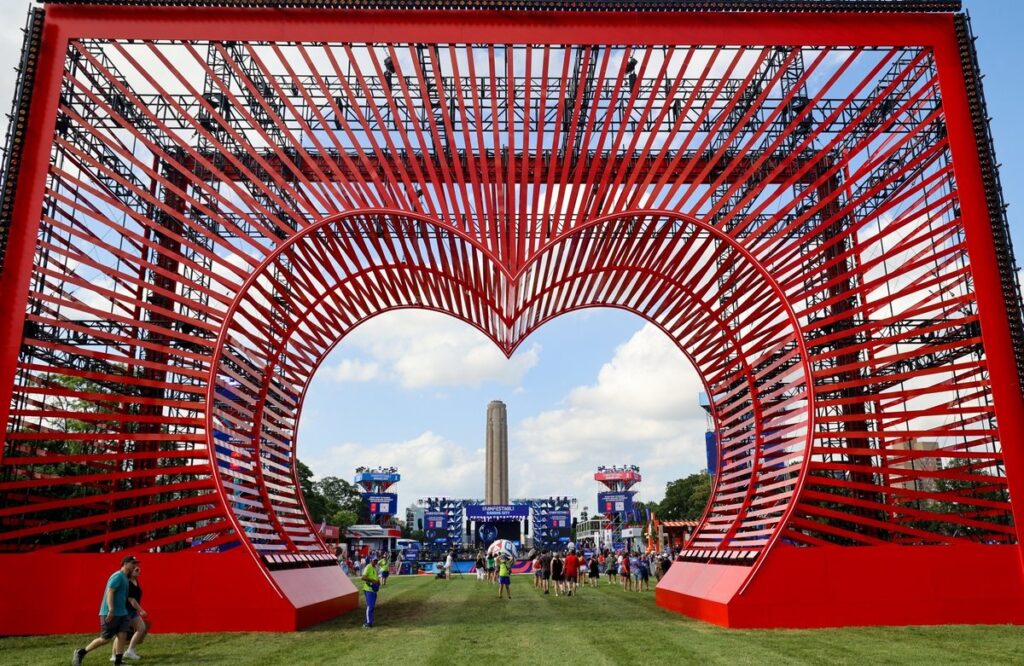
Despite being the smallest FIFA World Cup host city of 2026, Kansas City received more visitors during the tournament than expected, although their spending fell short of predictions.
“While the world watched Kansas City become the heart of the tournament, thousands of visitors got to experience firsthand the passion, hospitality and heart that define our community,” Visit KC CEO Kathy Nelson said in a release.
According to Visit KC – Kansas City’s destination marketing organization – 680,000 people visited the city during the World Cup, 5% more than expected.
Most of those visitors, 83%, were from within the U.S., while 17% traveled internationally, coming from nearly 180 countries in June and July.
“Kansas City beat visitor projections, set passenger records at the airport, packed the Kansas City Streetcar and put more than half a billion dollars into the pockets of local businesses and working families all around the region,” Mayor Quinton Lucas proclaimed.
Financially, the results fell short of expectations.
Visitor direct spending totaled roughly $570 million, less than the $653 million predicted across the nine Kansas City-area counties included in the calculations:
- Cass
- Clay
- Douglas
- Jackson
- Johnson
- Leavenworth
- Platte
- Miami
- Wyandotte
Visit KC defined direct spending to include things such as lodging, dining, local transportation and entertainment. Operating costs for events, match ticket sales, airfare and indirect economic effects weren’t included in the direct spending calculations.
The more than $80 million discrepancy in spending is likely due to fewer international visitors than expected, Visit KC explained, because visitors from other countries typically spend more on vacations than Americans.
Argentina vs. Switzerland: The most impactful match
The Argentina vs. Switzerland quarterfinal match, which took place July 11 and ended in a 3-1 Argentina victory in extra time, set several records in Kansas City.
Kansas City International Airport (MCI) had a record number of 24,266 outbound passengers the day after the game.
Local transportation on the KC Streetcar carried a record number of 55,973 passengers on the day of the quarterfinal match. The streetcar overall completed 838,826 passenger trips between June 11 and July 11, also a record.
Hotels experienced an overall increase in bookings and revenue during the tournament, and Kansas City ranked first among all U.S. host cities for ADR growth – the rise in the average daily rate (ADR), or the average revenue generated per occupied hotel room.
Kansas City set single-night records the night of the Argentina vs. Switzerland match in both ADR and RevPAR, or revenue per available room, which combines ADR and occupancy rate, Visit KC said.
World Cup leaves lifelong memories
Aside from money, Kansas City stole the world’s heart during the World Cup.
“The impressive economic impact numbers generated by the World Cup in Kansas City, Missouri, only tell part of the story of the event’s impact,” Stephen Foutes, director of the Missouri Division of Tourism, said.
The city had the highest percentage of people watching matches on Fox Sports and also gained attention for ranking as the top city for dating and romance among fans.
One monumental moment happened when the city hosted America’s largest Oranje Fanwalk in June. Around 36,000 fans dressed in Dutch orange and flooded downtown to support the Netherlands team ahead of its 3-1 win against Tunisia.
The Algeria, Argentina, England and Netherlands teams called Kansas City home for the tournament’s duration. Each team, alongside its fans, expressed gratitude to the city and recognized its charm.
“Kansas City showed the world the best of America and shared with everyone how special our city, our cuisine and our cultures are,” Lucas concluded. “Kansas City is where the world wanted to be in 2026.”