NASA chief tours Idaho lab, declares confidence to launch historic nuclear-powered spacecraft before China
NASA is betting on nuclear power to secure humanity’s deep space future, pushing an aggressive timeline to launch the first fission-powered interplanetary spacecraft.
NASA Administrator Jared…
NASA is betting on nuclear power to secure humanity’s deep space future, pushing an aggressive timeline to launch the first fission-powered interplanetary spacecraft.
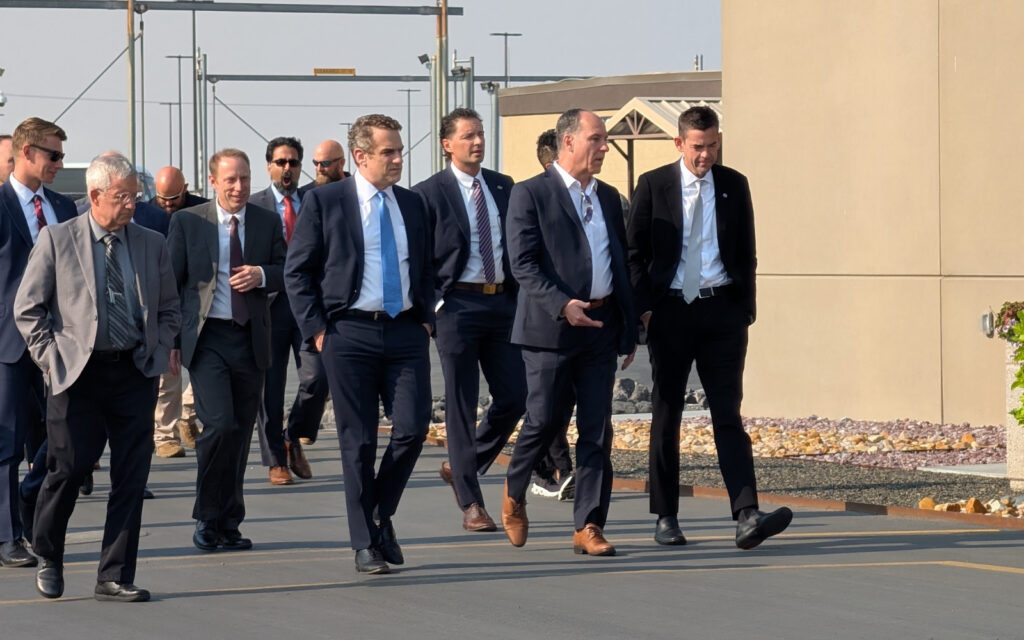
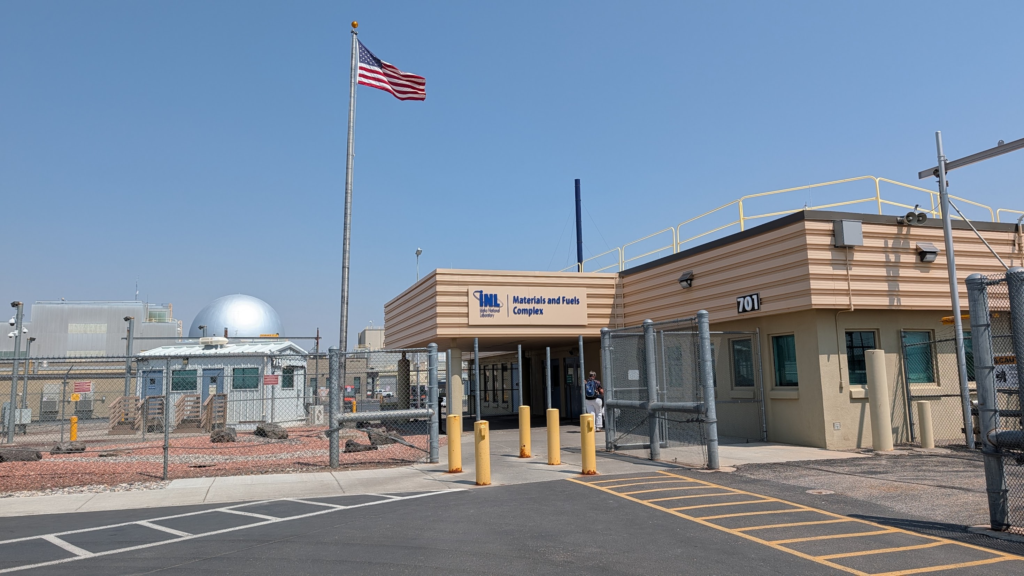
NASA Administrator Jared Isaacman toured facilities at the Idaho National Laboratory (INL) Aug. 7 to underscore the urgency of the space race with China and to review the ambitious schedule for Space Reactor-1 Freedom.
Isaacman says the United States must shift its resources away from routine satellite launches – technologies commercial companies already provide – to focus on building a moon base and mastering deep space exploration.
“America will win the second space race,” Isaacman said. “We will return to the moon. We will build the moon base and master the skills needed for where we go next, but the ship that will take us there will trace its origins to the work we do today.”
Racing China to the South Pole
The second space race is tighter than many officials originally anticipated. China plans to launch its Chang’e 7 mission this month to land on the lunar South Pole.
Isaacman warned this is the exact location the United States intends to secure for its own operations. While he noted American industry has set the nation up for success, he acknowledged putting boots on the moon will be a close contest.
“That’s where we want to be on the South Pole. This is very real,” Isaacman said.
Isaacman emphasized the critical nature of concurrent investments in lunar and Martian technologies.
“That’s why it’s so important to start making the investments today, like we’re doing alongside the DOE, like what we’re working on with INL here on SR-1 Freedom, so that the third space race to put boots on Mars, bring them back safely to talk about it, is never in question,” Isaacman said.
SR-1 Freedom faces 2028 deadline
SR-1 Freedom was designed to be the first fission-powered spacecraft in human history. Destined for Mars, it will demonstrate nuclear electric propulsion in deep space.
To stay ahead of foreign competitors, such as China, NASA is partnering with the Department of Energy at the Idaho lab to build the reactor.
The schedule is incredibly tight, requiring the spacecraft to be finished and ready to ship to the Kennedy Space Center by spring 2028 for a targeted December launch.
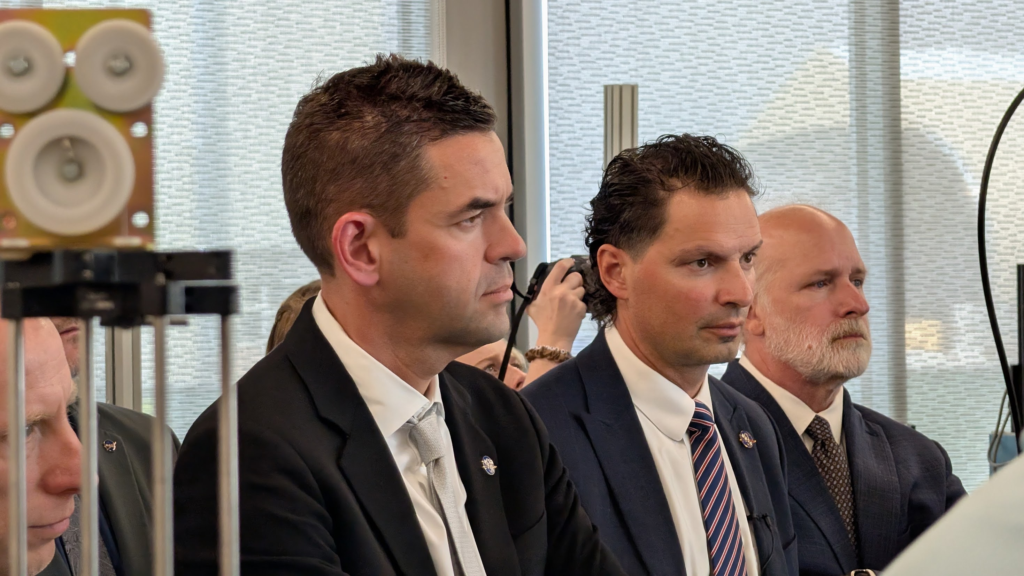
Dr. Justin Coleman, INL division director overseeing space nuclear power initiatives, said his laboratory’s job is to deliver the reactor hardware and ensure it meets safety objectives.
Engineers face massive mass and volume constraints fitting a high-temperature nuclear reactor onto a Falcon Heavy rocket, which heavily restricts the amount of gamma shielding they can use.
A return to hardware
Despite the challenges, Coleman remains confident in the mission’s trajectory and stressed the importance of strict deadlines for maintaining focus and avoiding bureaucratic bloat.
“We have a mission,” Coleman said. “We need to go accomplish that mission, we have a deadline. It’s December of 2028. That puts some excitement and energy into the organization, and it gives people the drive.”
NASA and the Department of Energy are heavily leveraging private industry to meet these goals. Department of Energy Deputy Secretary Danly, who also attended the tour, praised the “breathtaking pace” of the government’s rapid deployment of nuclear power.
“The rate at which we got these first set of small modular reactors critical, less than a year, about 10 months, is a breathtaking pace,” Danly said. “That really does characterize just about everything the Department of Energy is doing to support the president’s goal of rapid deployment of nuclear power, but also our partnership with NASA.”
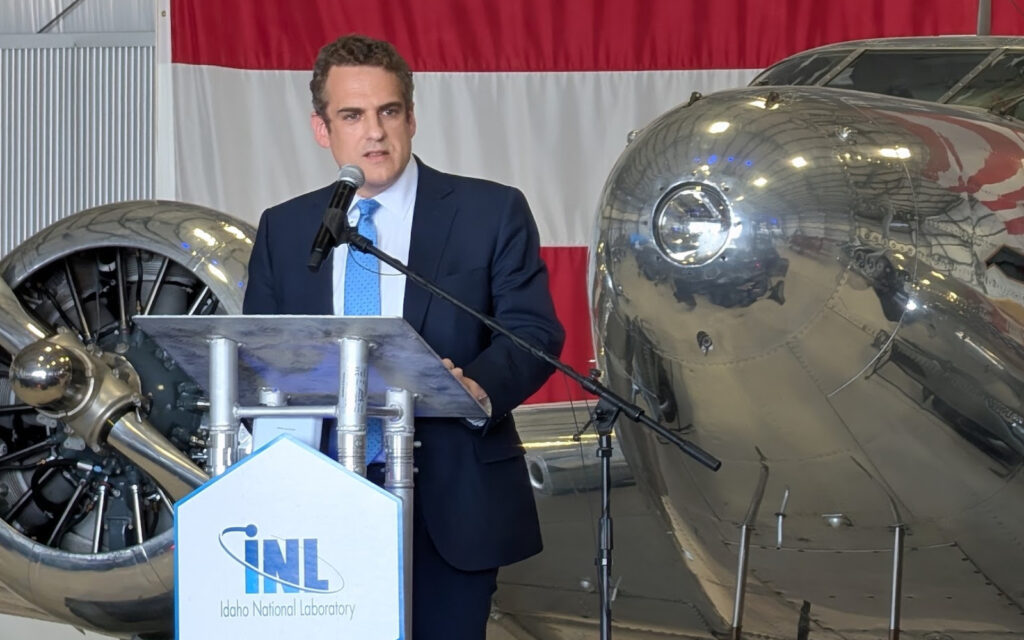
Isaacman left Idaho expressing high confidence in the 2028 timeline after seeing commercial companies quickly stand up operations and test hardware at INL.
“What a great time to be growing up in,” Isaacman said. “You’re going to get out of school and you’re going to have an operational moon base. There’s going to be nuclear-powered spaceships pursuing the secrets of the universe and setting us up to send astronauts to Mars.”
(Image credit: Stuart McMillian/Heartlander News)